
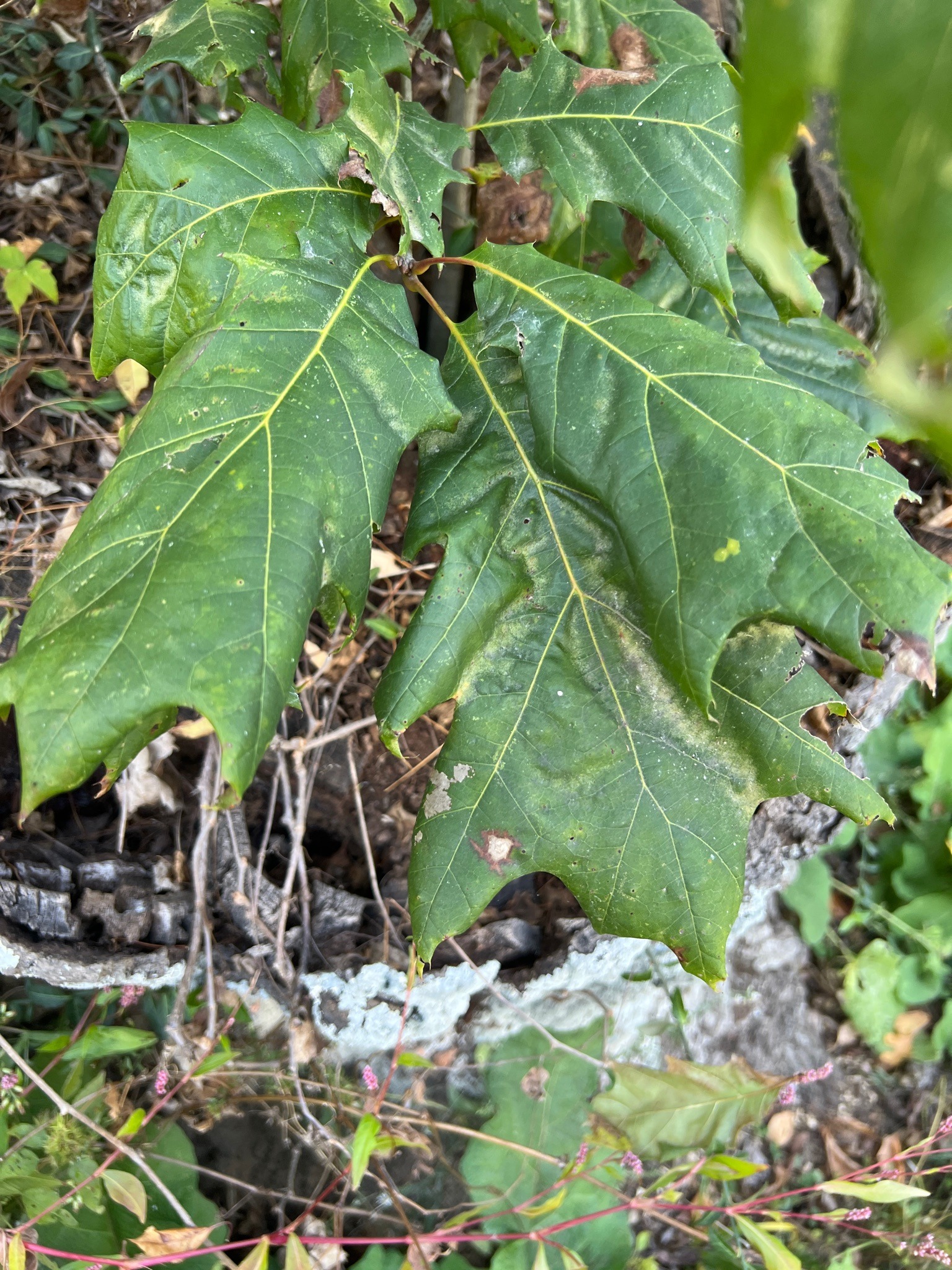
Post Oak
Quercus stellata
A medium-sized deciduous tree recognized by its distinctive leathery leaves that typically feature five lobes, often resembling the shape of a cross or a star.
- Light
- Full sun, requiring at least 6 hours of direct sunlight daily
- Water
- Low to moderate water needs once established. Highly drought tolerant. Water deeply every 1-2 weeks during dry spells, avoiding over-saturation.
- Growth
- Deciduous tree with a rounded crown, growing slowly to a mature height of 40 to 50 feet with an equal spread.
Care instructions
Provide full sun exposure and well-draining soil. Water deeply during establishment, and maintain a moderate watering schedule once established, allowing the soil to dry out between waterings. Apply a balanced fertilizer in early spring if growth is sluggish.
Growing details
Sunlight
Full sun, requiring at least 6 hours of direct sunlight daily
Watering
Low to moderate water needs once established. Highly drought tolerant. Water deeply every 1-2 weeks during dry spells, avoiding over-saturation.
Soil
Prefers well-draining sandy, loamy, or clay soils with an acidic to neutral pH range of 5.5 to 7.0.
Hardiness zone
USDA Hardiness Zones 5 through 9
Growth habit
Deciduous tree with a rounded crown, growing slowly to a mature height of 40 to 50 feet with an equal spread.
Bloom season
Spring, producing inconspicuous greenish-yellow catkins followed by acorns in the autumn.
Propagation
Propagated primarily from seeds (acorns) planted in autumn, or through grafting for specific cultivars.
Common pests & issues
Susceptible to oak wilt, powdery mildew, and defoliating insects such as caterpillars. Ensure good air circulation and prevent root compaction to maintain health.
Similar species
White Oak (Quercus alba), which has rounded leaf lobes but typically more deeply and symmetrically divided sinuses compared to the cross-like leaf shape of the post oak.