
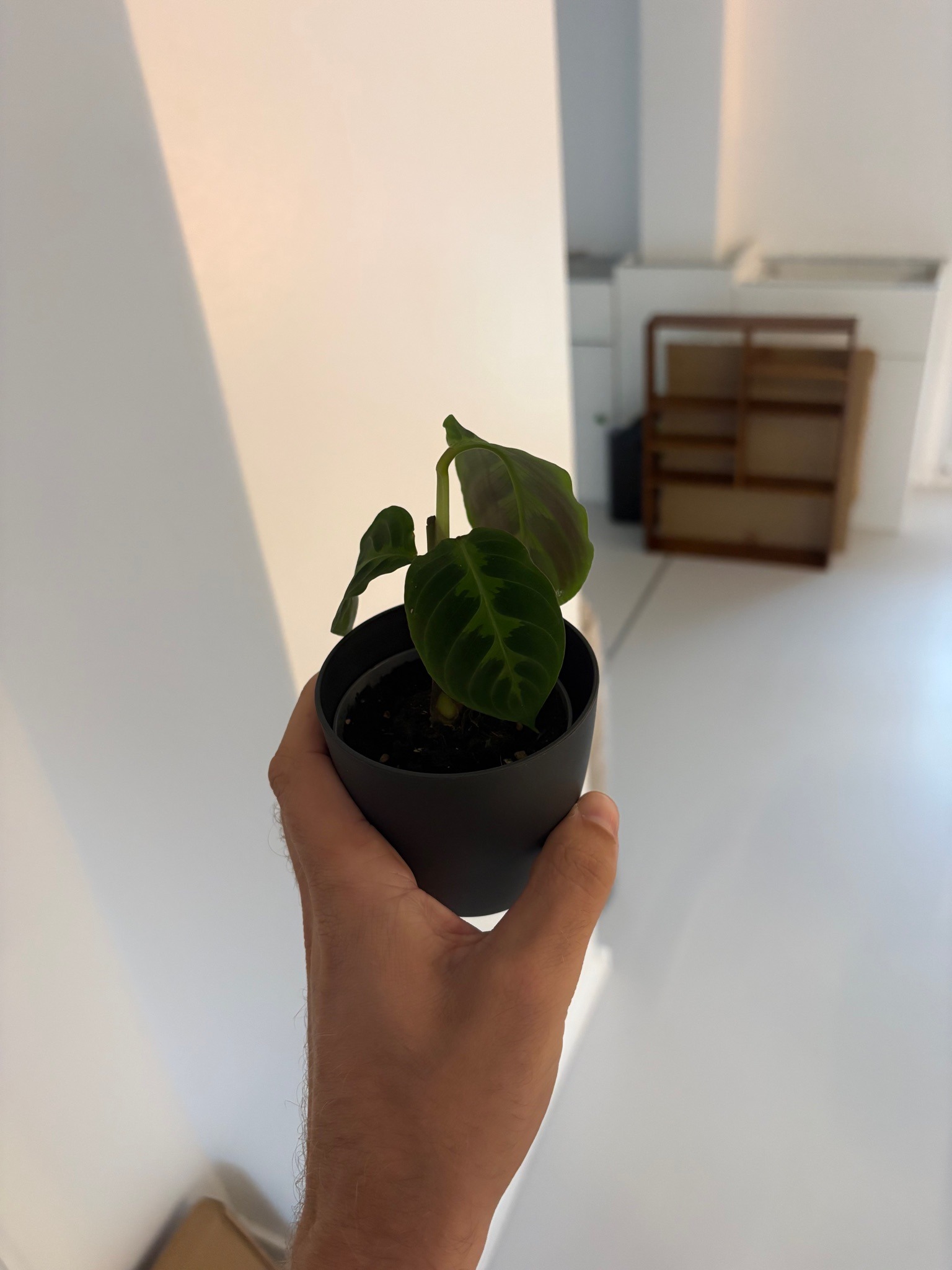
Prayer Plant (Calathea / Maranta)
Maranta leuconeura
A compact perennial houseplant featuring striking oval leaves with distinct markings, prominent veins, and deep purple undersides. Leaves fold upward at night resembling hands in prayer.
- Light
- Bright, indirect light for 6 to 8 hours daily; avoid direct sun which can scorch the delicate leaves.
- Water
- Water thoroughly when the top inch of soil feels slightly dry. Prefers chemical-free or filtered water kept at room temperature. Sensitive to underwatering and prolonged drought.
- Growth
- Low-growing, clump-forming herbaceous perennial with a spreading or trailing habit. Typically reaches a mature height and spread of 6 to 12 inches.
Care instructions
Provide bright, indirect sunlight and keep the soil consistently moist but never waterlogged. Maintain high ambient humidity and warm indoor temperatures, feeding lightly with a balanced liquid fertilizer during the spring and summer growing season.
Growing details
Sunlight
Bright, indirect light for 6 to 8 hours daily; avoid direct sun which can scorch the delicate leaves.
Watering
Water thoroughly when the top inch of soil feels slightly dry. Prefers chemical-free or filtered water kept at room temperature. Sensitive to underwatering and prolonged drought.
Soil
Rich, moisture-retentive potting mix with excellent drainage and a slightly acidic pH range of 5.5 to 6.5.
Hardiness zone
USDA zones 11 to 12; grown primarily as an indoor houseplant in cooler temperate regions.
Growth habit
Low-growing, clump-forming herbaceous perennial with a spreading or trailing habit. Typically reaches a mature height and spread of 6 to 12 inches.
Bloom season
Produces small, inconspicuous white or pale purple flowers occasionally during the spring and summer months under optimal indoor conditions.
Propagation
Propagated successfully through stem cuttings taken just below a node or by division of mature root clumps during the spring growing season.
Common pests & issues
Prone to spider mites and fungus gnats when humidity is low or soil remains overly saturated. Leaf tip browning can occur from dry air or chemical buildup from tap water.
Similar species
Goosefoot plant (Syngonium podophyllum) and various Calathea species, which can be distinguished by differences in leaf shape, growth structure, and distinct foliar patterns.