
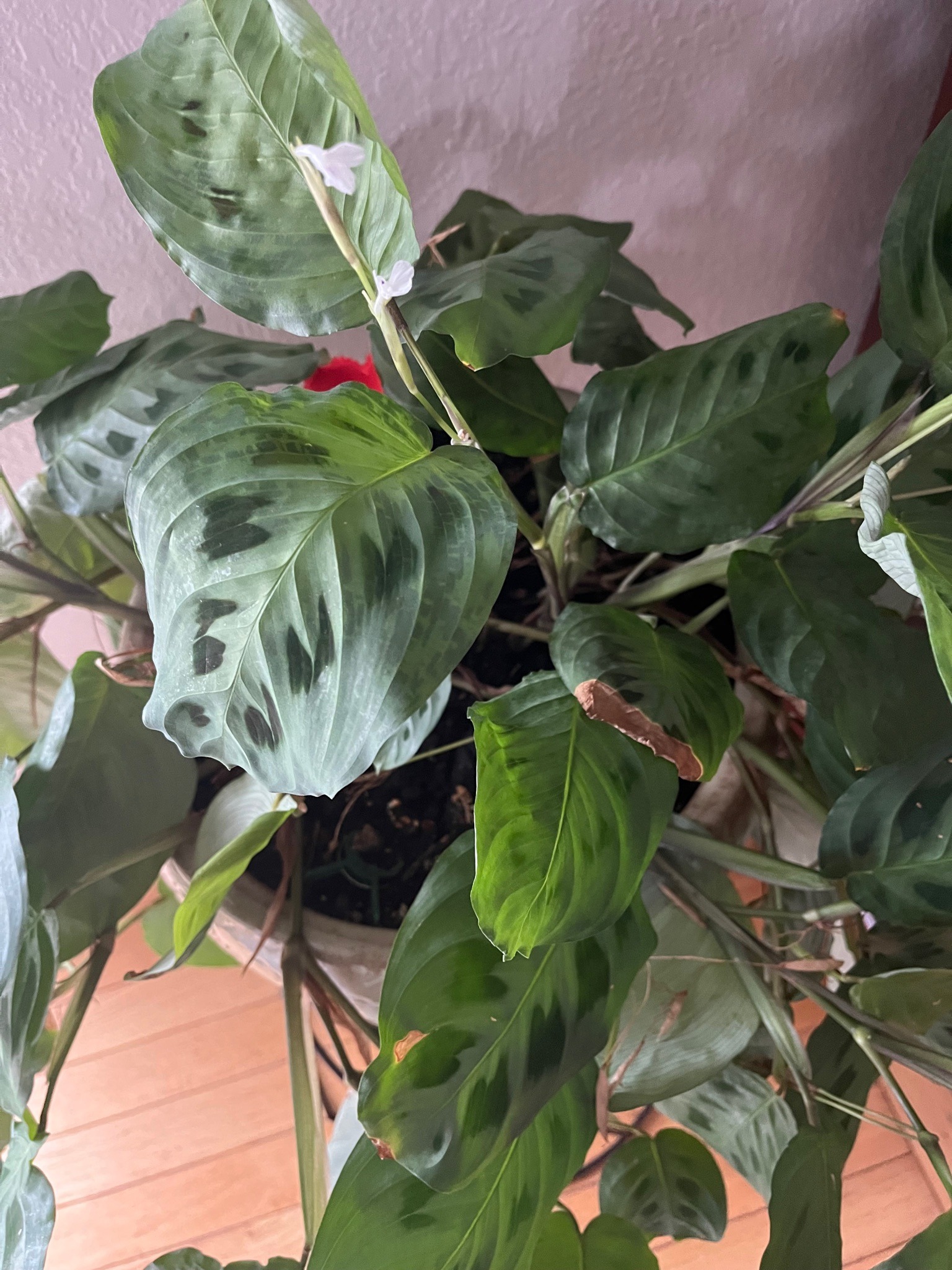
Prayer Plant
Maranta leuconeura
A low-growing, spreading perennial houseplant featuring distinct oval leaves with striking patterns of dark spots and contrasting veins, which fold upward in the evening resembling hands in prayer.
- Light
- Bright, indirect light for 6 to 8 hours daily; direct sun causes leaf scorching.
- Water
- Water thoroughly whenever the top inch of soil becomes dry. Requires high humidity; use filtered or rainwater if tap water contains heavy minerals.
- Growth
- Low-growing, trailing perennial herb, reaching heights of 8 to 12 inches with a spread of 12 to 15 inches, exhibiting a moderate growth rate.
Care instructions
Provide bright, indirect sunlight and maintain consistently moist soil with high humidity. Water when the top inch of soil feels dry, avoiding extremes of drought or waterlogging. Feed monthly during the growing season with a balanced, diluted liquid houseplant fertilizer.
Growing details
Sunlight
Bright, indirect light for 6 to 8 hours daily; direct sun causes leaf scorching.
Watering
Water thoroughly whenever the top inch of soil becomes dry. Requires high humidity; use filtered or rainwater if tap water contains heavy minerals.
Soil
Rich, moisture-retentive, well-draining potting mix with an acidic to neutral pH range of 5.5 to 6.5.
Hardiness zone
USDA zones 11 to 12; grown primarily as an indoor houseplant in cooler climates.
Growth habit
Low-growing, trailing perennial herb, reaching heights of 8 to 12 inches with a spread of 12 to 15 inches, exhibiting a moderate growth rate.
Bloom season
Spring to summer; produces small, insignificant white or pale purple two-lipped flowers on long, slender stalks.
Propagation
Propagated easily through stem cuttings taken just below a leaf node, rooted in water or moist potting soil during the spring.
Common pests & issues
Prone to spider mites and fungus gnats in dry conditions or over-saturated soil. Brown leaf tips can occur from low humidity, fluoride in water, or irregular watering.
Similar species
Often confused with Calathea species, which share similar foliage movements and patterning but generally feature larger growth habits and different leaf underside coloration.