
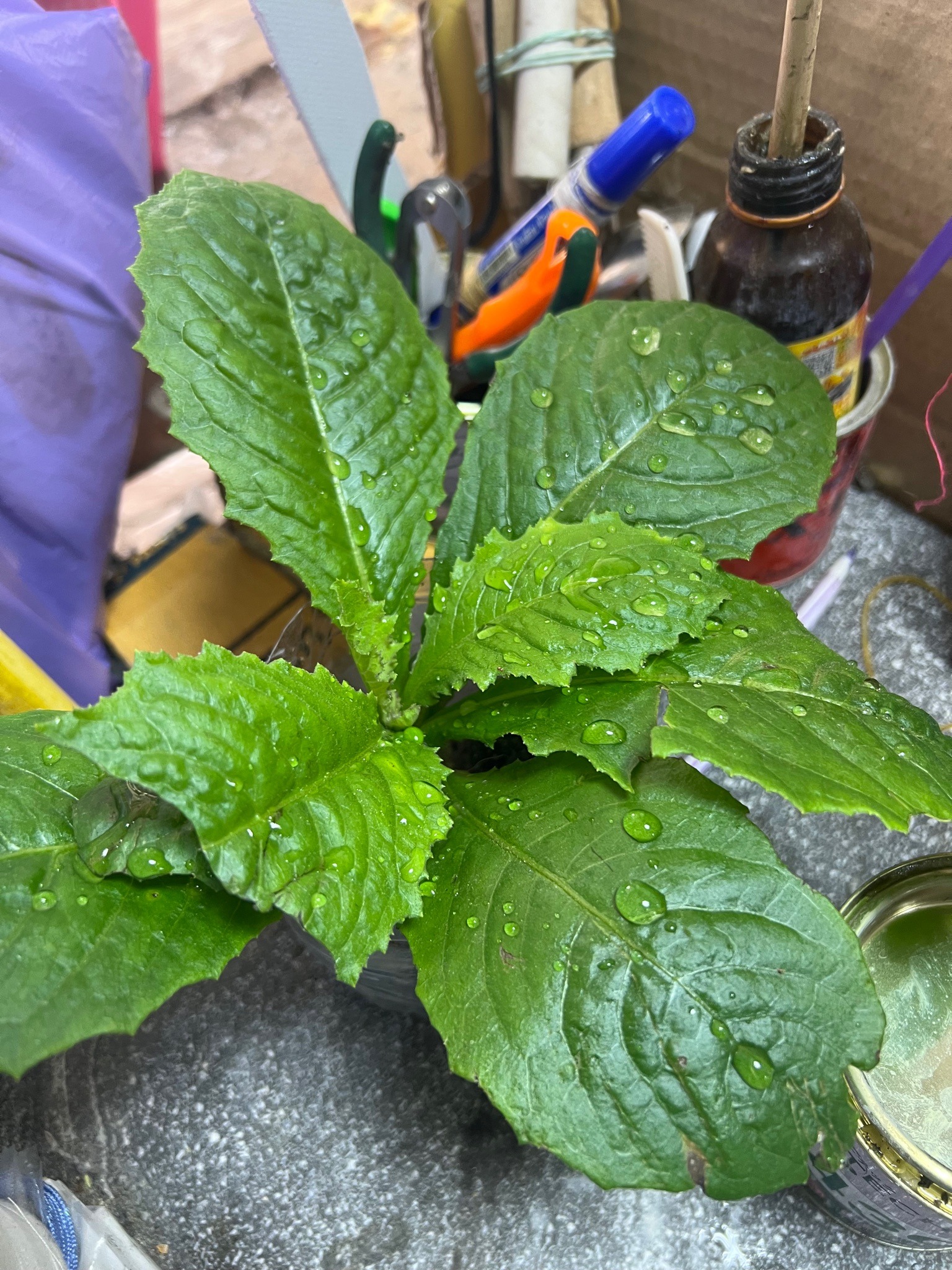
Prickly Elephant's Foot
Elephantopus scaber
A low-growing perennial herb featuring a basal rosette of stiff, rough-textured, obovate-to-spatulate green leaves with serrated or dentate margins and prominent veins.
- Light
- Partial shade to bright indirect light, approximately 4 to 6 hours daily
- Water
- Water when the top soil feels dry to the touch, maintaining moderate moisture without waterlogging
- Growth
- Perennial rosette-forming herb with a slow to moderate growth rate, reaching a height of 20 to 50 centimeters and spreading about 20 to 30 centimeters
Care instructions
Provide bright, indirect sunlight and plant in well-draining soil. Water moderately, allowing the top inch of soil to dry out between waterings. Apply a balanced liquid fertilizer during the growing season.
Growing details
Sunlight
Partial shade to bright indirect light, approximately 4 to 6 hours daily
Watering
Water when the top soil feels dry to the touch, maintaining moderate moisture without waterlogging
Soil
Well-draining loamy or sandy soil with a slightly acidic to neutral pH range of 6.0 to 7.0
Hardiness zone
USDA zones 9 through 11, sensitive to frost and freezing temperatures
Growth habit
Perennial rosette-forming herb with a slow to moderate growth rate, reaching a height of 20 to 50 centimeters and spreading about 20 to 30 centimeters
Bloom season
Flowers appear from late summer to autumn, producing small, pale purple to white composite flower heads clustered in terminal heads
Propagation
Propagated primarily through seeds sown in spring or via division of established basal rosettes
Common pests & issues
Susceptible to root rot if overwatered or kept in poorly draining soil; occasional issues with aphids or spider mites in dry indoor conditions
Similar species
Elephantopus mollis, which has softer, more pubescent leaves compared to the stiffer, scabrous foliage of Elephantopus scaber