
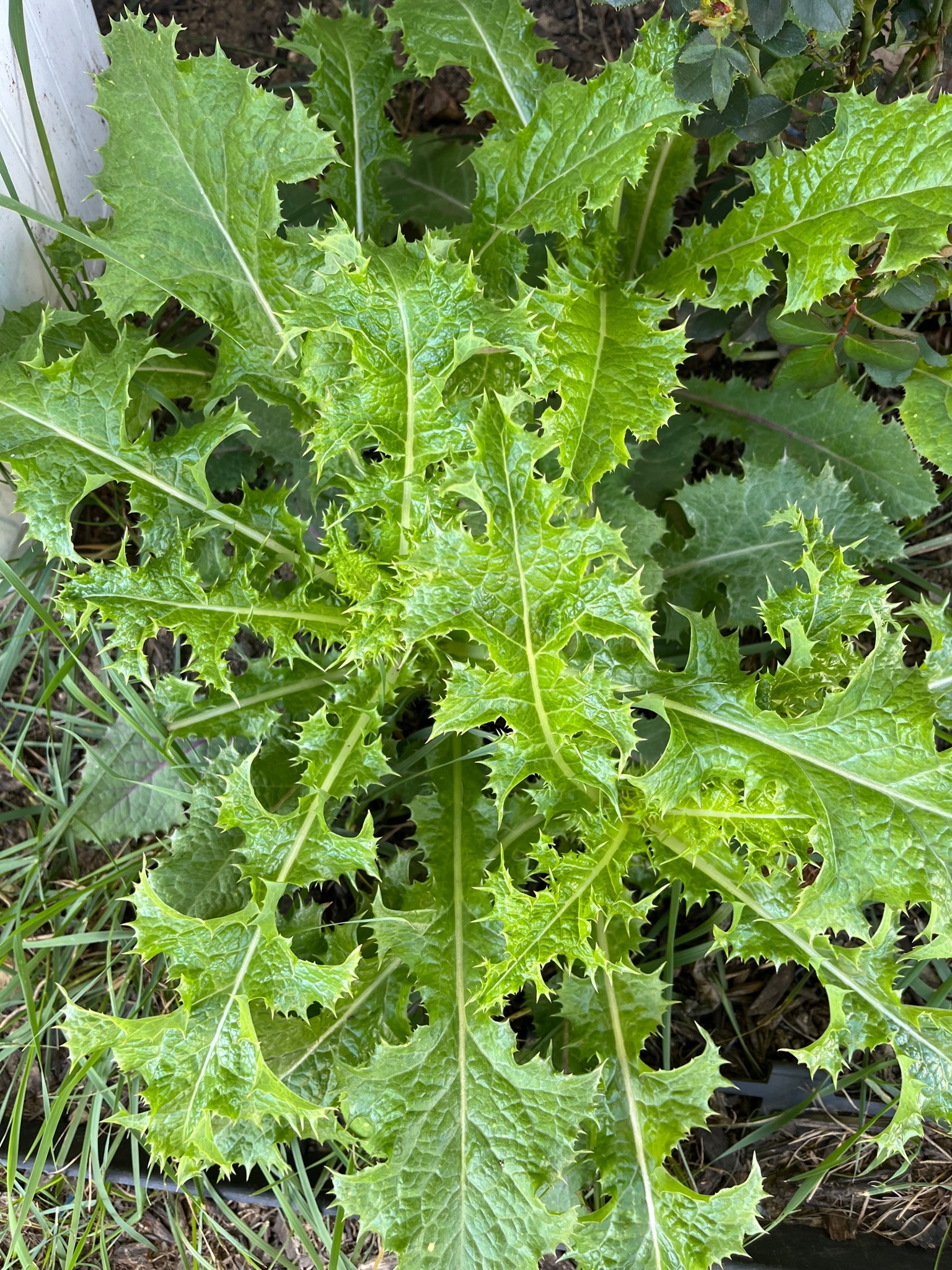
Prickly Lettuce
Lactuca serriola
An herbaceous annual or biennial plant featuring a rosette of deeply lobed, prickly leaves with distinctive bristly hairs along the midrib on the underside. The leaves often twist to align vertically in intense light.
- Light
- Full sun, requiring at least six hours of direct sunlight per day.
- Water
- Low to moderate water requirements. Drought tolerant once established. Allow the soil to dry out between watering sessions.
- Growth
- Herbaceous annual or biennial growing with a basal rosette initially, later bolting into an upright, branching flowering stem reaching heights of 1 to 2 meters.
Care instructions
Prefers full sun and well-draining soil. Water moderately during establishment, tolerating dry conditions well once mature. Avoid heavy fertilizers to maintain natural growth forms.
Growing details
Sunlight
Full sun, requiring at least six hours of direct sunlight per day.
Watering
Low to moderate water requirements. Drought tolerant once established. Allow the soil to dry out between watering sessions.
Soil
Adaptable to various soil types including clay, loam, and sandy soils, provided they are well-draining. Prefers a neutral to slightly alkaline pH range between 6.0 and 7.5.
Hardiness zone
USDA Hardiness Zones 3 through 10
Growth habit
Herbaceous annual or biennial growing with a basal rosette initially, later bolting into an upright, branching flowering stem reaching heights of 1 to 2 meters.
Bloom season
Blooms from mid-summer to early autumn, producing small, pale yellow flower heads composed entirely of ray florets.
Propagation
Propagated strictly through seed dissemination, which occurs readily via wind dispersal.
Common pests & issues
Generally resilient against major pests and diseases, though susceptible to standard fungal issues in overly damp conditions.
Similar species
Can be confused with other Asteraceae family members like Sonchus species (sow thistles) or other Lactuca species, but distinguished by the distinct row of prickles along the underside of the leaf midrib and the tendency of leaves to twist into a north-south plane.