
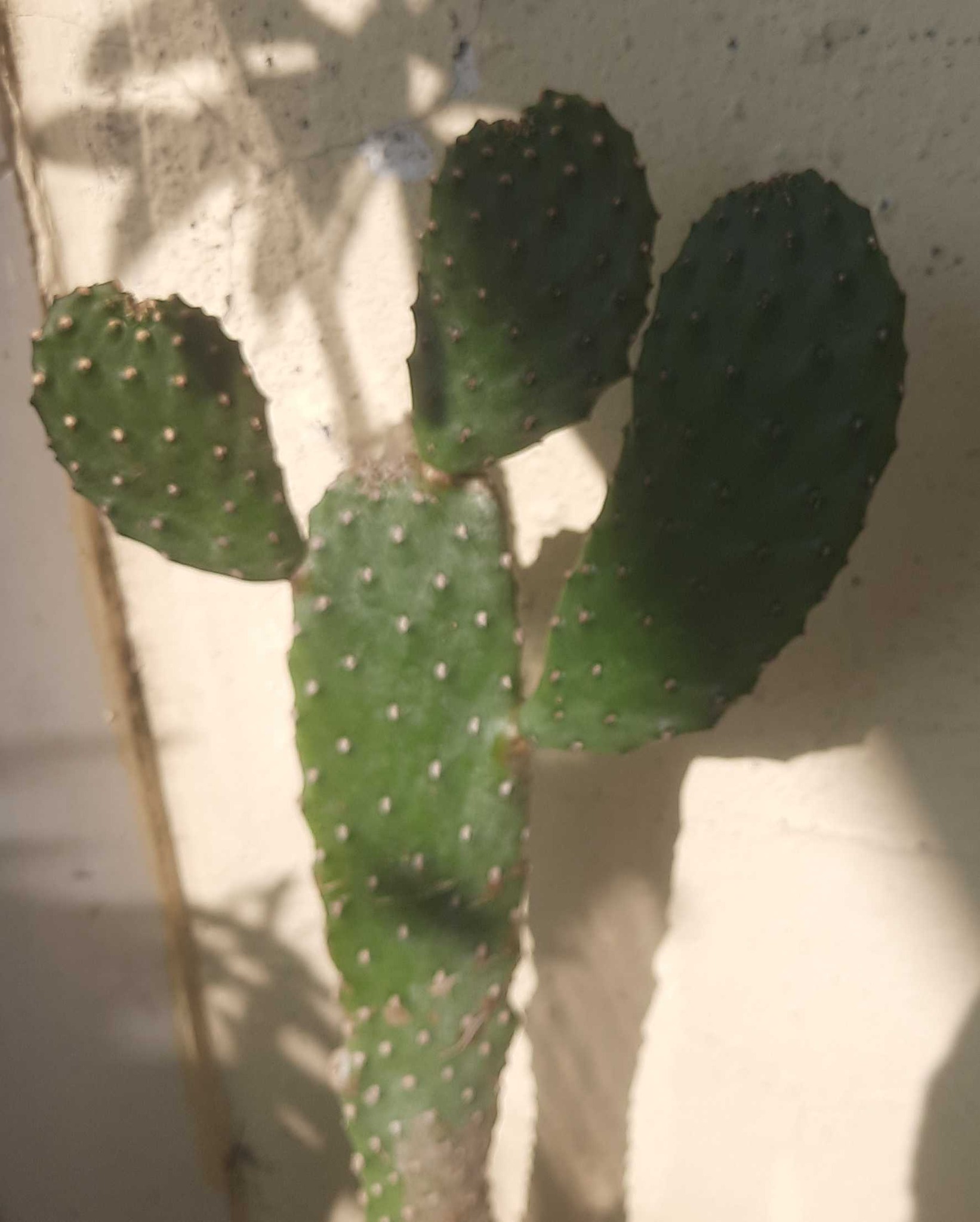
Prickly Pear Cactus
Opuntia ficus-indica
A large, shrubby or tree-like succulent featuring flat, fleshy, rounded green pads called cladodes arranged in branching chains, dotted with areoles bearing small bristles.
- Light
- Full sun, requiring at least 6 to 8 hours of direct sunlight daily.
- Water
- Low water requirements. Allow the soil to dry out completely between watering sessions. High drought tolerance; susceptible to root rot if overwatered.
- Growth
- Perennial succulent shrub growing up to 3 to 5 meters tall with a branching, tree-like form and a moderate growth rate.
Care instructions
Provide full sun and exceptionally well-draining soil. Water thoroughly only when the soil is completely dry, significantly reducing water during the winter months.
Growing details
Sunlight
Full sun, requiring at least 6 to 8 hours of direct sunlight daily.
Watering
Low water requirements. Allow the soil to dry out completely between watering sessions. High drought tolerance; susceptible to root rot if overwatered.
Soil
Sandy or gravelly well-draining soil with an optimal pH range between 6.0 and 7.5.
Hardiness zone
USDA Hardiness Zones 9 through 11, with some select species tolerating lower zones.
Growth habit
Perennial succulent shrub growing up to 3 to 5 meters tall with a branching, tree-like form and a moderate growth rate.
Bloom season
Flowers in late spring to summer, producing large cup-shaped yellow, orange, or red flowers.
Propagation
Easily propagated via stem cuttings by allowing harvested pads to callus over for several days before planting in dry, sandy soil.
Common pests & issues
Susceptible to mealybugs, scale insects, and fungal root rot caused by excessive moisture and poor drainage.
Similar species
Nopalea species, which can be distinguished by their asymmetrical, slightly curved flower structures and narrower pad shapes.