
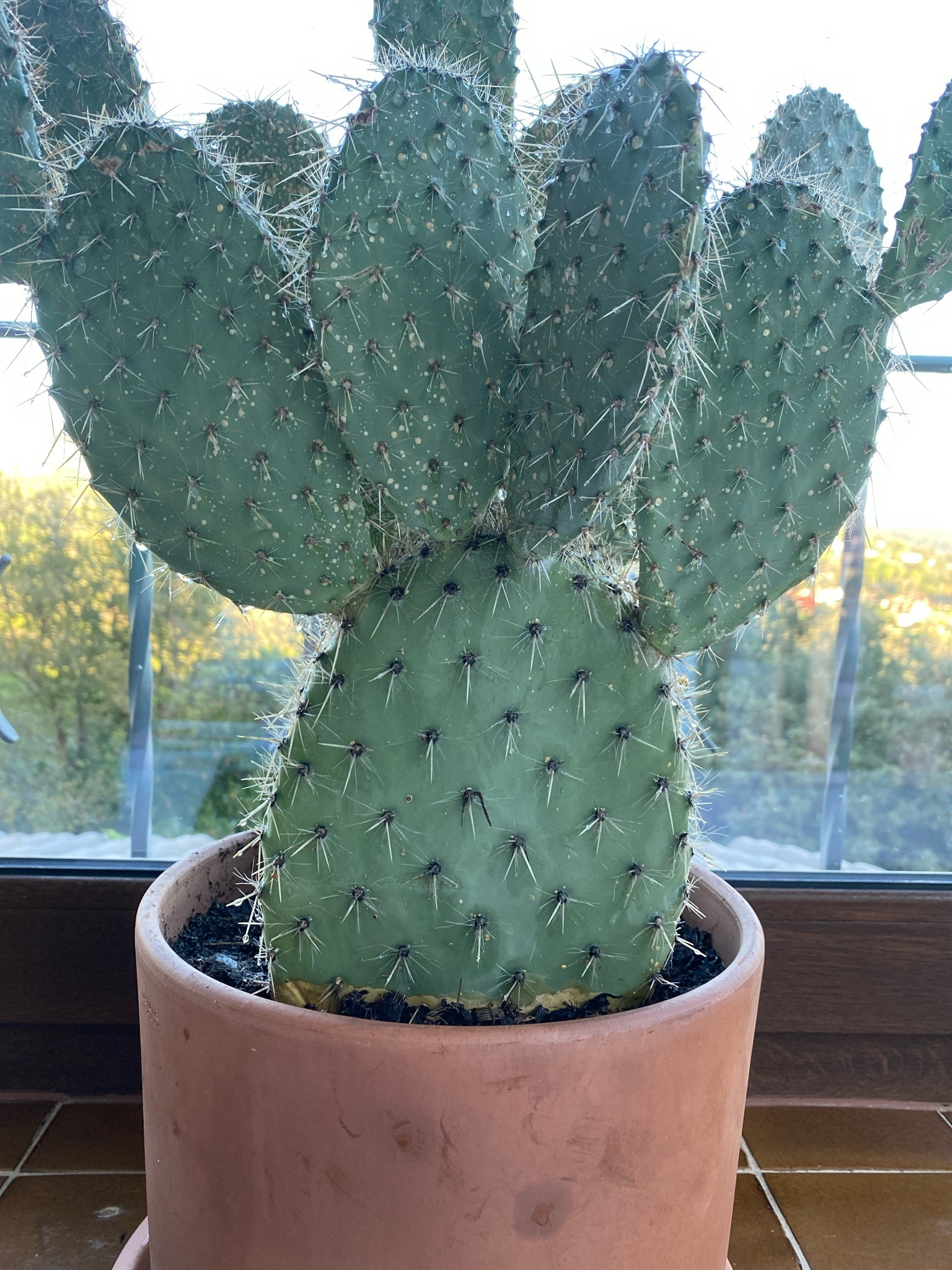
Prickly Pear Cactus
Opuntia ficus-indica
A large, branching succulent cactus featuring flat, fleshy, paddle-shaped stems known as cladodes, dotted with AREOLES bearing prominent spines and tiny hair-like bristles.
- Light
- Full sun, requiring a minimum of 6 to 8 hours of direct sunlight daily.
- Water
- Water deeply but infrequently, allowing the soil to dry out completely between waterings. Reduce watering significantly during winter months.
- Growth
- Perennial succulent shrub growing in an upright, branching habit, reaching mature heights of 3 to 5 meters with a similar spread, growing at a moderate rate.
Care instructions
Provide full sun exposure for at least six hours daily. Plant in sandy, fast-draining soil and allow the soil to dry out completely between watering sessions. Fertilize sparingly during the spring and summer growing season with a balanced, low-nitrogen succulent fertilizer.
Growing details
Sunlight
Full sun, requiring a minimum of 6 to 8 hours of direct sunlight daily.
Watering
Water deeply but infrequently, allowing the soil to dry out completely between waterings. Reduce watering significantly during winter months.
Soil
Well-draining sandy or gravelly soil mixes specifically formulated for cacti and succulents, with a neutral to slightly alkaline pH range between 6.0 and 7.5.
Hardiness zone
USDA Hardiness Zones 8 through 11, with low tolerance for prolonged freezing temperatures and high humidity.
Growth habit
Perennial succulent shrub growing in an upright, branching habit, reaching mature heights of 3 to 5 meters with a similar spread, growing at a moderate rate.
Bloom season
Late spring to early summer, producing large, showy cup-shaped flowers in shades of yellow, orange, or red.
Propagation
Easily propagated through stem cuttings (cladodes). Allow the cut end of a removed pad to callous over for a week in a dry, shaded area before planting upright in dry, sandy soil.
Common pests & issues
Prone to root rot if overwatered or kept in poorly draining soil. Common pests include cochineal scale insects, mealybugs, and spider mites, which can be treated with targeted insecticidal soaps.
Similar species
Other Opuntia species such as Opuntia basilaris (Beavertail cactus), which can be distinguished by its lack of prominent long spines and pinkish-purple pads.