
Pueraria lobata
Pueraria montana var. lobata
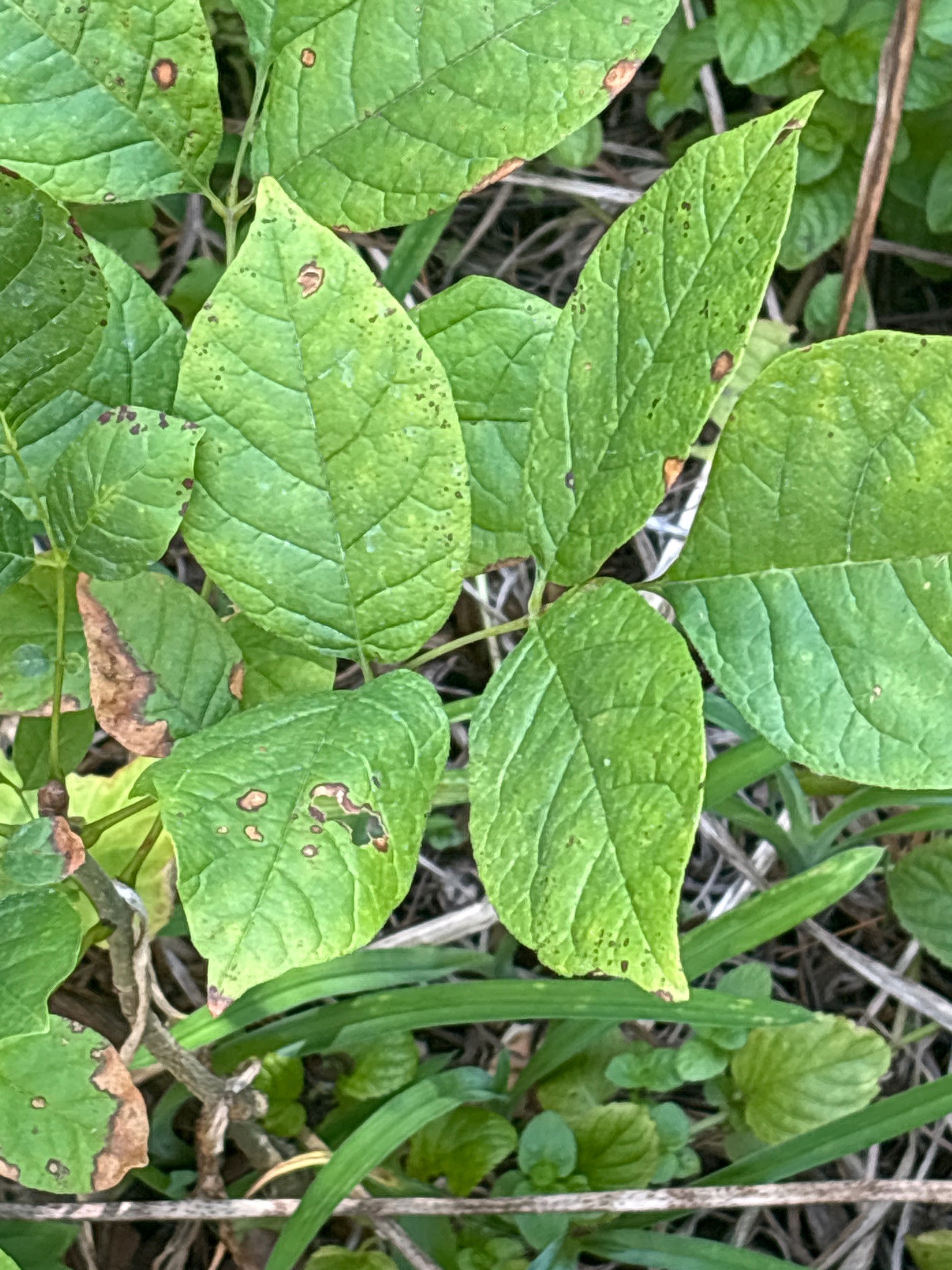
A vigorous perennial vine featuring alternate, trifoliate compound leaves with large, hairy leaflets that often exhibit variable lobing, prominent veins, and visible foliar blemishes.
- Light
- Full sun to partial shade, requiring at least 6 hours of direct sunlight daily.
- Water
- Prefers moderate moisture; highly drought-tolerant once established. Water deeply when the top few inches of soil dry out.
- Growth
- Perennial deciduous vine/climbing climber with a woody base, capable of growing rapidly and climbing high into trees or blanketing structures.
Care instructions
Thrives in full sun to partial shade with average to moist, well-draining soils. It requires very little intervention once established due to its aggressive growth rate.
Growing details
Sunlight
Full sun to partial shade, requiring at least 6 hours of direct sunlight daily.
Watering
Prefers moderate moisture; highly drought-tolerant once established. Water deeply when the top few inches of soil dry out.
Soil
Adaptable to a wide range of soil types including clay, loam, and sand, provided they are well-draining, with a pH range between 5.5 and 7.0.
Hardiness zone
USDA Hardiness Zones 5 through 9
Growth habit
Perennial deciduous vine/climbing climber with a woody base, capable of growing rapidly and climbing high into trees or blanketing structures.
Bloom season
Late summer; produces fragrant, reddish-purple to violet, pea-like flowers arranged in hanging clusters.
Propagation
Propagates readily through seeds and root fragments, as well as stem nodes that touch the ground and root easily.
Common pests & issues
Prone to fungal leaf spots and rusts, especially in humid environments, as well as various leaf-chewing insect pests.
Similar species
Can be confused with other large trifoliate vines such as certain wild beans (Phaseolus species) or American hog peanut (Amphicarpaea bracteata), but distinguished by its massive woody stems, hairy petioles, and distinctly lobed leaflets.