
Pumpkin
Cucurbita pepo
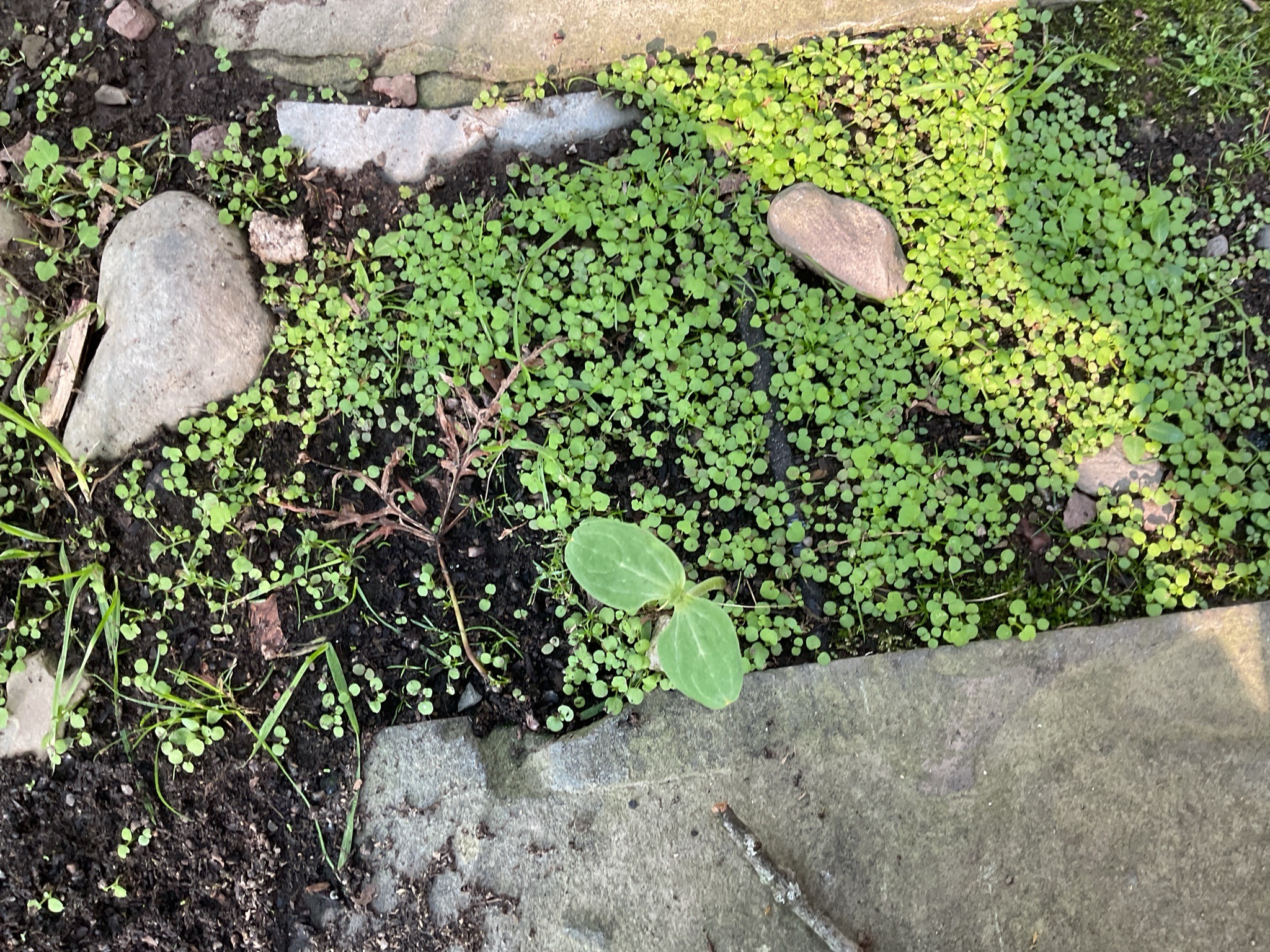
The image shows a very young seedling emerging with two smooth, rounded, oval-shaped cotyledons (seed leaves) growing in soil between stone pavers.
- Light
- Full sun, requiring a minimum of 6 to 8 hours of direct sunlight per day.
- Water
- Requires regular moisture, about 1 inch of water per week through rainfall or irrigation. Drought conditions will stunt growth. Allow the top inch of soil to dry slightly between waterings, and water deeply to encourage deep root establishment.
- Growth
- Sprawling annual vine that produces long, trailing stems spreading up to 10 to 20 feet wide and reaching heights or climbing up to 2 feet, exhibiting a very fast growth rate.
Care instructions
Provide full sun exposure of at least 6 to 8 hours daily. Water consistently to keep the soil evenly moist, especially during dry periods, watering at the base to keep foliage dry. Apply a balanced, slow-release fertilizer or organic compost during the growing season to support robust vine development.
Growing details
Sunlight
Full sun, requiring a minimum of 6 to 8 hours of direct sunlight per day.
Watering
Requires regular moisture, about 1 inch of water per week through rainfall or irrigation. Drought conditions will stunt growth. Allow the top inch of soil to dry slightly between waterings, and water deeply to encourage deep root establishment.
Soil
Prefers rich, well-draining loam or sandy loam soil with high organic matter. Ideal soil pH ranges from 6.0 to 6.8.
Hardiness zone
Typically grown as a tender annual across USDA hardiness zones 3 through 11.
Growth habit
Sprawling annual vine that produces long, trailing stems spreading up to 10 to 20 feet wide and reaching heights or climbing up to 2 feet, exhibiting a very fast growth rate.
Bloom season
Blooms during mid-summer to late summer, producing large, bright yellow, funnel-shaped monoecious flowers.
Propagation
Propagated exclusively from seeds planted directly in the soil after the final spring frost when soil temperatures warm up.
Common pests & issues
Susceptible to fungal issues such as powdery mildew and downy mildew, as well as pests like squash bugs and vine borers. Prevent issues by ensuring adequate spacing for air circulation, practicing crop rotation, and keeping the planting area free of debris.
Similar species
Other members of the Cucurbita genus such as winter squash, zucchini, and gourds, which share very similar seedling stages with oval cotyledons and can be distinguished primarily by later true leaves, vine characteristics, and fruit morphology.
User notes
I think it could be a pumpkin