
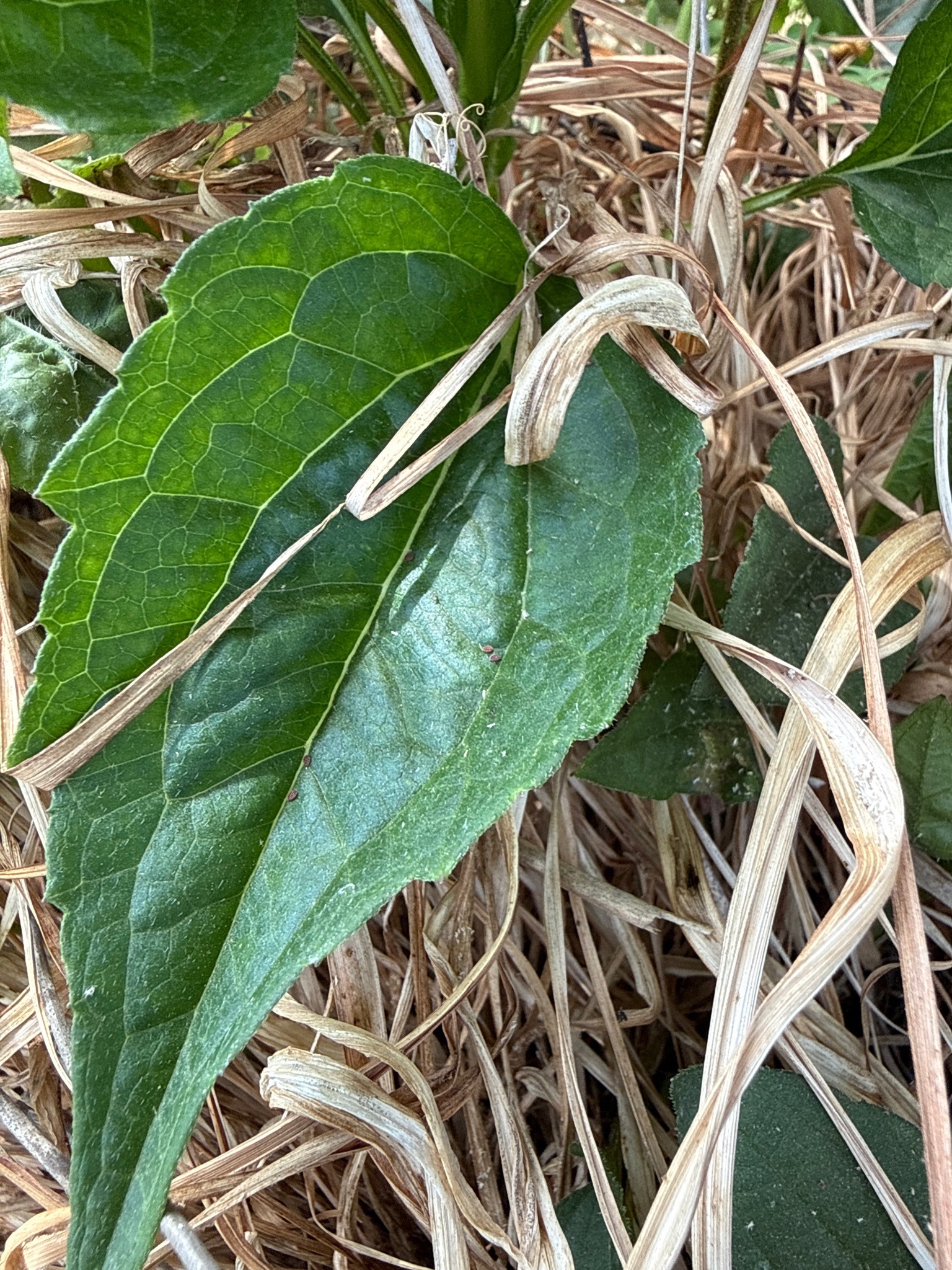
Purple Coneflower
Echinacea purpurea
A popular herbaceous perennial known for its large, daisy-like flowers with purple petals and a prominent, spiny central cone.
- Light
- Full sun (at least 6-8 hours a day) for best blooming, though it can tolerate partial shade.
- Water
- Moderate; water regularly during the first growing season. Once established, it is quite drought-tolerant and only needs water during prolonged dry spells.
- Growth
- Clump-forming perennial, growing 2-4 feet tall and 1.5-2 feet wide at a moderate rate.
Care instructions
This is a low-maintenance plant. Provide full sun and well-drained soil. Once established, it is drought-tolerant. Cut back spent blooms to encourage more flowering and divide clumps every 3-4 years.
Growing details
Sunlight
Full sun (at least 6-8 hours a day) for best blooming, though it can tolerate partial shade.
Watering
Moderate; water regularly during the first growing season. Once established, it is quite drought-tolerant and only needs water during prolonged dry spells.
Soil
Well-drained soil ranging from sandy to clay-loam; prefers a neutral pH of 6.0 to 7.0.
Hardiness zone
3-8
Growth habit
Clump-forming perennial, growing 2-4 feet tall and 1.5-2 feet wide at a moderate rate.
Bloom season
Mid-summer to early autumn; produces purple to pink ray petals with a central orange-brown cone.
Propagation
Easily propagated by seed (requires cold stratification), basal cuttings in spring, or root division in fall or spring.
Common pests & issues
Susceptible to aster yellows (a phytoplasma disease) and Japanese beetles. Powdery mildew can occur if airflow is poor.
Similar species
Echinacea pallida (Pale Purple Coneflower), which has narrower leaves and drooping petals, and Rudbeckia species which have yellow petals.