
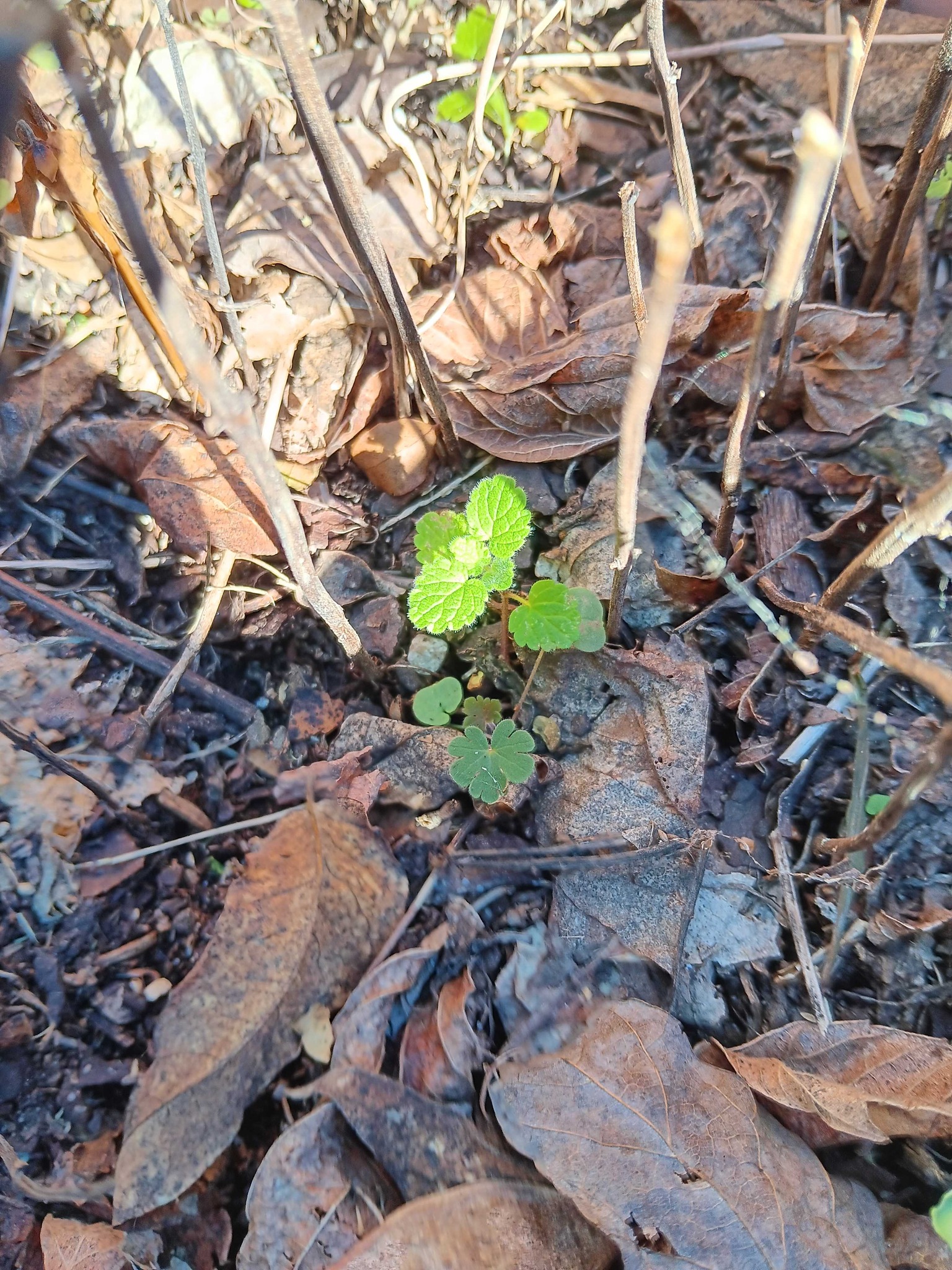
Purple Dead-nettle seedling
Lamium purpureum
A small winter annual or biennial herb with square stems and opposite, hairy, rounded to heart-shaped leaves that often show a purplish tint at the tips.
- Light
- Full sun to partial shade, approximately 4 to 6 hours of direct sunlight per day
- Water
- Requires moderate and consistent moisture. Allow the top inch of soil to dry out between watering sessions; avoid waterlogging.
- Growth
- Low-growing herbaceous annual or winter annual, typically reaching 6 to 18 inches in height with a similar spread, exhibiting a fast growth rate.
Care instructions
Provide partial shade to full sun and consistently moist, well-draining soil. Minimal maintenance is required as it adapts well to various garden conditions.
Growing details
Sunlight
Full sun to partial shade, approximately 4 to 6 hours of direct sunlight per day
Watering
Requires moderate and consistent moisture. Allow the top inch of soil to dry out between watering sessions; avoid waterlogging.
Soil
Adaptable to various well-draining soil types, including loam, clay, or sandy substrates, with a neutral to slightly alkaline pH range of 6.0 to 7.5.
Hardiness zone
USDA hardiness zones 3 through 9
Growth habit
Low-growing herbaceous annual or winter annual, typically reaching 6 to 18 inches in height with a similar spread, exhibiting a fast growth rate.
Bloom season
Blooms from early spring through summer, producing small, bilateral tubular flowers in shades of pink, purple, or magenta.
Propagation
Propagates easily by self-seeding and dispersal of seeds, or through stem cuttings taken during the active growing season.
Common pests & issues
Generally resilient against major pests and diseases, though overly damp conditions can occasionally lead to root rot or powdery mildew.
Similar species
Henbit (Lamium amplexicaule), which can be distinguished by its sessile, clasping upper leaves compared to the stalked leaves of Purple Dead-nettle.