
Purple Heart
Tradescantia pallida
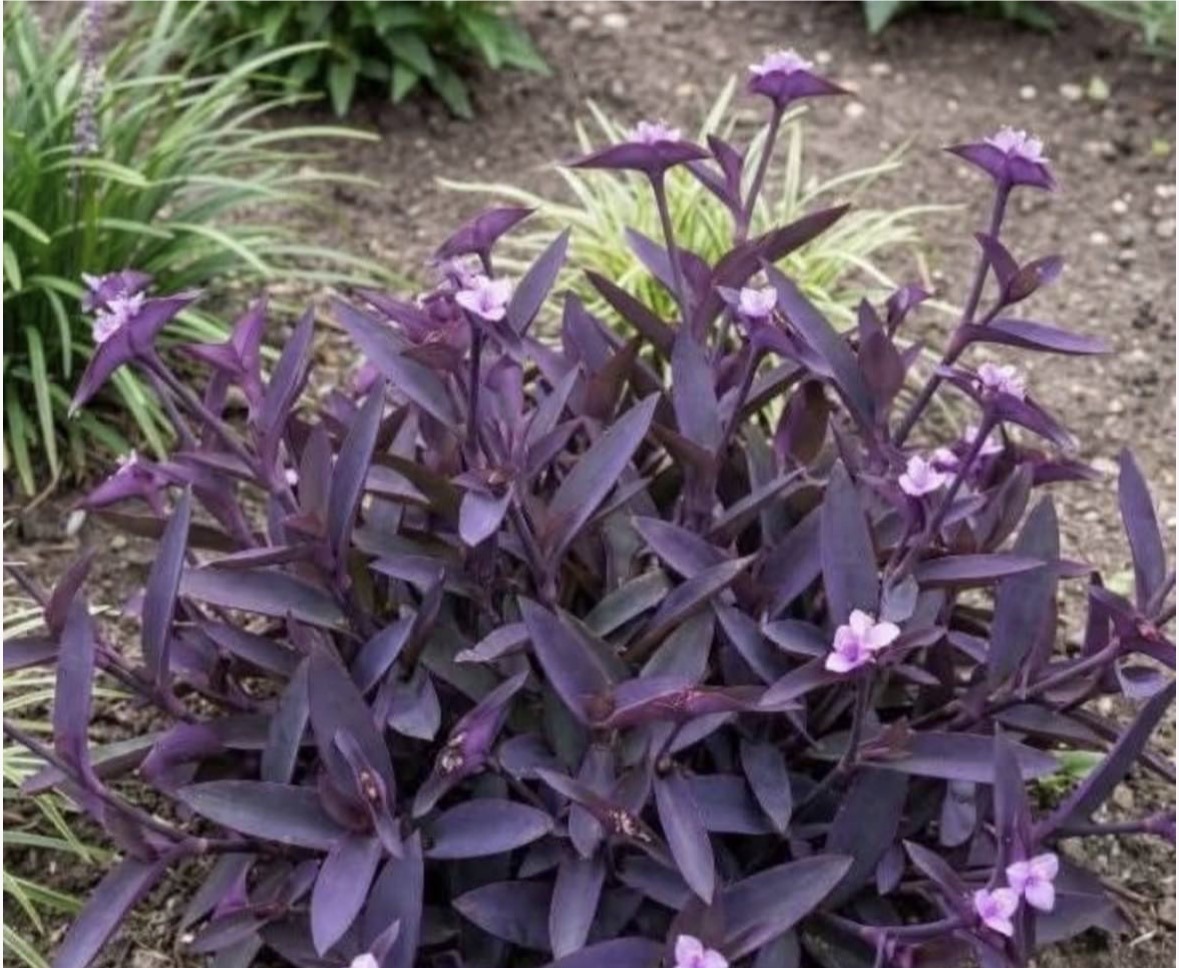
Tradescantia pallida is a tender, evergreen perennial recognized for its intensely rich purple, succulent-like stems and elongated pointed leaves. It produces small, three-petaled flowers in shades of pale pink to light purple.
- Light
- Full sun to bright indirect light, ideally 6 or more hours of direct sunlight daily for optimal leaf coloration.
- Water
- Moderate drought tolerance once established. Allow the soil to dry completely between watering sessions. Avoid prolonged saturation to prevent root rot.
- Growth
- Trailing or sprawling evergreen perennial forming dense mats, reaching heights of 12 to 18 inches with a spread of up to 16 inches or more.
Care instructions
Provide bright, indirect to direct light to maintain vibrant purple foliage. Water thoroughly when the top two inches of soil dry out, reducing watering frequency during the winter. Plant in well-draining soil and apply a balanced liquid fertilizer monthly during the active growing season.
Growing details
Sunlight
Full sun to bright indirect light, ideally 6 or more hours of direct sunlight daily for optimal leaf coloration.
Watering
Moderate drought tolerance once established. Allow the soil to dry completely between watering sessions. Avoid prolonged saturation to prevent root rot.
Soil
Well-draining, loamy or sandy potting mix with a neutral to slightly acidic pH range between 6.0 and 7.0.
Hardiness zone
USDA Hardiness Zones 10 through 11, grown as an annual or indoor container plant in colder regions.
Growth habit
Trailing or sprawling evergreen perennial forming dense mats, reaching heights of 12 to 18 inches with a spread of up to 16 inches or more.
Bloom season
Blooms intermittently from late spring through summer, featuring small, three-petaled pale pink or lavender flowers.
Propagation
Easily propagated through stem cuttings placed in water or directly into moist, well-draining soil, where they root rapidly at the nodes.
Common pests & issues
Generally resilient, but susceptible to root rot in overly wet soils. Aphids and mealybugs can occasionally appear, treatable with insecticidal soap.
Similar species
Tradescantia zebrina, which features striped leaves with silver and purple markings rather than uniform solid purple coloration.