
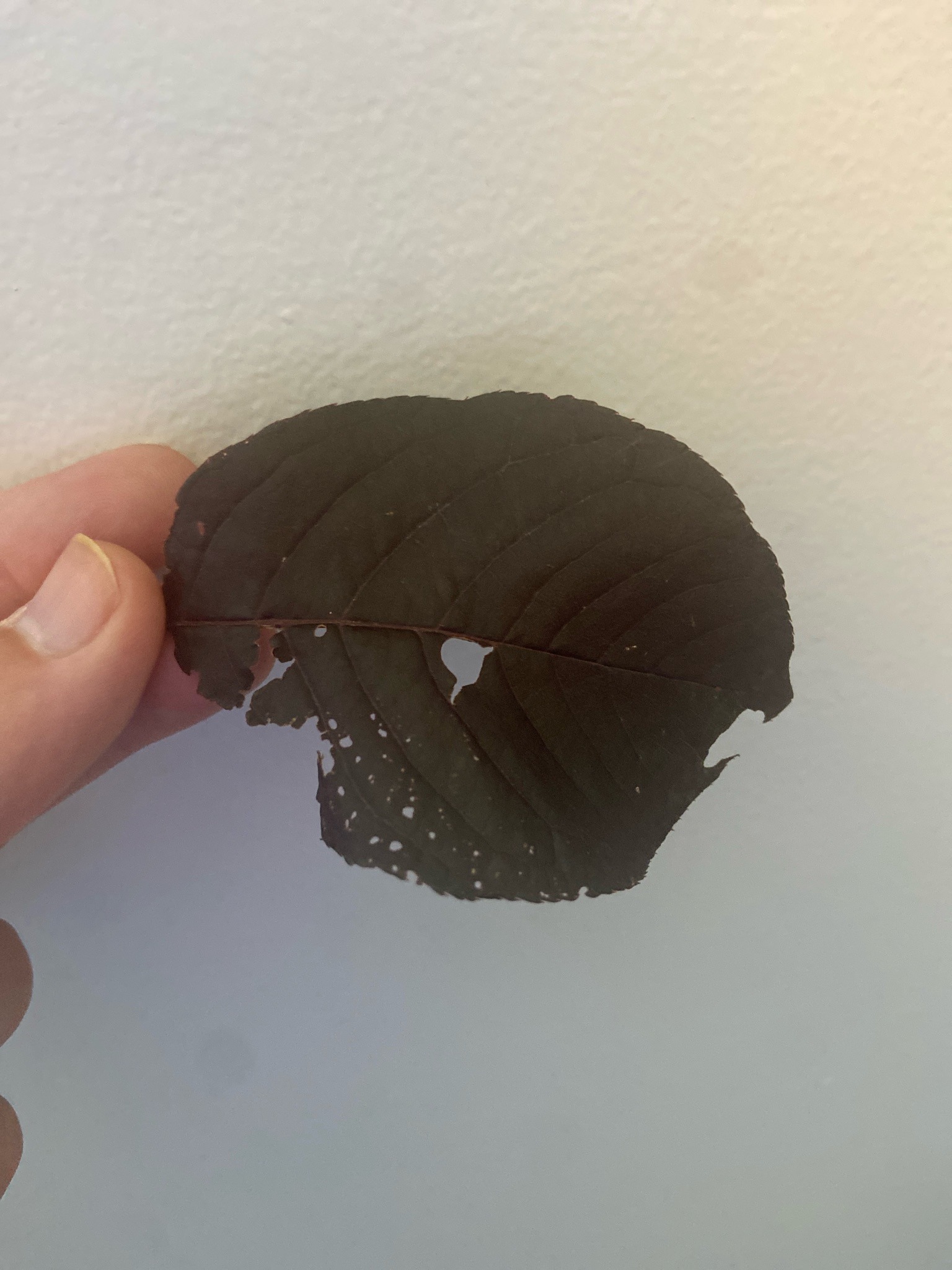
Purple Leaf Plum
Prunus cerasifera
A deciduous ornamental tree featuring distinct deep purple foliage, rounded oval leaves with finely serrated margins, and prominent parallel lateral veins.
- Light
- Full sun, requiring at least six to eight hours of direct sunlight daily
- Water
- Moderate watering needs. Allow the top few inches of soil to dry out between waterings. Drought tolerant once fully established.
- Growth
- Perennial deciduous tree with a rounded or vase-shaped canopy, reaching mature heights of 15 to 25 feet with a similar spread and moderate growth rate
Care instructions
Plant in full sun for optimal deep leaf coloration. Provide regular watering until established, then maintain moderate moisture in well-draining soil. Apply a balanced fertilizer in early spring.
Growing details
Sunlight
Full sun, requiring at least six to eight hours of direct sunlight daily
Watering
Moderate watering needs. Allow the top few inches of soil to dry out between waterings. Drought tolerant once fully established.
Soil
Adaptable to a wide range of well-draining soils including loam, clay, and sand, with a neutral to slightly acidic pH range between 6.0 and 7.0
Hardiness zone
USDA Hardiness Zones 4 through 9
Growth habit
Perennial deciduous tree with a rounded or vase-shaped canopy, reaching mature heights of 15 to 25 feet with a similar spread and moderate growth rate
Bloom season
Early spring, producing abundant small pinkish-white flowers before the new leaves fully emerge
Propagation
Propagated through softwood cuttings in summer, hardwood cuttings in winter, or by grafting onto rootstock
Common pests & issues
Susceptible to aphids, scale insects, Japanese beetles, black knot, and powdery mildew. Prevent by ensuring good air circulation and maintaining proper watering practices.
Similar species
Purple leaf sand cherry (Prunus x cistena), which typically presents smaller shrubs and narrower leaves, and other purple-foliaged Prunus varieties which differ in mature size and leaf shape.