
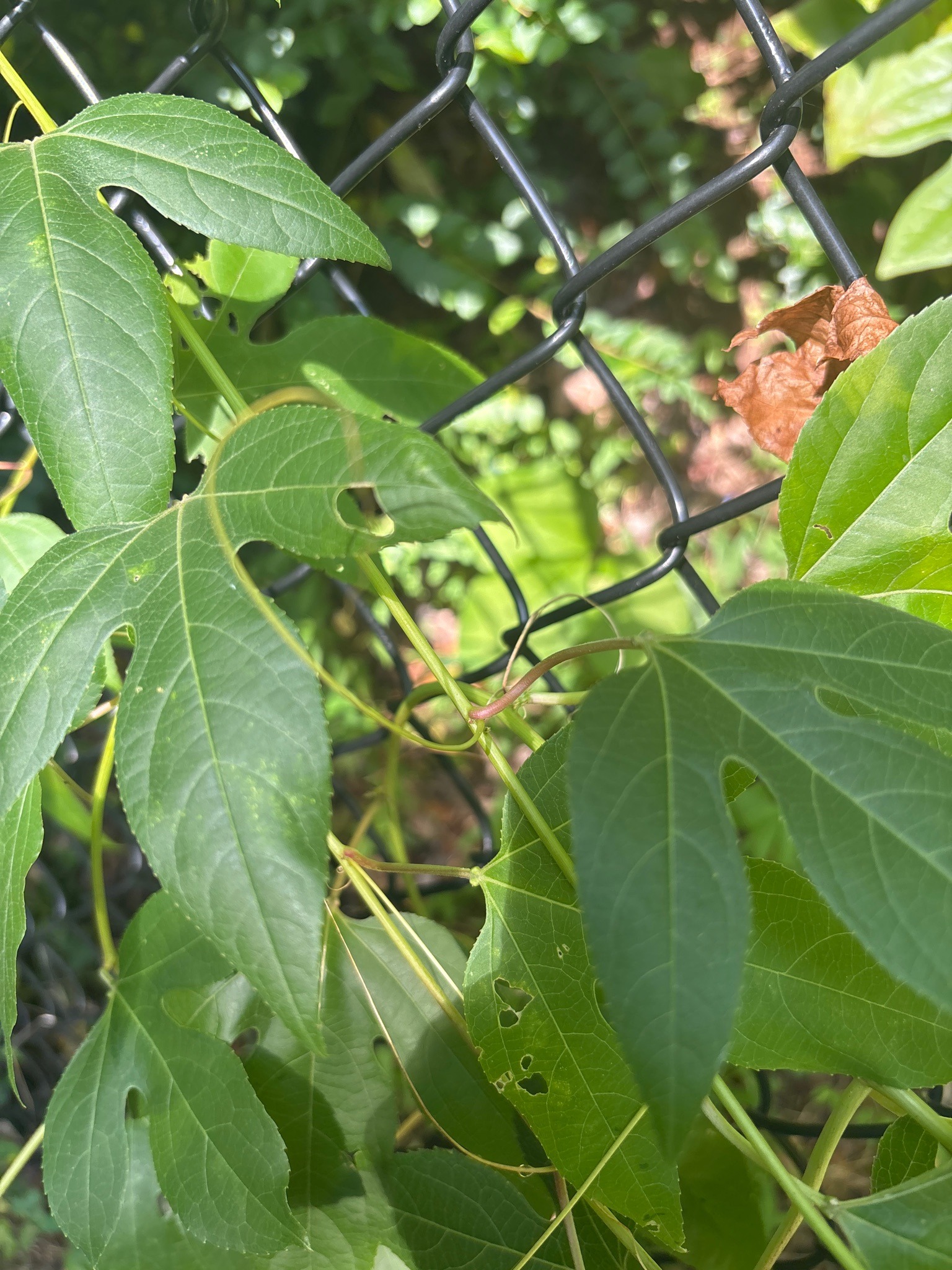
Purple Passionflower
Passiflora incarnata
A vigorous perennial vine featuring alternate, deeply lobed leaves with typically three to five lobes, serrated margins, and slender tendrils used for climbing fences and structures.
- Light
- Full sun to partial shade, requiring at least six hours of direct sunlight daily for optimal vigor and flowering.
- Water
- Moderate water needs; water deeply when the top inch of soil becomes dry. Established plants tolerate short dry spells, but consistent moisture supports best growth.
- Growth
- Herbaceous perennial vine that climbs rapidly via tendrils, reaching mature lengths of 6 to 30 feet with a fast growth rate.
Care instructions
Provide full sun to partial shade, regular watering to keep the soil evenly moist without waterlogging, and well-draining loamy or sandy soil. Apply a balanced fertilizer during the active spring growing season.
Growing details
Sunlight
Full sun to partial shade, requiring at least six hours of direct sunlight daily for optimal vigor and flowering.
Watering
Moderate water needs; water deeply when the top inch of soil becomes dry. Established plants tolerate short dry spells, but consistent moisture supports best growth.
Soil
Prefers loose, well-draining soils rich in organic matter, with a slightly acidic to neutral pH range of 6.0 to 7.5.
Hardiness zone
USDA Hardiness Zones 5 through 9, demonstrating good cold tolerance by dying back to the roots in winter and returning in spring.
Growth habit
Herbaceous perennial vine that climbs rapidly via tendrils, reaching mature lengths of 6 to 30 feet with a fast growth rate.
Bloom season
Blooms from mid-summer to early fall, producing complex, intricate flowers featuring prominent white, purple, and pink corona filaments.
Propagation
Easily propagated via stem cuttings taken in spring or summer, through root divisions, or by sowing seeds in warm spring soil.
Common pests & issues
Susceptible to caterpillars of certain butterfly species feeding on foliage, as well as occasional fungal leaf spot issues promoted by high humidity and poor air circulation.
Similar species
Passiflora lutea (Yellow Passionflower), which features smaller, greenish-yellow flowers and smaller, blunt-lobed leaves compared to the deeply lobed leaves and colorful flowers of Passiflora incarnata.