
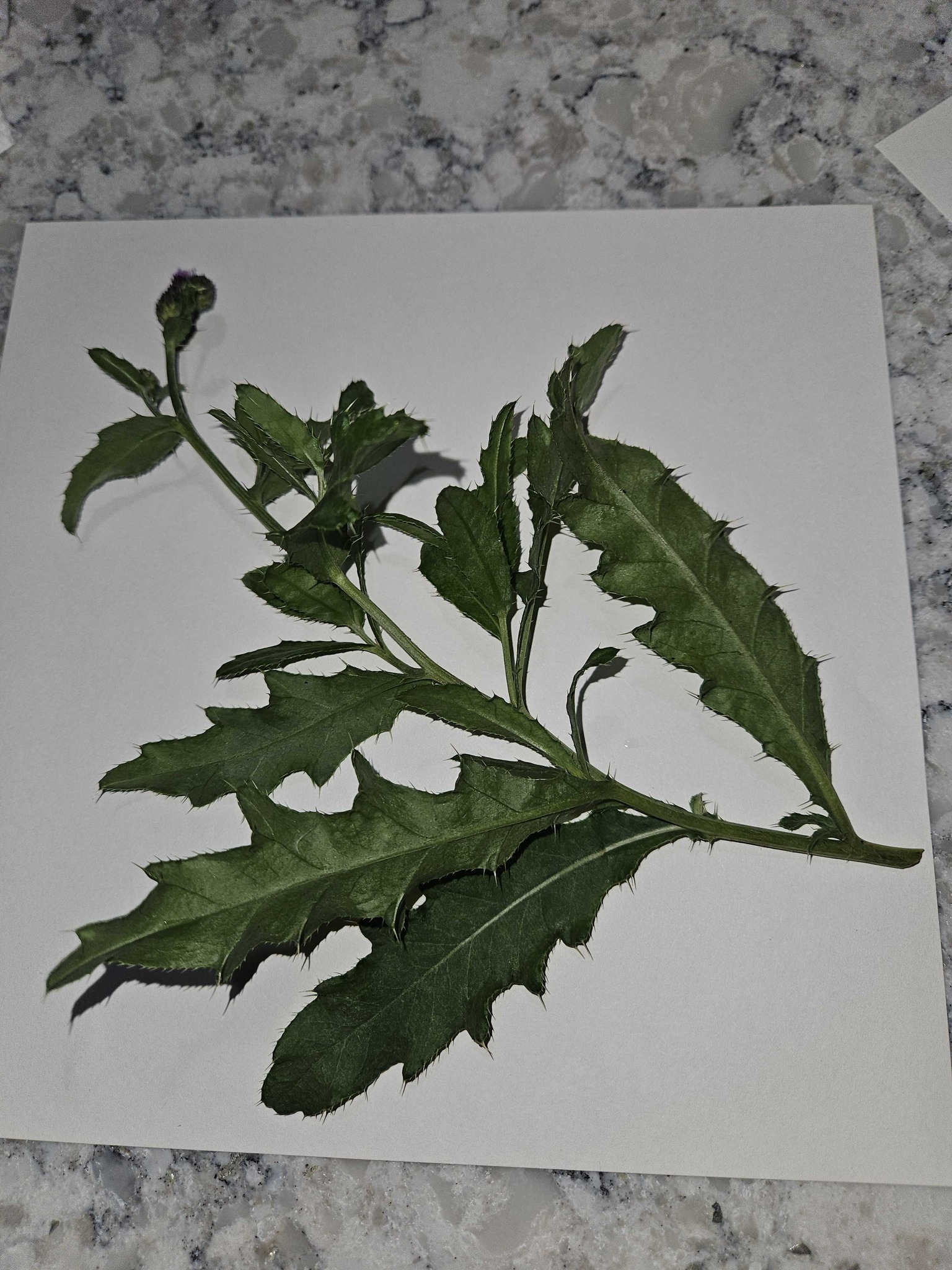
Purple Thistle
Cirsium arvense
An herbaceous plant characterized by lobed, spiny leaves and branching stems bearing small, terminal purple flower heads.
- Light
- Full sun, requiring at least 6 hours of direct sunlight daily
- Water
- Low watering needs once established; allow soil to dry out between waterings. Highly drought tolerant.
- Growth
- Perennial plant forming deep root systems, growing up to 1.5 to 4 feet tall with an upright, branching growth habit and rapid spread.
Care instructions
Thrives in open, sunny locations with well-drained soils. Very adaptable to various soil types and exhibits high drought tolerance once established.
Growing details
Sunlight
Full sun, requiring at least 6 hours of direct sunlight daily
Watering
Low watering needs once established; allow soil to dry out between waterings. Highly drought tolerant.
Soil
Adaptable to a wide range of soil types including clay, loam, and sandy soils, provided they are well-drained with a neutral to slightly alkaline pH.
Hardiness zone
USDA zones 3 through 9
Growth habit
Perennial plant forming deep root systems, growing up to 1.5 to 4 feet tall with an upright, branching growth habit and rapid spread.
Bloom season
Summer to early autumn, producing small, clustered purple to pinkish flower heads composed of disk florets.
Propagation
Propagates extensively via creeping underground root systems (rhizomes) and wind-dispersed seeds.
Common pests & issues
Generally resilient against most pests and diseases, though can occasionally be affected by rust fungi or stem-boring insects.
Similar species
Can be confused with other Cirsium species or Carduus acanthoides (Plumeless thistle), but distinguished by its extensive creeping root system, smaller flower heads, and less spiny stems.