
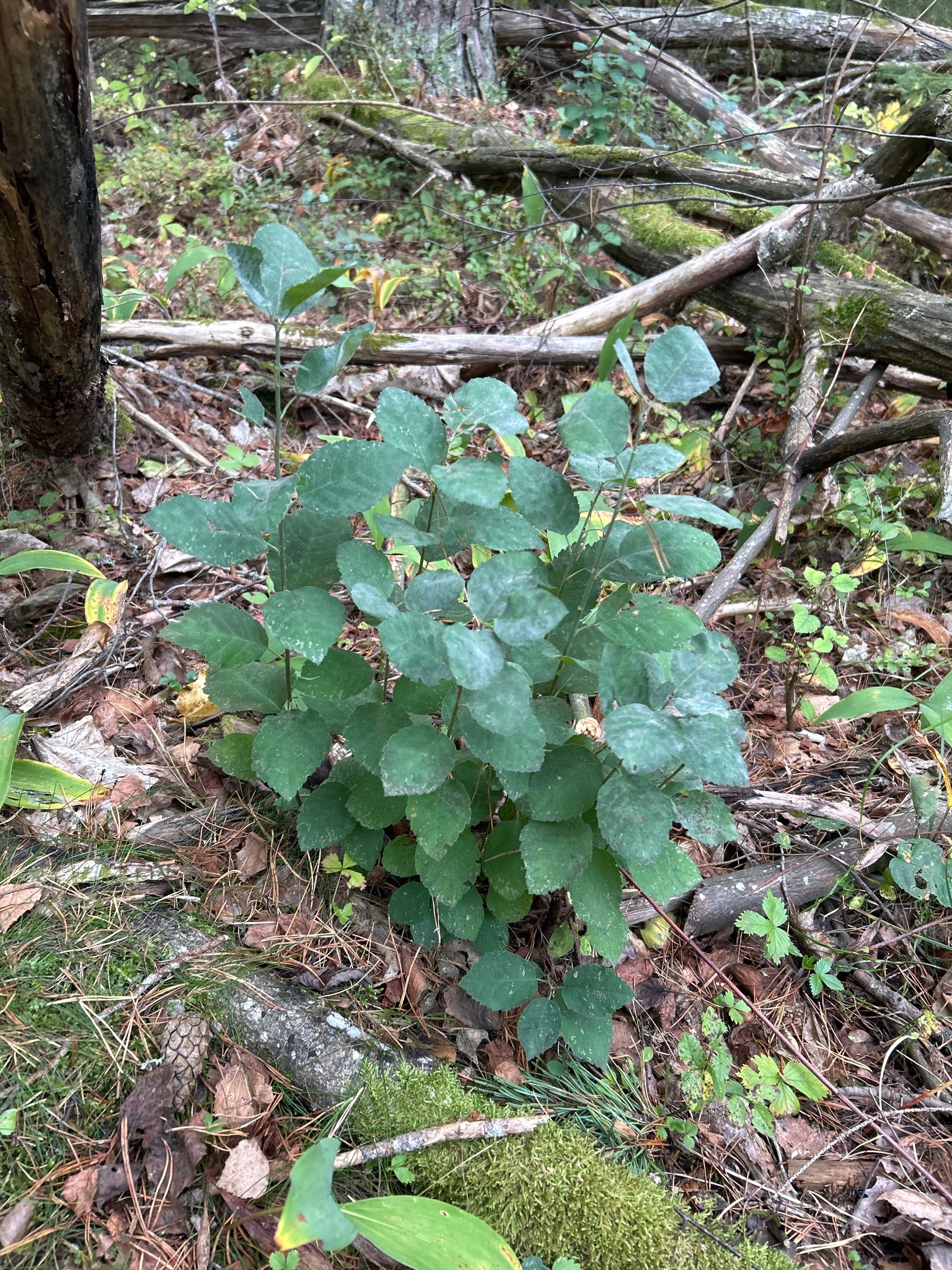
Quaking Aspen (sucker shoots)
Populus tremuloides
A cluster of young upright stems featuring rounded to deltoid green leaves with finely toothed margins, characteristic of juvenile growth arising from an established underground root system.
- Light
- Full sun, requiring at least 6 hours of direct sunlight daily
- Water
- Prefers consistent moisture, especially when young, though established root systems display moderate resilience to dry spells
- Growth
- Perennial deciduous tree, growing rapidly up to 50 to 80 feet tall as a mature tree, typically spreading extensively via underground root sprouts
Care instructions
Requires full sun exposure and consistently moist, well-draining soil. Thrives best in cooler climates with adequate open space for root expansion.
Growing details
Sunlight
Full sun, requiring at least 6 hours of direct sunlight daily
Watering
Prefers consistent moisture, especially when young, though established root systems display moderate resilience to dry spells
Soil
Adaptable to a range of well-drained soils including sandy, loamy, and gravelly textures with a neutral to slightly acidic pH
Hardiness zone
USDA zones 1 to 7
Growth habit
Perennial deciduous tree, growing rapidly up to 50 to 80 feet tall as a mature tree, typically spreading extensively via underground root sprouts
Bloom season
Spring, producing pendulous catkins before the leaves emerge
Propagation
Propagates primarily and aggressively through root suckers, and can also be grown from hardwood cuttings or seeds
Common pests & issues
Susceptible to various leaf spots, cankers, and defoliating insects such as tent caterpillars, managed best by ensuring optimal airflow and sunlight
Similar species
Bigtooth Aspen (Populus grandidentata), which features much coarser teeth along the leaf margins