
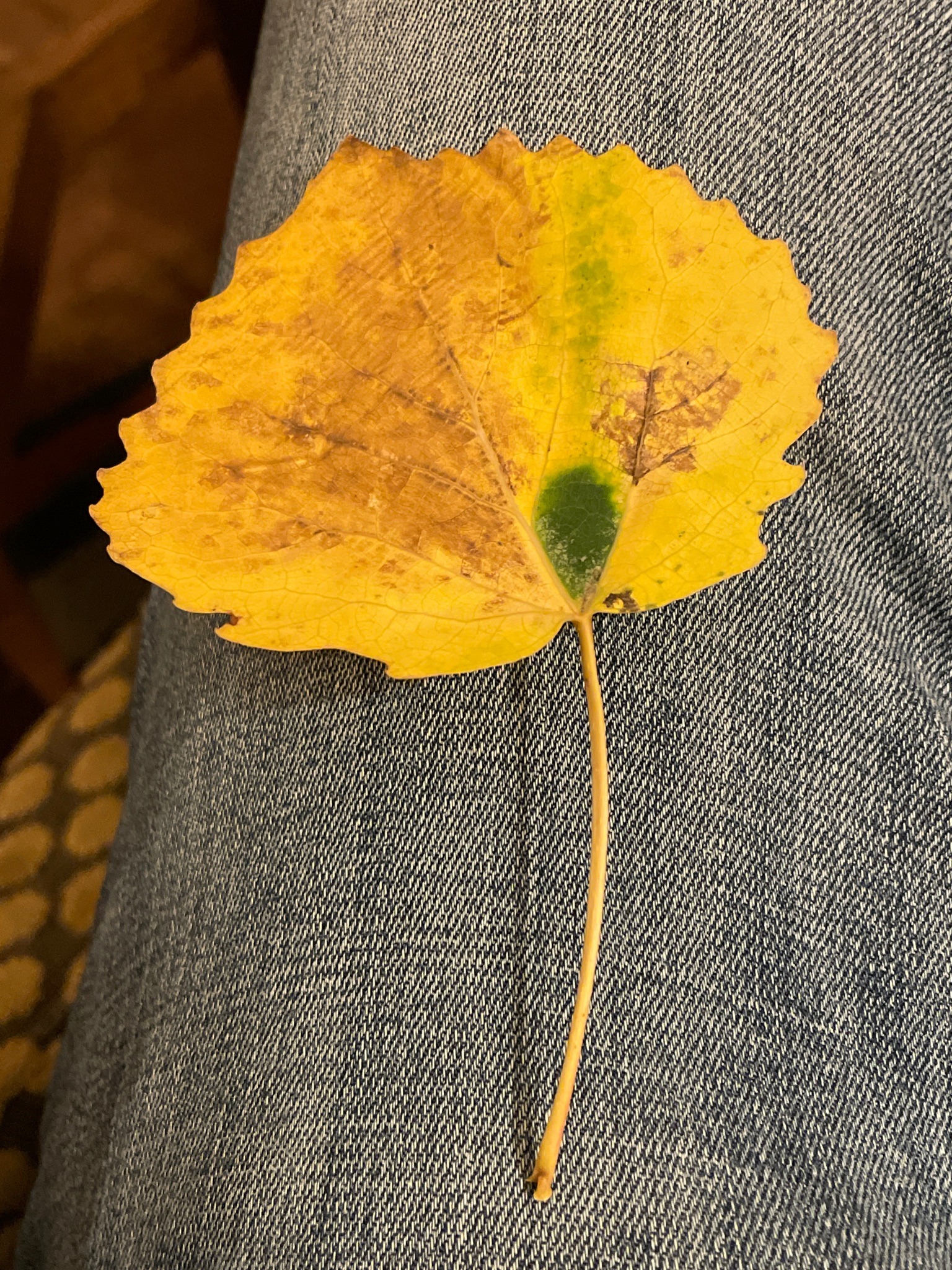
Quaking Aspen
Populus tremuloides
A medium-sized deciduous tree featuring rounded to broadly ovate leaves with finely crenate-serrate margins and flattened petioles that cause the leaves to tremble in the breeze. The leaves turn a brilliant yellow in autumn.
- Light
- Full sun, requiring at least 6 hours of direct sunlight per day.
- Water
- Prefers consistent moisture, especially during establishment and dry periods. Does not tolerate prolonged drought.
- Growth
- Perennial deciduous tree with a fast growth rate, typically reaching mature heights of 40 to 50 feet with a spread of 20 to 30 feet, often growing in clonal colonies connected by an extensive root system.
Care instructions
Provide full sun and consistently moist, well-draining soil. Avoid heavy or compacted soils. Apply a balanced fertilizer in early spring if growth is sluggish.
Growing details
Sunlight
Full sun, requiring at least 6 hours of direct sunlight per day.
Watering
Prefers consistent moisture, especially during establishment and dry periods. Does not tolerate prolonged drought.
Soil
Adaptable to a range of soil types including sandy, loamy, or clay soils, provided they are well-draining with a pH between 6.0 and 7.5.
Hardiness zone
USDA Zones 1 through 7
Growth habit
Perennial deciduous tree with a fast growth rate, typically reaching mature heights of 40 to 50 feet with a spread of 20 to 30 feet, often growing in clonal colonies connected by an extensive root system.
Bloom season
Spring, featuring drooping catkins before the leaves fully emerge.
Propagation
Propagated primarily through root sprouts (suckers) naturally produced by the clonal root system, or through hardwood and softwood cuttings.
Common pests & issues
Susceptible to cankers, leaf spots, rusts, borers, and defoliating insects. Ensuring good air circulation and avoiding mechanical injury to the bark helps prevent diseases.
Similar species
Bigtooth Aspen (Populus grandidentata), which can be distinguished by its coarser, more prominent leaf teeth.