
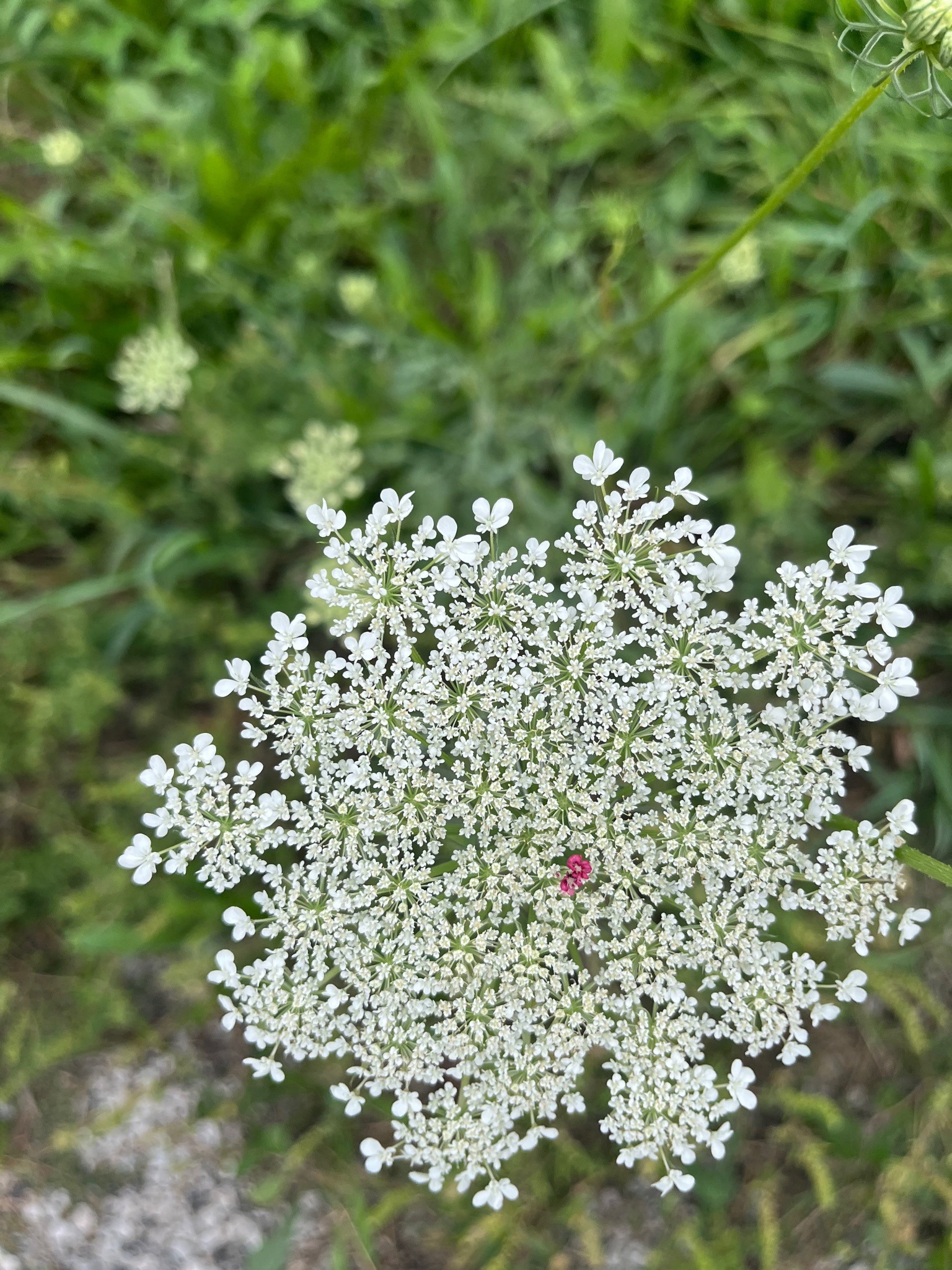
Queen Anne's lace
Daucus carota
A biennial herb featuring finely divided, fern-like leaves and flat-topped, lace-like clusters of tiny white flowers, often with a single dark purple or reddish flower positioned in the exact center.
- Light
- Full sun, requiring at least 6 to 8 hours of direct sunlight daily
- Water
- Low watering needs once established. Water occasionally during prolonged dry spells, letting the soil dry out thoroughly between waterings.
- Growth
- Biennial growing upright from a taproot, reaching heights of 1 to 4 feet with a spread of 1 to 2 feet, exhibiting a moderate to fast growth rate.
Care instructions
Thrives in full sun with average to poor, well-draining soils. Highly drought-tolerant once established and generally requires little to no supplemental fertilizer.
Growing details
Sunlight
Full sun, requiring at least 6 to 8 hours of direct sunlight daily
Watering
Low watering needs once established. Water occasionally during prolonged dry spells, letting the soil dry out thoroughly between waterings.
Soil
Prefers well-draining, sandy or loamy soils with a neutral to slightly alkaline pH, though it adapts well to poor soils.
Hardiness zone
USDA Hardiness Zones 3 through 9
Growth habit
Biennial growing upright from a taproot, reaching heights of 1 to 4 feet with a spread of 1 to 2 feet, exhibiting a moderate to fast growth rate.
Bloom season
Blooms from late spring through early autumn, producing large, compound umbels composed of numerous tiny white flowers.
Propagation
Propagated easily by scattering seeds directly onto the soil surface in spring or autumn.
Common pests & issues
Generally resilient against major pests and diseases, though occasionally susceptible to common fungal mildews in overly damp conditions.
Similar species
Look-alikes include Conium maculatum (poison hemlock), which can be distinguished by purple blotches on smooth stems and an unpleasant odor, whereas Daucus carota features hairy stems and finely dissected foliage.