
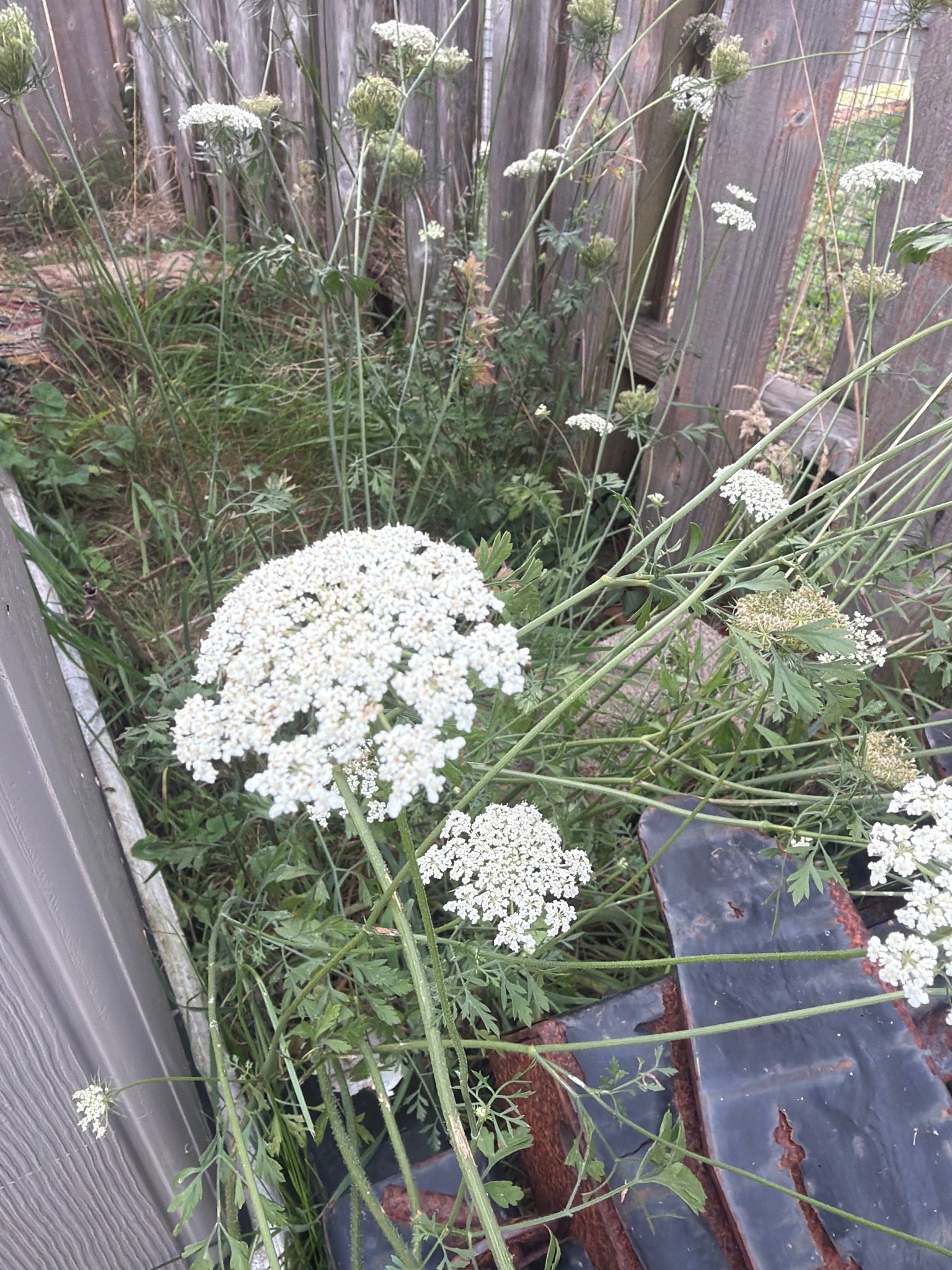
Queen Anne's lace
Daucus carota
An herbaceous plant featuring finely divided, fern-like leaves and flat-topped, lace-like clusters of tiny white flowers, often with a single dark purple floret in the center.
- Light
- Full sun, requiring at least 6 to 8 hours of direct sunlight daily
- Water
- Moderate moisture needs when young; highly drought-tolerant once established. Allow soil to dry between waterings.
- Growth
- Biennial or occasionally annual growing form reaching heights of 2 to 4 feet with a spread of 1 to 2 feet, featuring a slender upright stem and taproot system.
Care instructions
Provide full sun exposure and well-drained soil. Water deeply during establishment, though mature plants show strong drought tolerance. Fertilization is generally unnecessary and can lead to excessive foliage growth at the expense of flowering.
Growing details
Sunlight
Full sun, requiring at least 6 to 8 hours of direct sunlight daily
Watering
Moderate moisture needs when young; highly drought-tolerant once established. Allow soil to dry between waterings.
Soil
Adaptable to a wide range of soil types including clay, loam, and sand, provided there is good drainage. Prefers a neutral to slightly alkaline pH between 6.0 and 7.5.
Hardiness zone
USDA hardiness zones 3 through 9
Growth habit
Biennial or occasionally annual growing form reaching heights of 2 to 4 feet with a spread of 1 to 2 feet, featuring a slender upright stem and taproot system.
Bloom season
Blooms from late spring through mid-autumn, producing compound umbels of small white flowers.
Propagation
Propagated primarily through seed dispersal. Seeds can be collected from dried flower heads in autumn and sown directly into the soil.
Common pests & issues
Generally robust with few serious pest or disease problems, though susceptible to root-knot nematodes and fungal leaf spots in overly humid or poorly draining conditions.
Similar species
Similar to poison hemlock (Conium maculatum) and water dropwort, but distinguished by its hairy stems, distinct bracts beneath the flower clusters, and lack of purple blotches on the stem.