
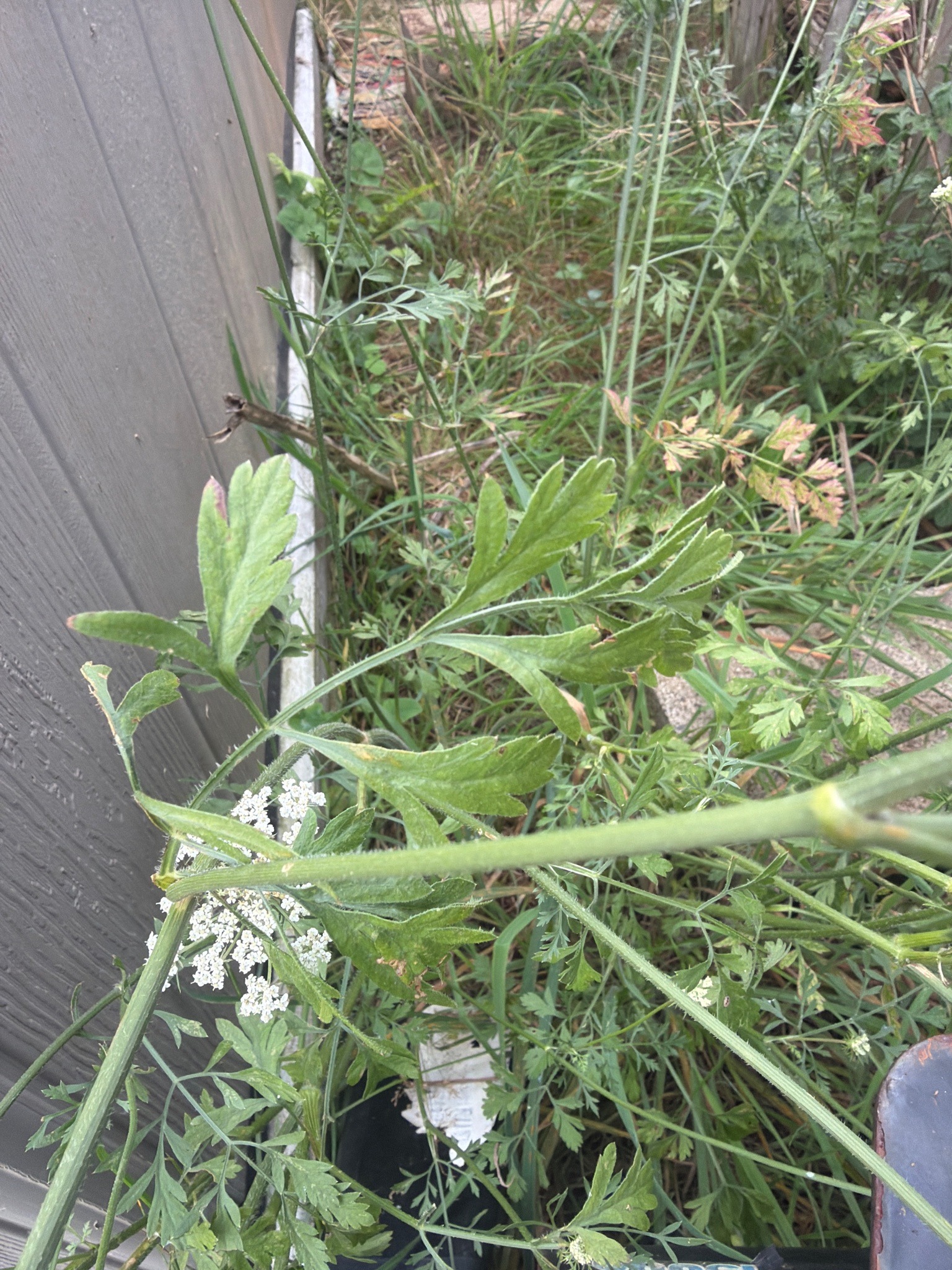
Queen Anne's lace
Daucus carota
An herbaceous plant featuring finely divided, fern-like leaves, hairy stems, and flat-topped clusters of small white flowers that often feature a single dark purple floret in the center.
- Light
- Full sun, requiring at least 6 hours of direct sunlight daily
- Water
- Low to moderate watering needs; allow soil to dry out between waterings. Highly drought tolerant once established.
- Growth
- Typically a biennial plant forming a low rosette of leaves in the first year, followed by a flowering stem growing 2 to 4 feet tall in the second year with a moderate to fast spread via seed.
Care instructions
Prefers full sun and well-draining soil. Highly adaptable to poor soils and drought tolerant once established. Water deeply during prolonged dry spells, but avoid waterlogged conditions.
Growing details
Sunlight
Full sun, requiring at least 6 hours of direct sunlight daily
Watering
Low to moderate watering needs; allow soil to dry out between waterings. Highly drought tolerant once established.
Soil
Adaptable to a wide range of soil types including clay, loam, and sandy soils, provided they are well-draining. Prefers a neutral to slightly alkaline pH range of 6.0 to 7.5.
Hardiness zone
USDA hardiness zones 3 to 9
Growth habit
Typically a biennial plant forming a low rosette of leaves in the first year, followed by a flowering stem growing 2 to 4 feet tall in the second year with a moderate to fast spread via seed.
Bloom season
Late spring through mid-autumn, producing compound umbels of tiny white flowers, sometimes featuring a characteristic dark purple central flower.
Propagation
Propagated easily by seeds scattered directly onto the soil surface in spring or autumn, requiring light for germination.
Common pests & issues
Generally resilient against major pests and diseases, though can occasionally be affected by powdery mildew or carrot rust fly in certain agricultural settings.
Similar species
Look-alikes include poison hemlock (Conium maculatum) and water hemlock (Cicuta species); Queen Anne's lace can be distinguished by its hairy stems, distinctly lacy bracts beneath the flower clusters, and lack of purple blotches on the stem.