
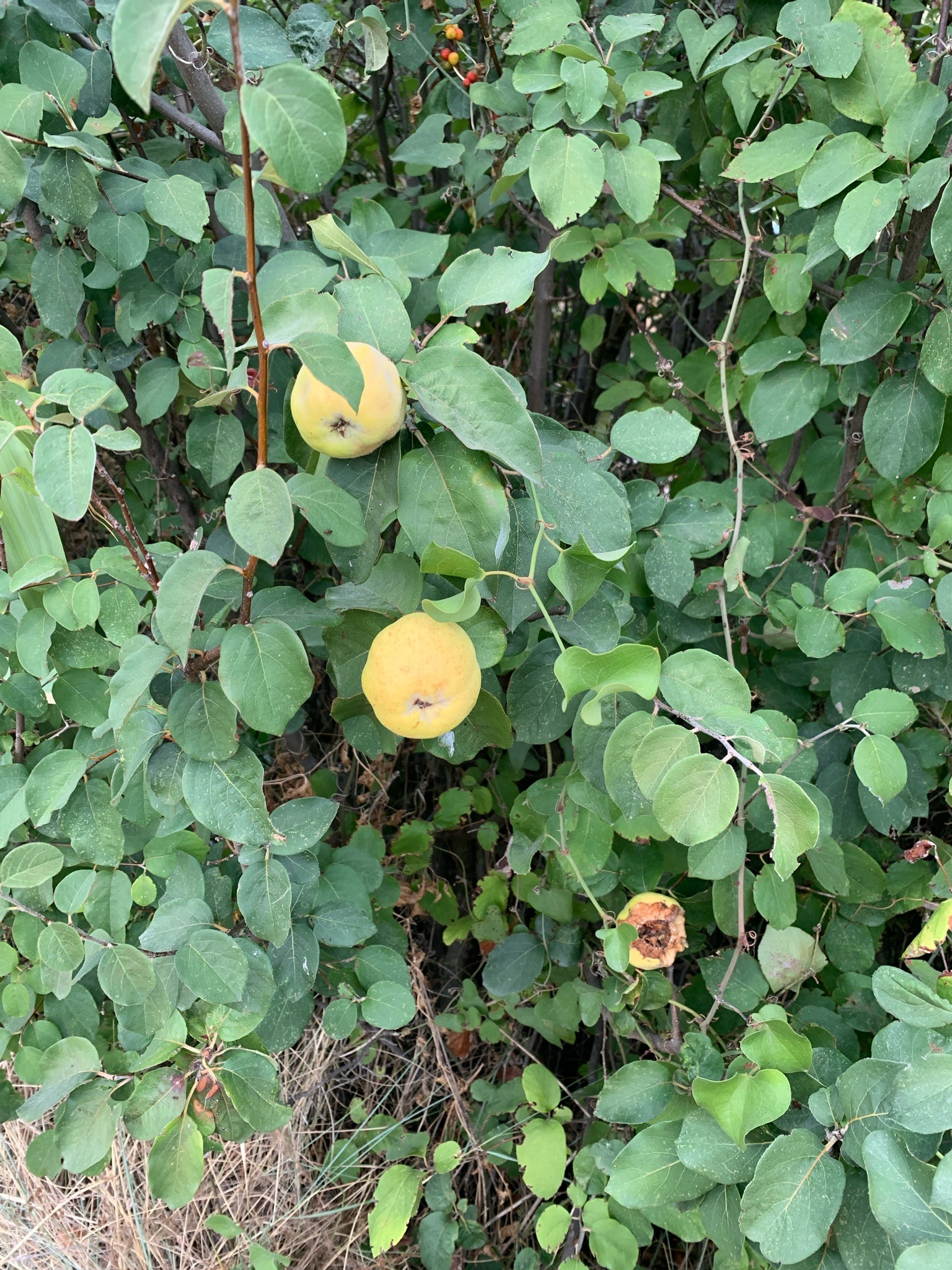
Quince
Cydonia oblonga
A deciduous shrub or small tree bearing simple, alternate, oval-shaped green leaves with hairy undersides and distinctive, fragrant, hard, yellow pome fruits that resemble lumpy pears.
- Light
- Full sun, requiring at least six to eight hours of direct sunlight daily
- Water
- Moderate water needs; allow the top few inches of soil to dry out between waterings. Drought tolerant once fully established.
- Growth
- Perennial deciduous woody shrub or small tree growing typically between 10 and 20 feet in height with a similar spread, featuring a somewhat crooked or irregular branching habit and moderate growth rate.
Care instructions
Provide full sun exposure for optimal flowering and fruit development. Water regularly during the first growing season to establish deep root systems, then moderately as established specimens have moderate drought tolerance. Apply a balanced, slow-release fertilizer in early spring.
Growing details
Sunlight
Full sun, requiring at least six to eight hours of direct sunlight daily
Watering
Moderate water needs; allow the top few inches of soil to dry out between waterings. Drought tolerant once fully established.
Soil
Prefers well-draining, fertile loamy soils with a neutral to slightly acidic pH range between 6.0 and 7.0.
Hardiness zone
USDA Hardiness Zones 5 through 9
Growth habit
Perennial deciduous woody shrub or small tree growing typically between 10 and 20 feet in height with a similar spread, featuring a somewhat crooked or irregular branching habit and moderate growth rate.
Bloom season
Spring, producing showy, solitary white or pale pink five-petaled cup-shaped flowers.
Propagation
Propagated via hardwood cuttings taken in late autumn or winter, or by grafting onto rootstocks, and occasionally from seed.
Common pests & issues
Susceptible to fungal pathogens such as fire blight and leaf spot, as well as pests like aphids and codling moth. Ensure good air circulation and prune away affected branches promptly.
Similar species
Flowering Quince (Chaenomeles speciosa), which is typically grown primarily for dense ornamental spring blooms rather than large pear-shaped fruit.