
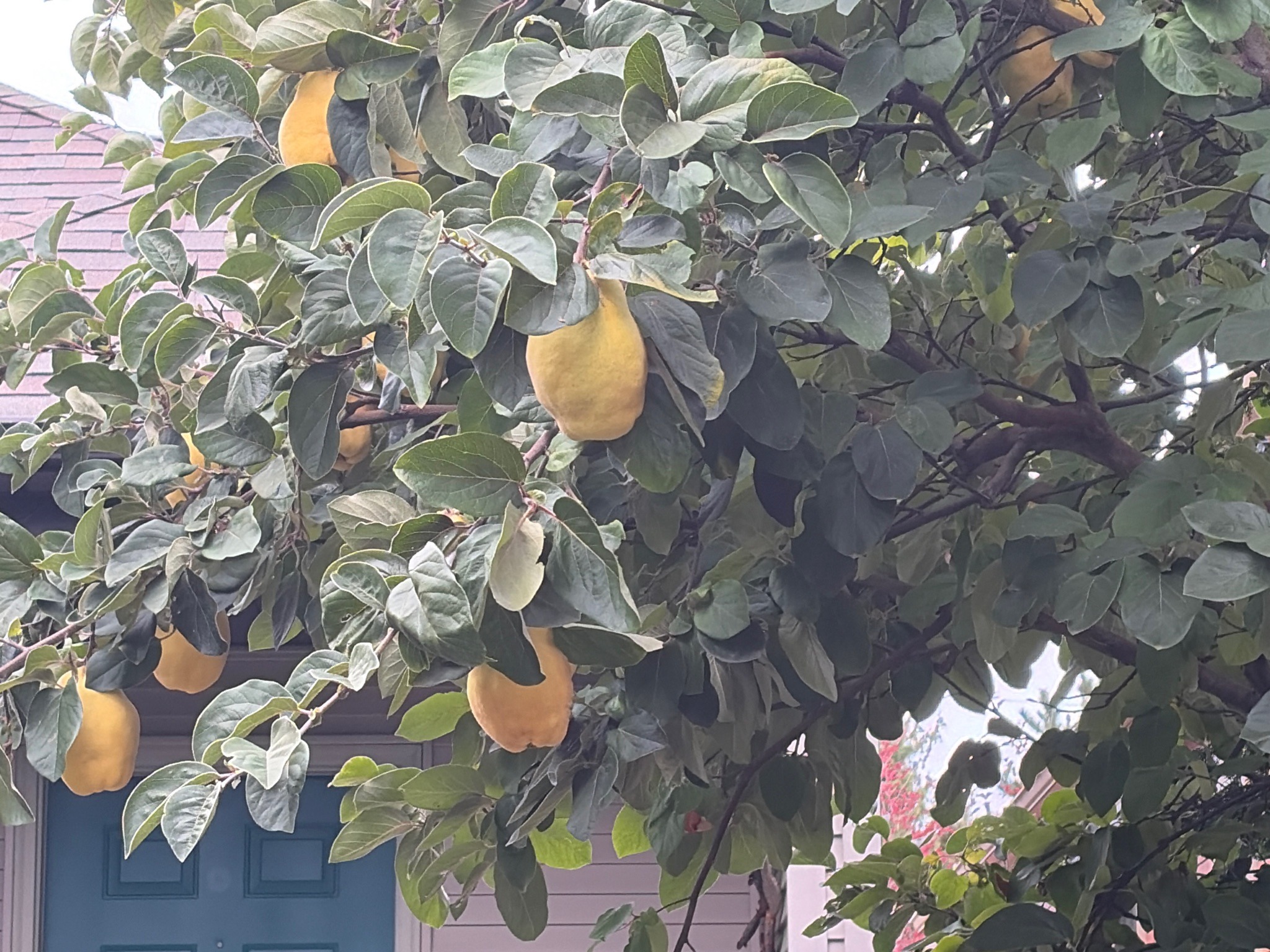
Quince
Cydonia oblonga
A small deciduous tree or large shrub bearing alternating, simple, ovate leaves with felted gray-white hairs underneath, and large, bright yellow, pear-shaped or apple-shaped pome fruits.
- Light
- Full sun, requiring at least six hours of direct sunlight daily.
- Water
- Moderate watering needs. Water deeply once a week during dry spells, allowing the soil to dry slightly between watering sessions. Established plants have moderate drought tolerance.
- Growth
- Perennial deciduous tree or large shrub with a twiggy, crooked growth form, reaching heights and spreads of 3 to 5 meters with a slow to moderate growth rate.
Care instructions
Plant in full sun in well-draining loam with a neutral to slightly acidic pH. Water regularly during the establishment phase and periods of extended drought. Apply a balanced organic fertilizer in early spring.
Growing details
Sunlight
Full sun, requiring at least six hours of direct sunlight daily.
Watering
Moderate watering needs. Water deeply once a week during dry spells, allowing the soil to dry slightly between watering sessions. Established plants have moderate drought tolerance.
Soil
Prefers fertile, well-draining loamy soils with a pH ranging from 6.0 to 7.0, though it adapts well to clay soils as long as drainage is adequate.
Hardiness zone
USDA Hardiness Zones 5 through 9.
Growth habit
Perennial deciduous tree or large shrub with a twiggy, crooked growth form, reaching heights and spreads of 3 to 5 meters with a slow to moderate growth rate.
Bloom season
Late spring, producing solitary, showy pale pink or white flowers measuring about 5 centimeters across.
Propagation
Propagated primarily through hardwood cuttings in winter, or by grafting onto rootstocks in spring, as well as by seed.
Common pests & issues
Susceptible to fire blight, powdery mildew, and brown rot. Managed by pruning out infected branches, maintaining good air circulation, and utilizing appropriate copper-based dormant sprays.
Similar species
Apples (Malus domestica) and Pears (Pyrus communis), but distinguished by its conspicuously fuzzy, woolly young foliage and distinctly pear-shaped or lumpy golden fruit covered in fine down when young.