
Radish (Seedlings)
Raphanus sativus
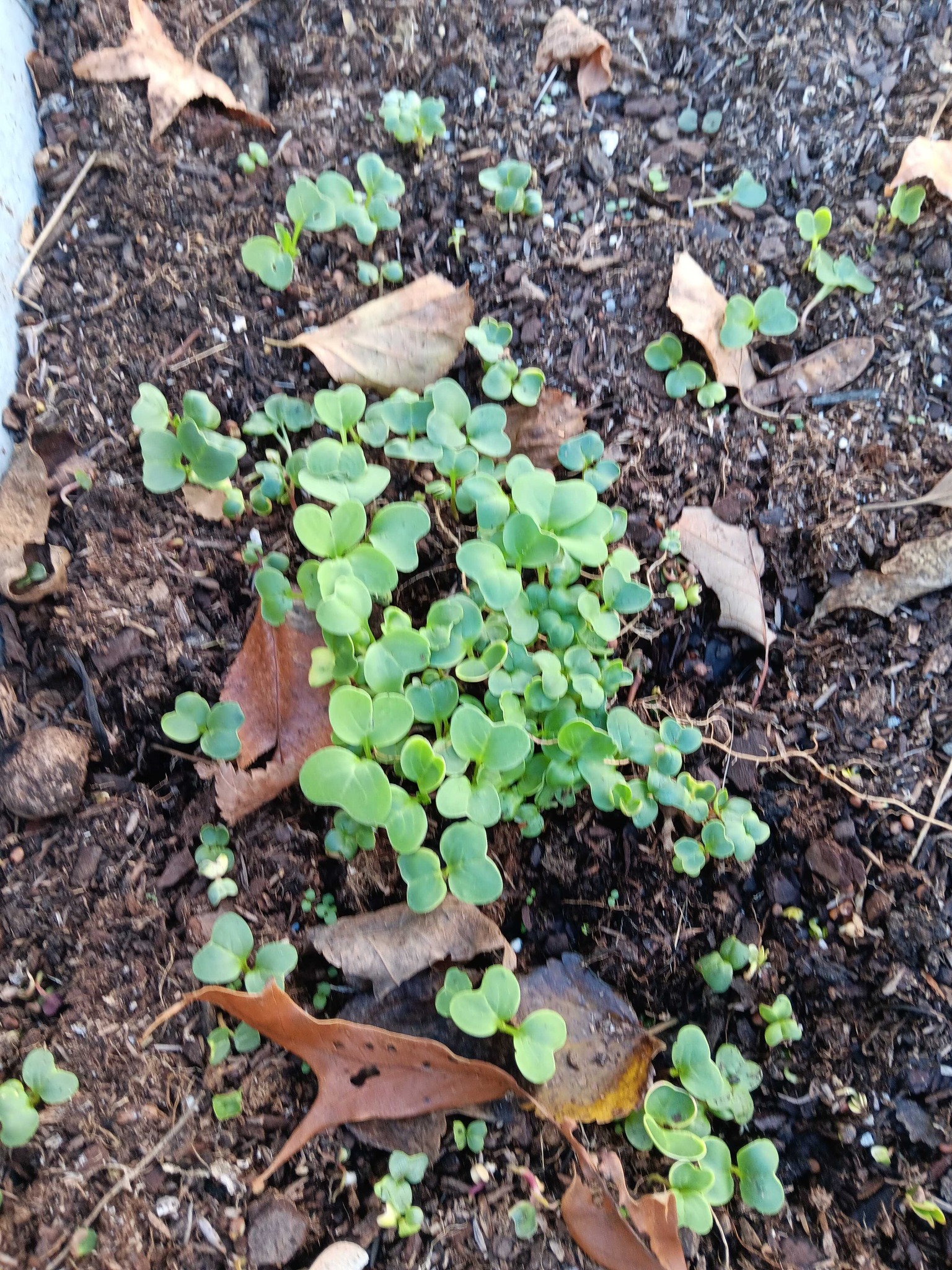
The image shows very young plant seedlings, specifically in the cotyledon stage, displaying distinct heart-shaped or indented seed leaves (cotyledons) attached to thin stems emerging from dark, organic-rich soil.
- Light
- Full sun, requiring a minimum of 6 hours of direct sunlight per day.
- Water
- Moderate and consistent watering needs. Keep the soil evenly moist to support rapid early development, allowing the top layer to dry slightly between waterings.
- Growth
- Fast-growing herbaceous annual featuring a compact rosette growth habit during early stages, eventually developing an enlarged hypocotyl storage root, reaching a mature height of 6 to 18 inches.
Care instructions
Provide bright, direct light for at least 6 hours daily to prevent leggy growth. Keep the soil consistently moist but well-drained, avoiding waterlogged conditions. Maintain cool to moderate temperatures and thin the seedlings once true leaves appear to prevent overcrowding.
Growing details
Sunlight
Full sun, requiring a minimum of 6 hours of direct sunlight per day.
Watering
Moderate and consistent watering needs. Keep the soil evenly moist to support rapid early development, allowing the top layer to dry slightly between waterings.
Soil
Loose, loamy, well-draining soil with an optimal pH range of 6.0 to 7.0.
Hardiness zone
Typically grown as an annual across USDA zones 2 through 11.
Growth habit
Fast-growing herbaceous annual featuring a compact rosette growth habit during early stages, eventually developing an enlarged hypocotyl storage root, reaching a mature height of 6 to 18 inches.
Bloom season
Spring or autumn if allowed to bolt; produces delicate white to pale pink flowers with four petals arranged in a cross shape.
Propagation
Propagated exclusively from seeds sown directly into the soil at a depth of about one-half inch.
Common pests & issues
Vulnerable to damping-off disease in overly wet soil conditions. Pests such as flea beetles can damage young cotyledons; use floating row covers to protect early growth.
Similar species
Other young Brassicaceae seedlings such as turnips or mustard greens, which share similar heart-shaped cotyledons in their earliest stages of development.