
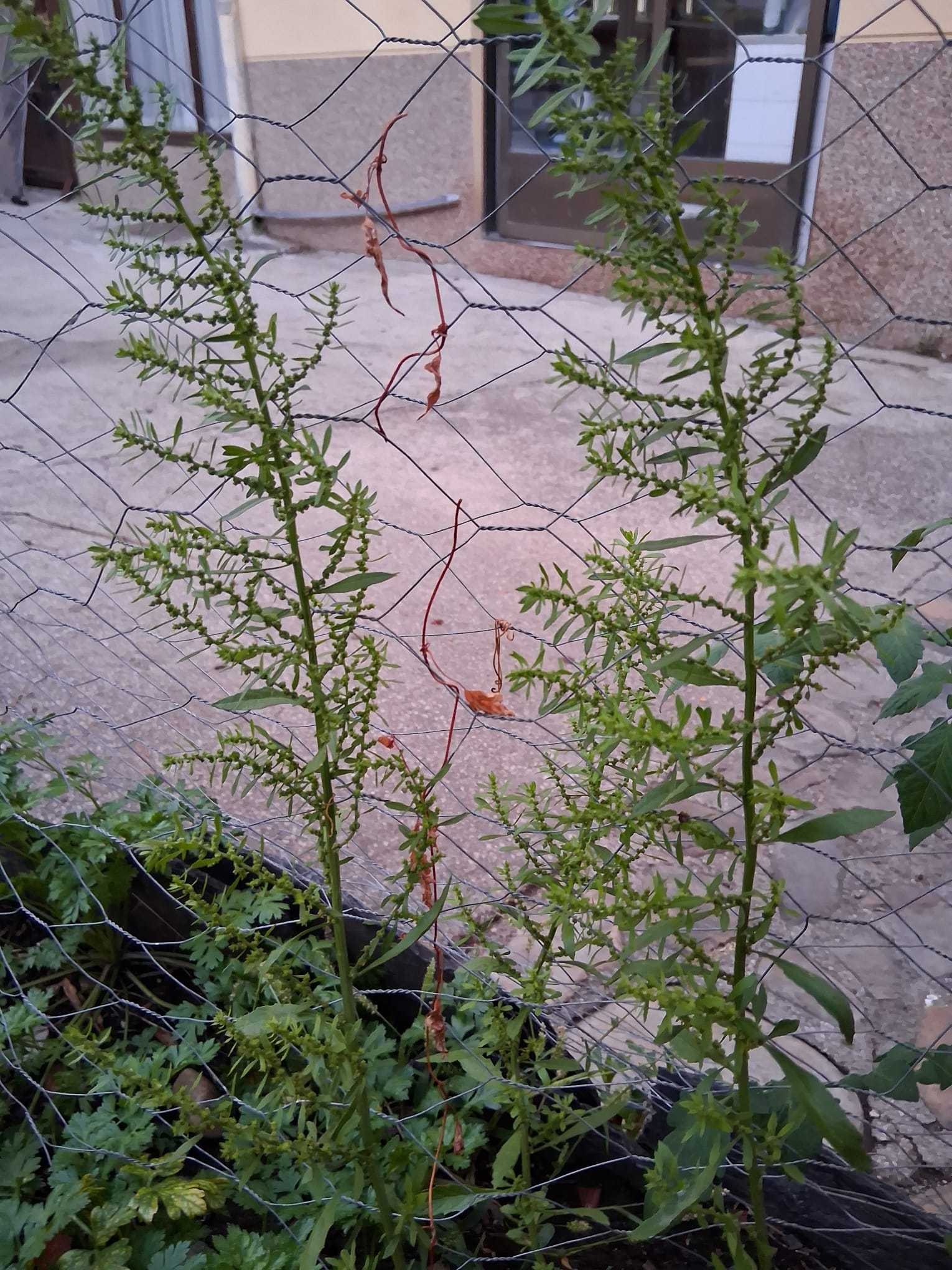
Ragweed
Ambrosia artemisiifolia
An upright, branching herbaceous plant with deeply lobed, fern-like leaves and inconspicuous green flowers arranged in long, spike-like terminal clusters.
- Light
- Full sun, requiring 6 to 8 hours of direct sunlight daily.
- Water
- Moderate water requirements. Tolerates brief dry spells once established, but prefers consistently moist, well-drained conditions.
- Growth
- An annual herbaceous plant with an upright, branching growth form, reaching mature heights of 1 to 5 feet with a spread of 1 to 2 feet, exhibiting rapid growth during the spring and summer months.
Care instructions
Requires full sun exposure and well-draining soil. Naturally occurring in disturbed soils with moderate moisture needs, though typically managed as a wild weed rather than cultivated ornamentally.
Growing details
Sunlight
Full sun, requiring 6 to 8 hours of direct sunlight daily.
Watering
Moderate water requirements. Tolerates brief dry spells once established, but prefers consistently moist, well-drained conditions.
Soil
Adapts to a wide range of soil types including sandy, loamy, and clay soils, provided drainage is adequate. Prefers a neutral to slightly acidic pH range of 6.0 to 7.0.
Hardiness zone
USDA Hardiness Zones 3 through 9.
Growth habit
An annual herbaceous plant with an upright, branching growth form, reaching mature heights of 1 to 5 feet with a spread of 1 to 2 feet, exhibiting rapid growth during the spring and summer months.
Bloom season
Blooms from mid-summer through autumn, producing small, greenish, inconspicuous male and female flowers clustered separately on the same plant without notable fragrance.
Propagation
Propagates exclusively by seed, which are produced in large quantities and disperse easily via wind and water to germinate in disturbed soils during the spring.
Common pests & issues
Susceptible to various general garden pests such as aphids and leaf miners, as well as fungal leaf spot diseases in overly humid or damp conditions.
Similar species
Can be confused with mugwort (Artemisia vulgaris) or various goldenrod species in their vegetative stages, but can be distinguished by the specific texture, alternate vs. opposite lower leaf arrangements, and the lack of distinct aromatic foliage present in members of the Artemisia genus.