
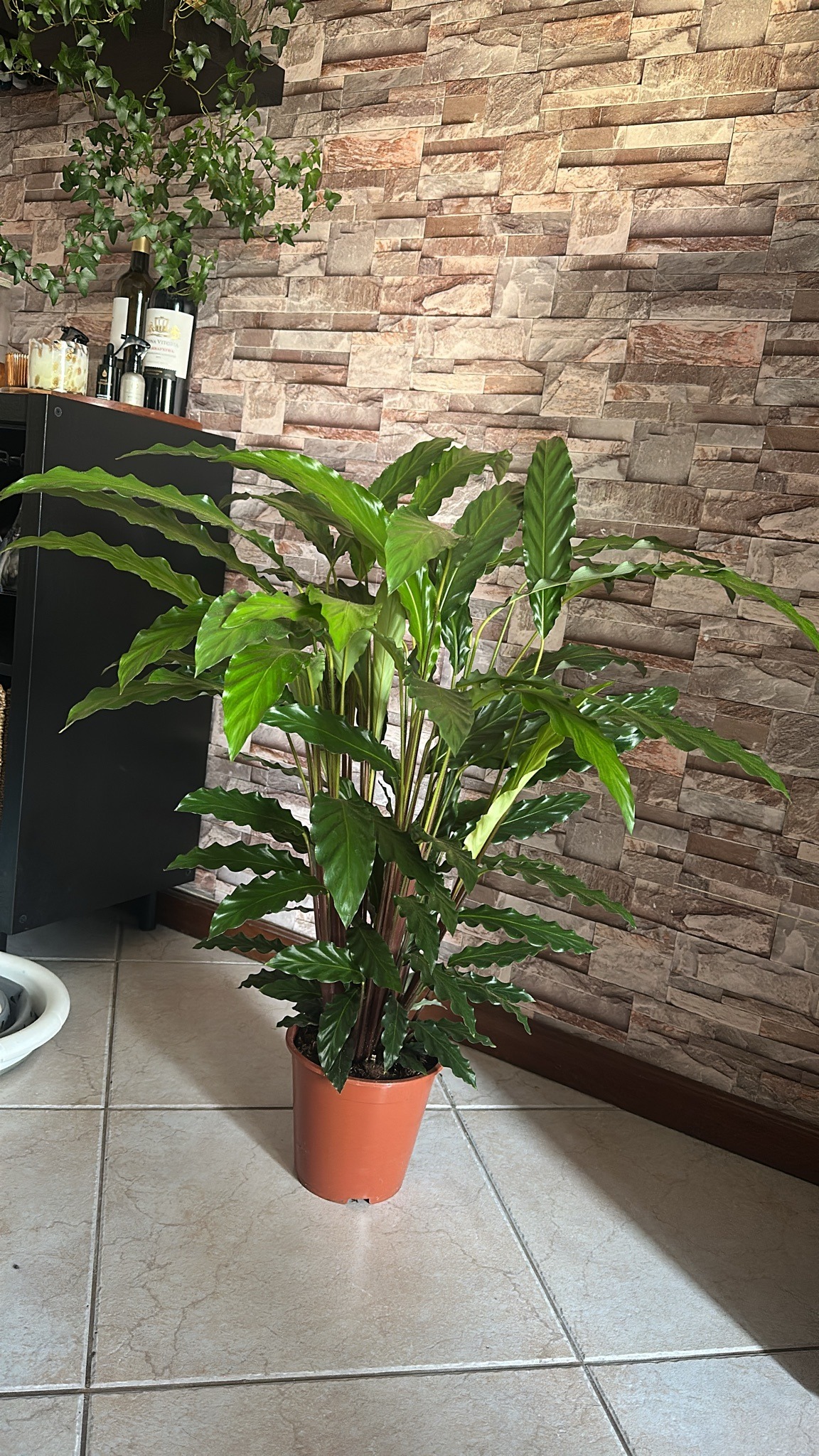
Rattlesnake Plant (also known as Calathea lancifolia)
Goeppertia insignis (formerly Calathea lancifolia)
Features long, slender, light green leaves with dark green oval blotches along the margins and deep purple undersides, with ruffled leaf edges.
- Light
- Bright indirect light, about 6 to 8 hours daily; avoid direct sun which can bleach the foliage.
- Water
- Water when the top inch of soil feels dry. Highly sensitive to chemicals in tap water, so filtered or rainwater is preferred.
- Growth
- Clumping herbaceous perennial growing up to 2 to 3 feet in height and spread, with an upright to arching growth form.
Care instructions
Provide bright, indirect sunlight, keep the soil consistently moist but never waterlogged, use well-draining organic soil, and fertilize lightly during the active growing season.
Growing details
Sunlight
Bright indirect light, about 6 to 8 hours daily; avoid direct sun which can bleach the foliage.
Watering
Water when the top inch of soil feels dry. Highly sensitive to chemicals in tap water, so filtered or rainwater is preferred.
Soil
Rich, well-draining potting mix containing peat moss, perlite, and organic matter with a slightly acidic to neutral pH between 6.0 and 6.5.
Hardiness zone
USDA hardiness zones 11 to 12; strictly grown as a houseplant in cooler temperate regions.
Growth habit
Clumping herbaceous perennial growing up to 2 to 3 feet in height and spread, with an upright to arching growth form.
Bloom season
Rarely blooms indoors; produces small, insignificant yellow or white flowers when mature in optimal greenhouse conditions.
Propagation
Propagated primarily through root division during repotting in the spring.
Common pests & issues
Prone to spider mites and fungus gnats if humidity is too low or soil is kept overly soggy; leaf tip browning can occur from dry air or tap water chemicals.
Similar species
Gooeppertia zebrina (Zebra Plant), which has broader, velvety leaves with light green stripes rather than dark spots.