
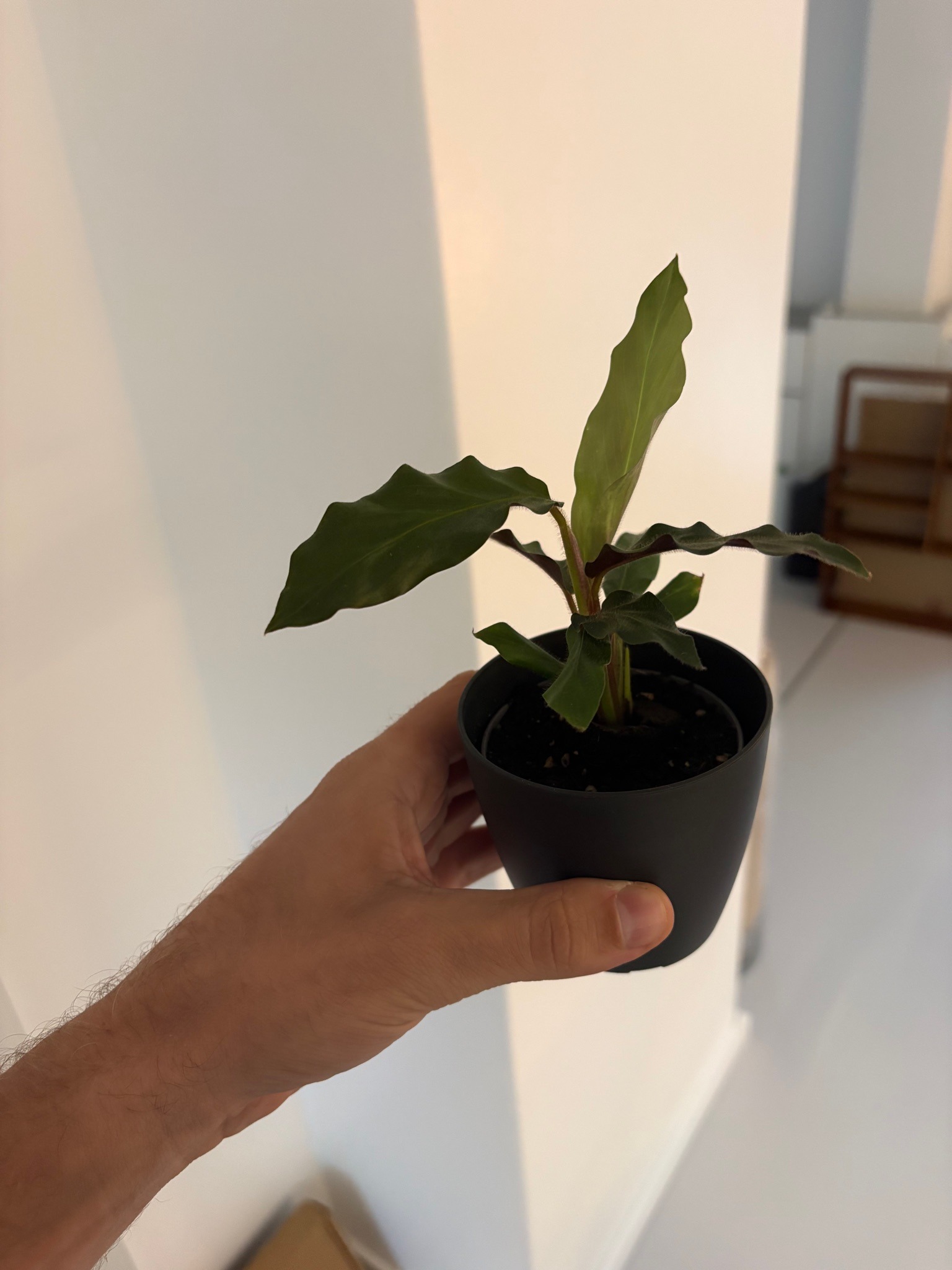
Rattlesnake Plant
Goeppertia insignis
A compact perennial houseplant featuring long, narrow, undulating leaves with distinct dark green blotches and a deep purple underside.
- Light
- Bright, indirect light for 6 to 8 hours daily; avoid direct sun to prevent leaf scorching.
- Water
- Water thoroughly whenever the top inch of soil feels dry. Use filtered or rainwater if possible, as tap water minerals can cause leaf tip browning.
- Growth
- Clumping herbaceous perennial growing to a mature height and spread of 1 to 2 feet with a moderate growth rate.
Care instructions
Provide bright, indirect sunlight and keep the soil consistently moist but never waterlogged. Maintain high ambient humidity and apply a balanced liquid fertilizer monthly during the spring and summer growing seasons.
Growing details
Sunlight
Bright, indirect light for 6 to 8 hours daily; avoid direct sun to prevent leaf scorching.
Watering
Water thoroughly whenever the top inch of soil feels dry. Use filtered or rainwater if possible, as tap water minerals can cause leaf tip browning.
Soil
Well-draining, peat-based potting mix that retains moisture well, with an acidic to neutral pH range of 5.5 to 6.5.
Hardiness zone
USDA hardiness zones 10 to 11 when grown outdoors; primarily cultivated as an indoor houseplant in cooler climates.
Growth habit
Clumping herbaceous perennial growing to a mature height and spread of 1 to 2 feet with a moderate growth rate.
Bloom season
Rarely blooms indoors; produces small, insignificant yellow or white flowers on short spikes when mature in ideal tropical conditions.
Propagation
Propagated primarily through root division during the spring repotting season by gently separating established clumps.
Common pests & issues
Susceptible to spider mites and mealybugs when humidity is too low. Brown leaf tips typically indicate low humidity, underwatering, or sensitivity to tap water chemicals.
Similar species
Gooeppertia lancifolia, which shares long lance-shaped foliage but features more prominent spots and different leaf margin patterns.