
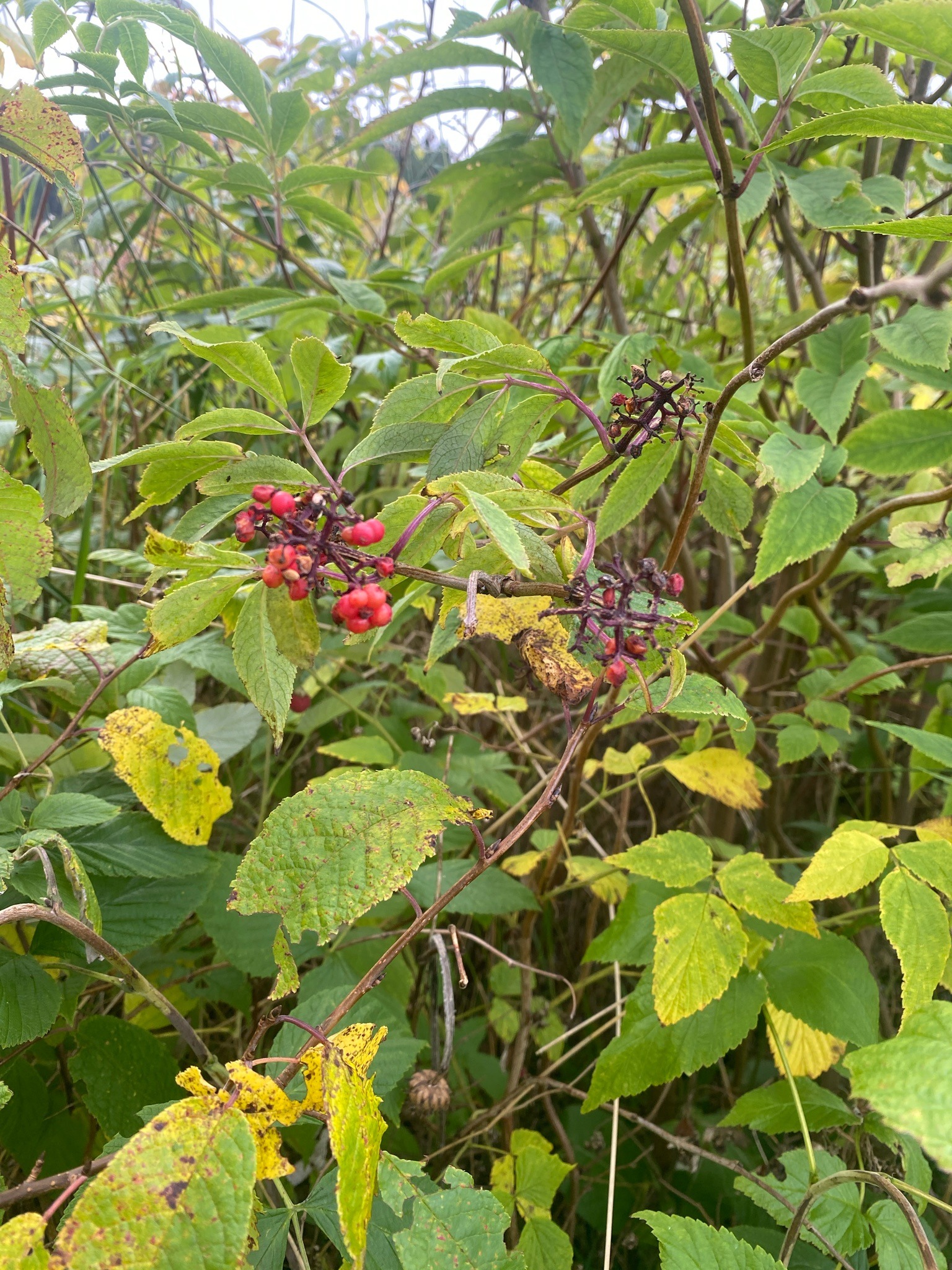
Red Elderberry
Sambucus racemosa
A deciduous shrub featuring opposite, pinnately compound leaves with serrated leaflets, and clusters of small, bright red berries maturing from pyramidal flower clusters.
- Light
- Full sun to partial shade, approximately 6 to 8 hours of direct sunlight daily for optimal development.
- Water
- High moisture requirements; prefers consistently moist, well-drained soils and does not tolerate prolonged drought.
- Growth
- A multi-stemmed deciduous shrub growing typically 10 to 20 feet tall and wide with an upright, spreading habit and moderate to fast growth rate.
Care instructions
Provide full sun to partial shade in moist, well-draining soils rich in organic matter. Water regularly to maintain even soil moisture, and prune lightly after flowering to maintain shape.
Growing details
Sunlight
Full sun to partial shade, approximately 6 to 8 hours of direct sunlight daily for optimal development.
Watering
High moisture requirements; prefers consistently moist, well-drained soils and does not tolerate prolonged drought.
Soil
Adaptable to various soil types including loam, clay, and sandy soils, provided they have good drainage and a neutral to slightly acidic pH range of 5.5 to 7.0.
Hardiness zone
USDA Hardiness Zones 3 through 7
Growth habit
A multi-stemmed deciduous shrub growing typically 10 to 20 feet tall and wide with an upright, spreading habit and moderate to fast growth rate.
Bloom season
Spring, producing small, creamy-white to yellowish flower clusters shaped in rounded or pyramidal panicles.
Propagation
Propagated easily through hardwood or softwood cuttings taken in spring or summer, as well as by sowing stratified seeds.
Common pests & issues
Susceptible to occasional aphid infestations, stem borers, and fungal leaf spots, which can be managed with proper air circulation and standard cultural controls.
Similar species
Can be distinguished from American Elderberry (Sambucus canadensis) by its bright red fruit clusters compared to the dark purple or black fruits of the latter.