
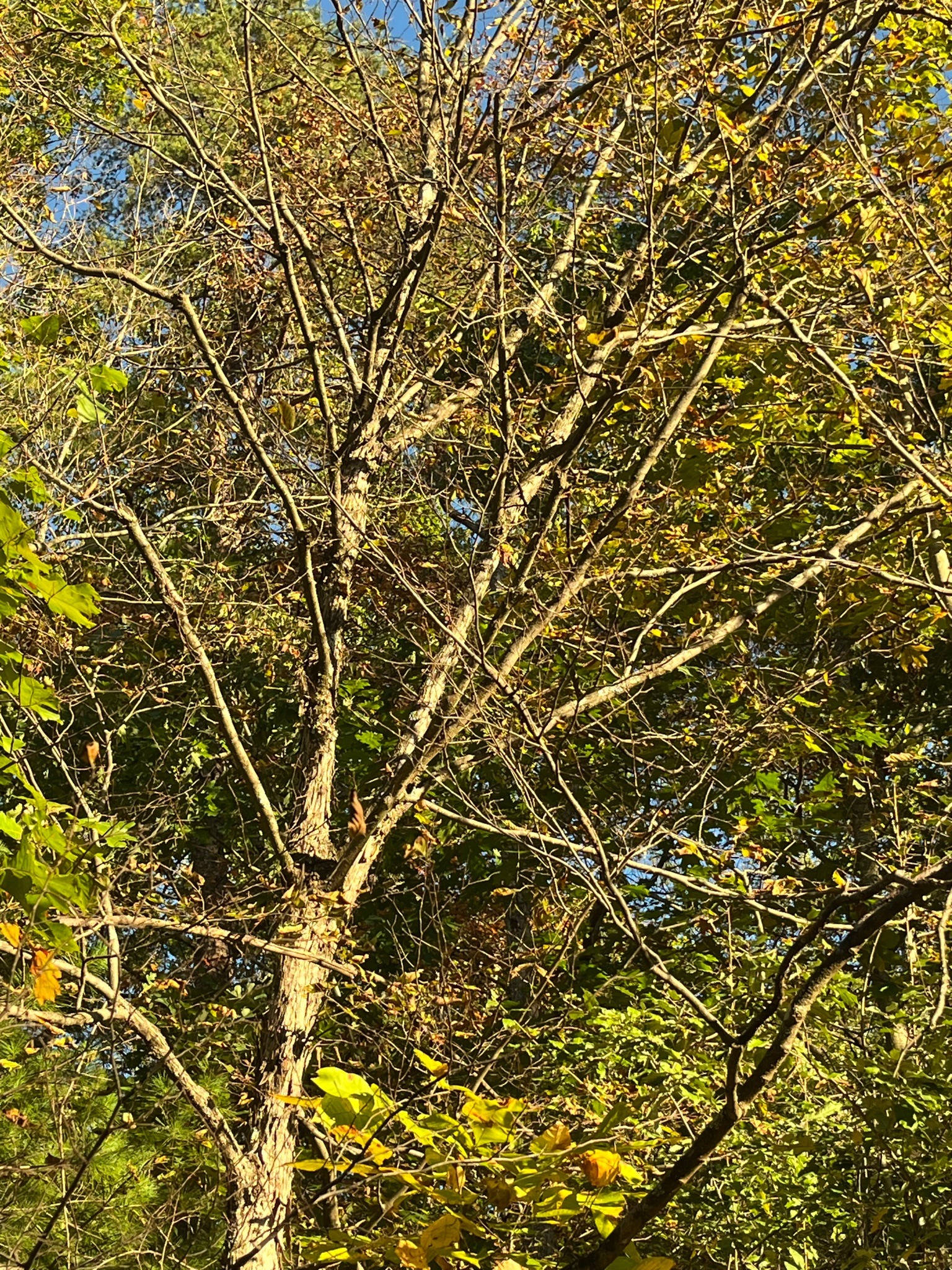
Red Maple
Acer rubrum
A medium to large deciduous tree featuring a dense canopy, smooth gray bark on younger trunks that darkens and develops ridges with age, and lobed leaves that transition to brilliant red and orange autumn colors.
- Light
- Full sun to partial shade, requiring at least six hours of direct sunlight daily.
- Water
- Requires regular watering to keep soil moist, especially during dry spells. Highly sensitive to prolonged drought and prefers consistently damp conditions without waterlogging.
- Growth
- Deciduous tree with an upright, oval to rounded crown, growing to a mature height of 40 to 70 feet and a spread of 30 to 50 feet with a moderate to fast growth rate.
Care instructions
Plant in a location receiving ample sunlight with consistently moist, well-draining soil. Apply a layer of organic mulch around the root zone to retain soil moisture and supply balanced slow-release fertilizer in early spring.
Growing details
Sunlight
Full sun to partial shade, requiring at least six hours of direct sunlight daily.
Watering
Requires regular watering to keep soil moist, especially during dry spells. Highly sensitive to prolonged drought and prefers consistently damp conditions without waterlogging.
Soil
Adaptable to various soil types including clay, loam, and sand, but thrives best in acidic, moist, well-draining soils with a pH between 4.5 and 6.5.
Hardiness zone
USDA Hardiness Zones 3 through 9.
Growth habit
Deciduous tree with an upright, oval to rounded crown, growing to a mature height of 40 to 70 feet and a spread of 30 to 50 feet with a moderate to fast growth rate.
Bloom season
Blooms in early spring before leaf emergence, producing small clusters of red flowers that lack petals.
Propagation
Propagated primarily through seed sown in autumn or by softwood cuttings taken in late spring and treated with rooting hormone.
Common pests & issues
Susceptible to aphids, scale insects, leafhoppers, and verticillium wilt, as well as stem cankers. Prevent by maintaining proper tree vigor and avoiding mechanical injury to the bark.
Similar species
Silver Maple (Acer saccharinum) and Sugar Maple (Acer saccharum). Red maple is distinguished by its shorter leaf lobes and distinctly serrated margins compared to sugar maple, and less deeply cut sinuses than silver maple.