
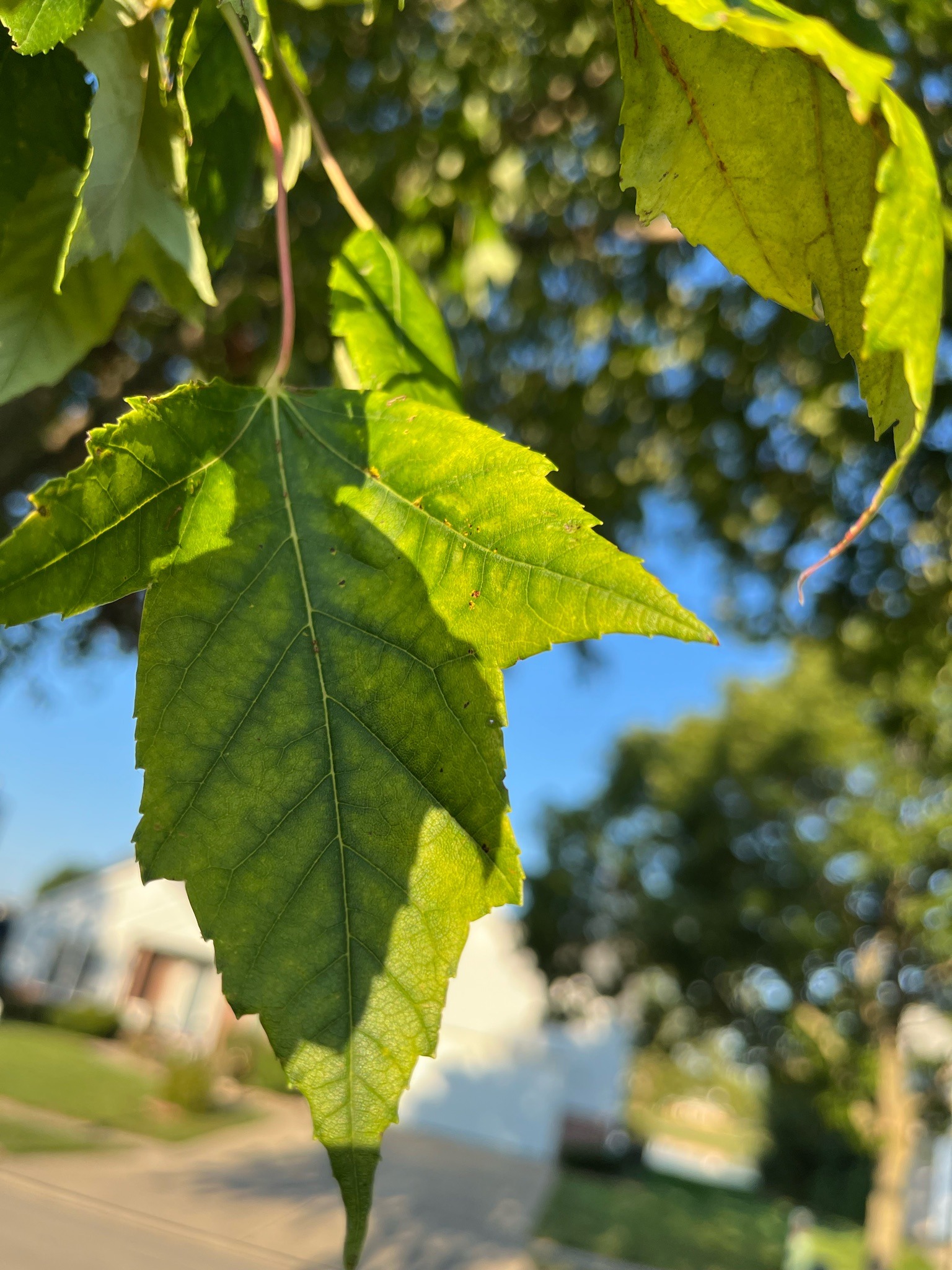
Red Maple
Acer rubrum
A medium to large deciduous tree featuring oppositely arranged, palmately lobed green leaves with serrated margins, which transition to vibrant shades of red and orange in autumn.
- Light
- Full sun to partial shade, requiring at least 6 hours of direct sunlight daily for optimal foliage color.
- Water
- Prefers consistently moist soil and does not tolerate prolonged drought. Water deeply once a week during dry periods, allowing the top layer of soil to remain slightly damp.
- Growth
- A fast-to-moderate growing deciduous tree reaching heights of 40 to 70 feet and spreads of 30 to 50 feet with an upright, rounded canopy.
Care instructions
Provide full sun to partial shade with consistently moist, well-draining acidic soil. Water deeply during dry spells and apply a balanced fertilizer in early spring if soil nutrients are lacking.
Growing details
Sunlight
Full sun to partial shade, requiring at least 6 hours of direct sunlight daily for optimal foliage color.
Watering
Prefers consistently moist soil and does not tolerate prolonged drought. Water deeply once a week during dry periods, allowing the top layer of soil to remain slightly damp.
Soil
Thrives in rich, loamy, acidic soils with good moisture retention, but adapts well to clay or sand, with an ideal pH range between 4.5 and 6.5.
Hardiness zone
USDA zones 3 through 9, demonstrating strong adaptability to varying winter lows and summer highs.
Growth habit
A fast-to-moderate growing deciduous tree reaching heights of 40 to 70 feet and spreads of 30 to 50 feet with an upright, rounded canopy.
Bloom season
Flowers in early spring before the leaves emerge, producing small red to reddish-orange clusters of flowers.
Propagation
Propagated primarily through semi-hardwood cuttings taken in summer or by planting fresh seeds gathered in late spring.
Common pests & issues
Susceptible to aphids, scale insects, leafhoppers, and fungal leaf spot diseases. Prevent issues by ensuring adequate air circulation and avoiding overhead watering.
Similar species
Silver Maple (Acer saccharinum), which has deeper leaf sinuses and silvery undersides, and Sugar Maple (Acer saccharum), which features fewer serrations and U-shaped leaf sinuses.