
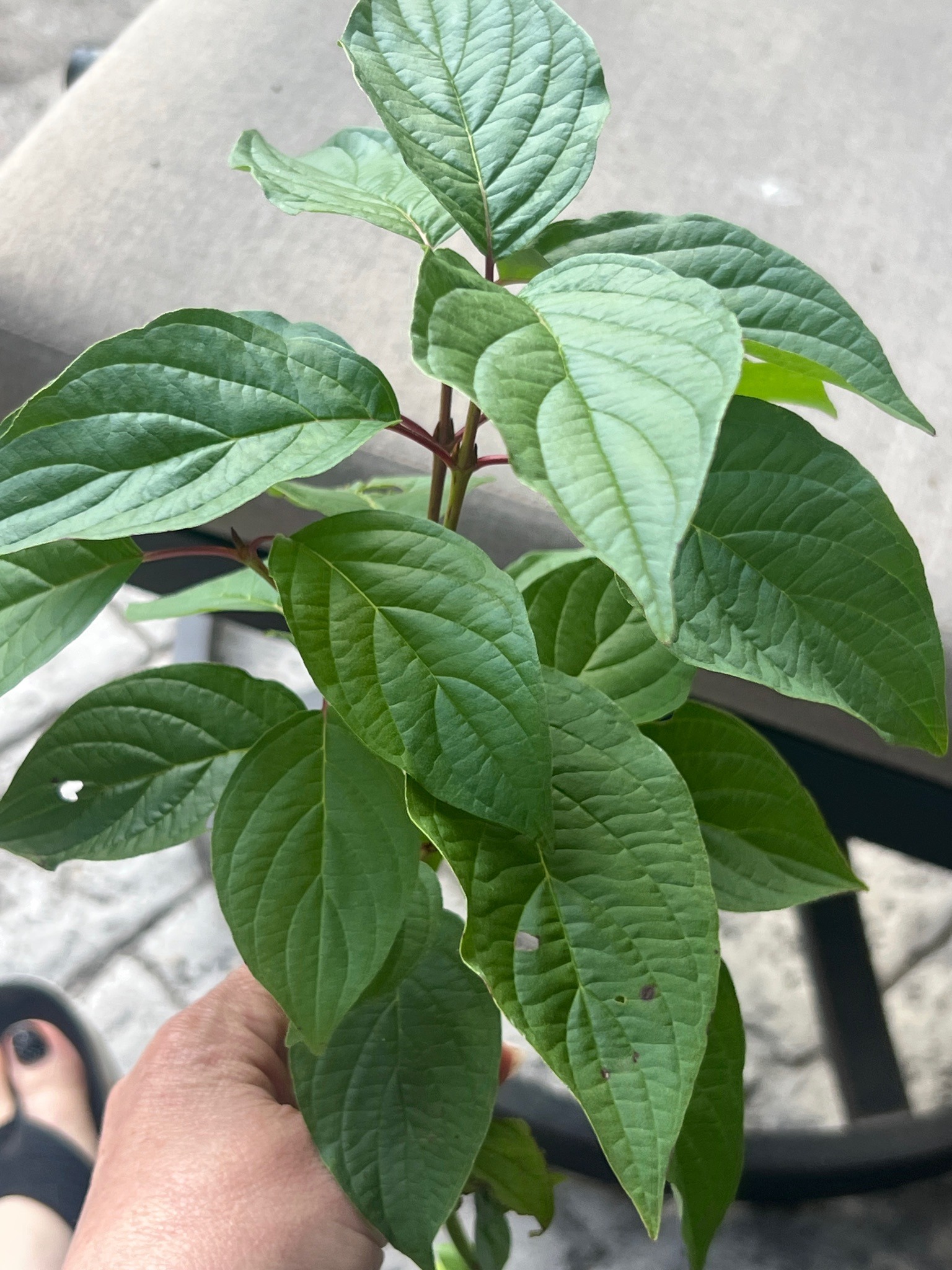
Red Osier Dogwood
Cornus sericea
A deciduous shrub featuring opposite, simple leaves with prominent curved veins and distinctive reddish stems, especially vibrant in the winter months.
- Light
- Full sun to partial shade, requiring at least 4 to 6 hours of direct sunlight daily for optimal stem color.
- Water
- Prefers consistently moist soil. Water deeply on a regular basis, especially during prolonged dry periods, as it has low drought tolerance.
- Growth
- A multi-stemmed deciduous shrub with a rounded, spreading habit, typically reaching 6 to 9 feet in height and width with a moderate to fast growth rate.
Care instructions
Provide full sun to partial shade with consistently moist, well-draining soil. Water regularly during establishment and dry spells. Prune older stems in early spring to encourage bright new branch growth.
Growing details
Sunlight
Full sun to partial shade, requiring at least 4 to 6 hours of direct sunlight daily for optimal stem color.
Watering
Prefers consistently moist soil. Water deeply on a regular basis, especially during prolonged dry periods, as it has low drought tolerance.
Soil
Adaptable to various soil types including clay, loam, and sand, provided they hold some moisture and have good drainage. Prefers a neutral to slightly acidic pH range of 6.0 to 7.0.
Hardiness zone
USDA Hardiness Zones 3 through 8, demonstrating strong cold tolerance.
Growth habit
A multi-stemmed deciduous shrub with a rounded, spreading habit, typically reaching 6 to 9 feet in height and width with a moderate to fast growth rate.
Bloom season
Late spring to early summer, producing flat-topped clusters of small white flowers.
Propagation
Propagated easily through hardwood cuttings taken in winter, softwood cuttings in summer, or by division of root suckers.
Common pests & issues
Vulnerable to twig blight, canker, powdery mildew, and leaf spots. Pests such as scale insects and aphids may occasionally appear. Ensure good air circulation and avoid overhead watering to prevent fungal issues.
Similar species
Silky Dogwood (Cornus amomum), which features brownish to purplish pith in the stems rather than the white pith typically found in Red Osier Dogwood.