
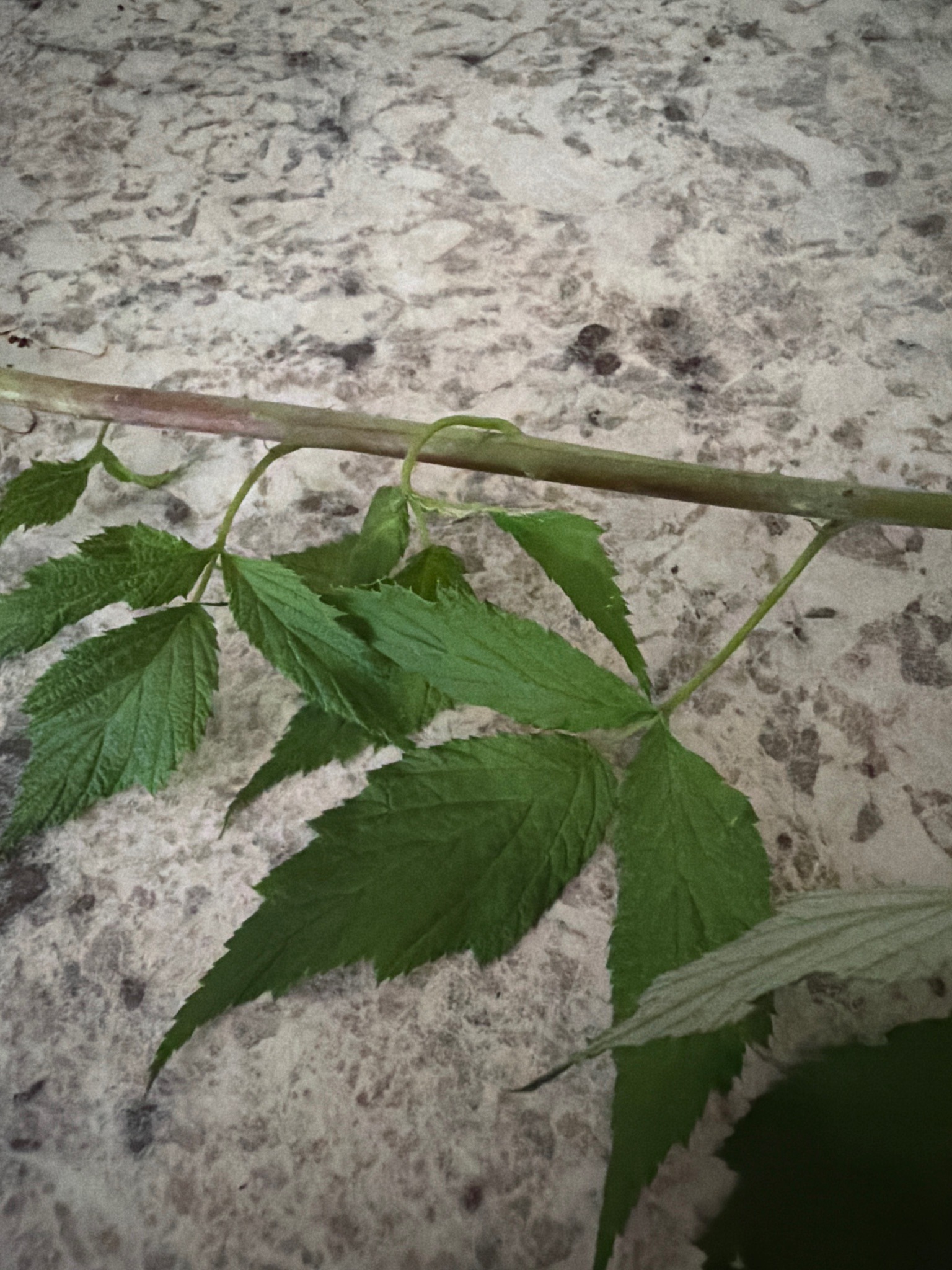
Red Raspberry
Rubus idaeus
A deciduous shrub featuring upright stems known as canes, compound leaves typically divided into three to five leaflets with serrated margins, and prickly stems.
- Light
- Full sun, requiring at least six to eight hours of direct sunlight daily
- Water
- Moderate to high water requirements; keep soil evenly moist but not waterlogged. Water deeply once a week during dry spells.
- Growth
- Perennial shrub with biennial canes that grow upright, reaching mature heights of 4 to 6 feet with a spreading habit.
Care instructions
Provide full sun exposure, consistently moist and well-draining soil rich in organic matter, and regular watering especially during dry periods. Apply a balanced fertilizer in early spring.
Growing details
Sunlight
Full sun, requiring at least six to eight hours of direct sunlight daily
Watering
Moderate to high water requirements; keep soil evenly moist but not waterlogged. Water deeply once a week during dry spells.
Soil
Loamy, well-draining soil with an optimal pH range between 5.5 and 6.5, rich in organic matter.
Hardiness zone
USDA Hardiness Zones 3 through 8
Growth habit
Perennial shrub with biennial canes that grow upright, reaching mature heights of 4 to 6 feet with a spreading habit.
Bloom season
Flowers appear in late spring to early summer, producing small, white, five-petaled blossoms.
Propagation
Propagated easily through root suckers, dormant hardwood cuttings, or tip layering in late summer.
Common pests & issues
Susceptible to fungal diseases such as powdery mildew, spur blight, and root rot, as well as pests like aphids and cane borers. Ensure good air circulation and proper spacing to prevent issues.
Similar species
Blackberry (Rubus fruticosus agg.), which can be distinguished by its solid core remaining attached to the fruit when picked, whereas this species separates with a hollow center, and generally has more curved, robust prickles.