
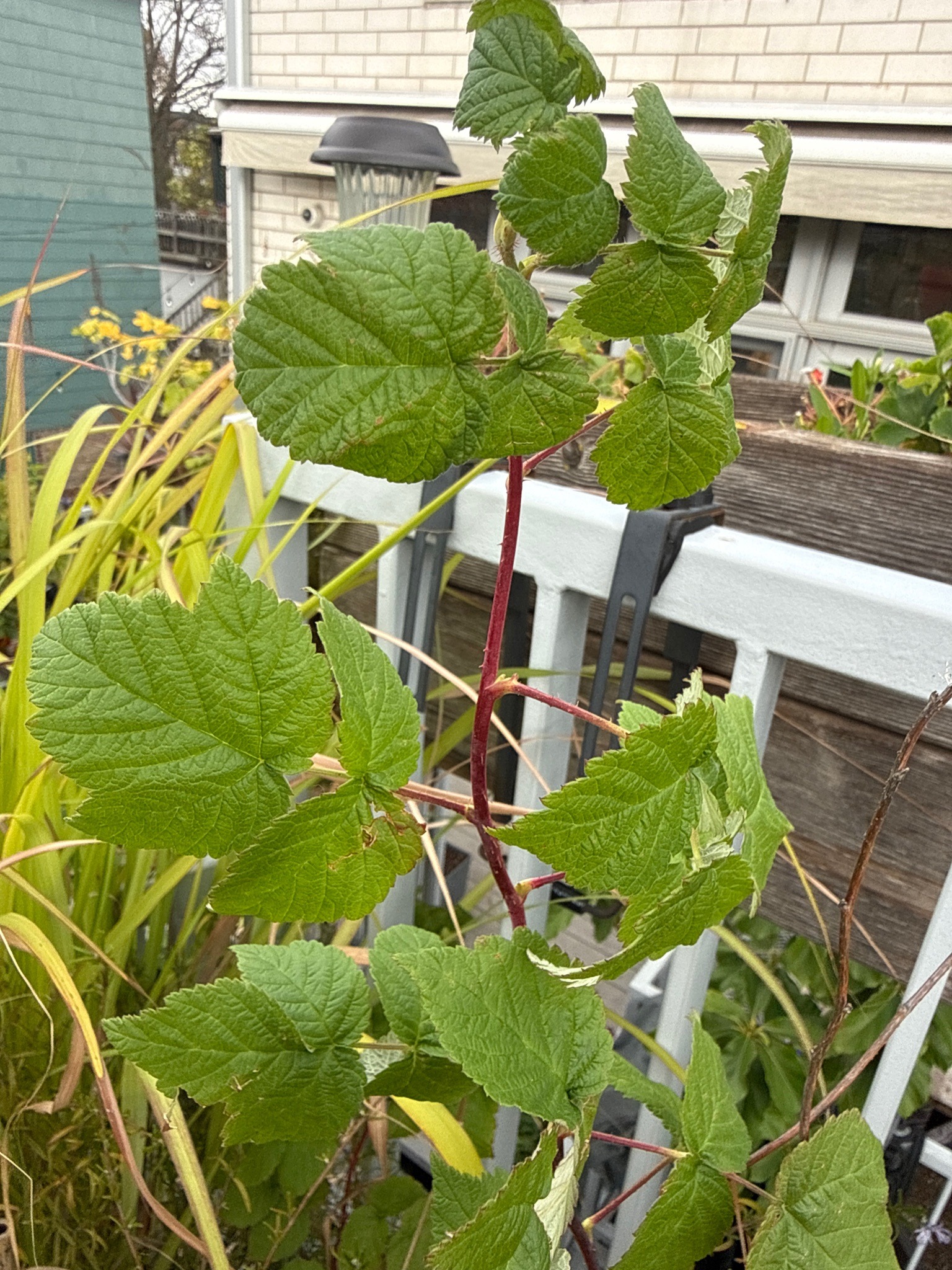
Red Raspberry
Rubus idaeus
A deciduous shrub featuring upright, spiny stems, alternate compound leaves with serrated margins, and a distinct reddish or purplish tint on young canes.
- Light
- Full sun, requiring at least 6 to 8 hours of direct sunlight per day.
- Water
- Consistent moisture, requiring about 1 inch of water per week through rainfall or irrigation. Avoid waterlogged conditions and drought stress.
- Growth
- Perennial shrub with biennial canes (floricanes and primocanes) growing upright to a height of 4 to 6 feet with a similar spread.
Care instructions
Provide full sun, consistent moisture with well-draining loamy soil, and organic mulch to retain moisture. Prune old canes annually after the growing season.
Growing details
Sunlight
Full sun, requiring at least 6 to 8 hours of direct sunlight per day.
Watering
Consistent moisture, requiring about 1 inch of water per week through rainfall or irrigation. Avoid waterlogged conditions and drought stress.
Soil
Well-draining, rich loamy soil with an optimal pH range between 5.5 and 6.5.
Hardiness zone
USDA Hardiness Zones 3 through 8
Growth habit
Perennial shrub with biennial canes (floricanes and primocanes) growing upright to a height of 4 to 6 feet with a similar spread.
Bloom season
Late spring to mid-summer, producing small, white, five-petaled flowers.
Propagation
Propagated easily through root suckers, tip layering, or hardwood cuttings taken in late winter.
Common pests & issues
Susceptible to fungal diseases such as powdery mildew and cane blight, as well as pests like aphids and borers. Ensure good air circulation and avoid overhead watering to prevent fungal issues.
Similar species
Blackberry (Rubus fruticosus), which can be distinguished by its more trailing habit, darker stems, and the receptacle remaining attached to the picked structure.