
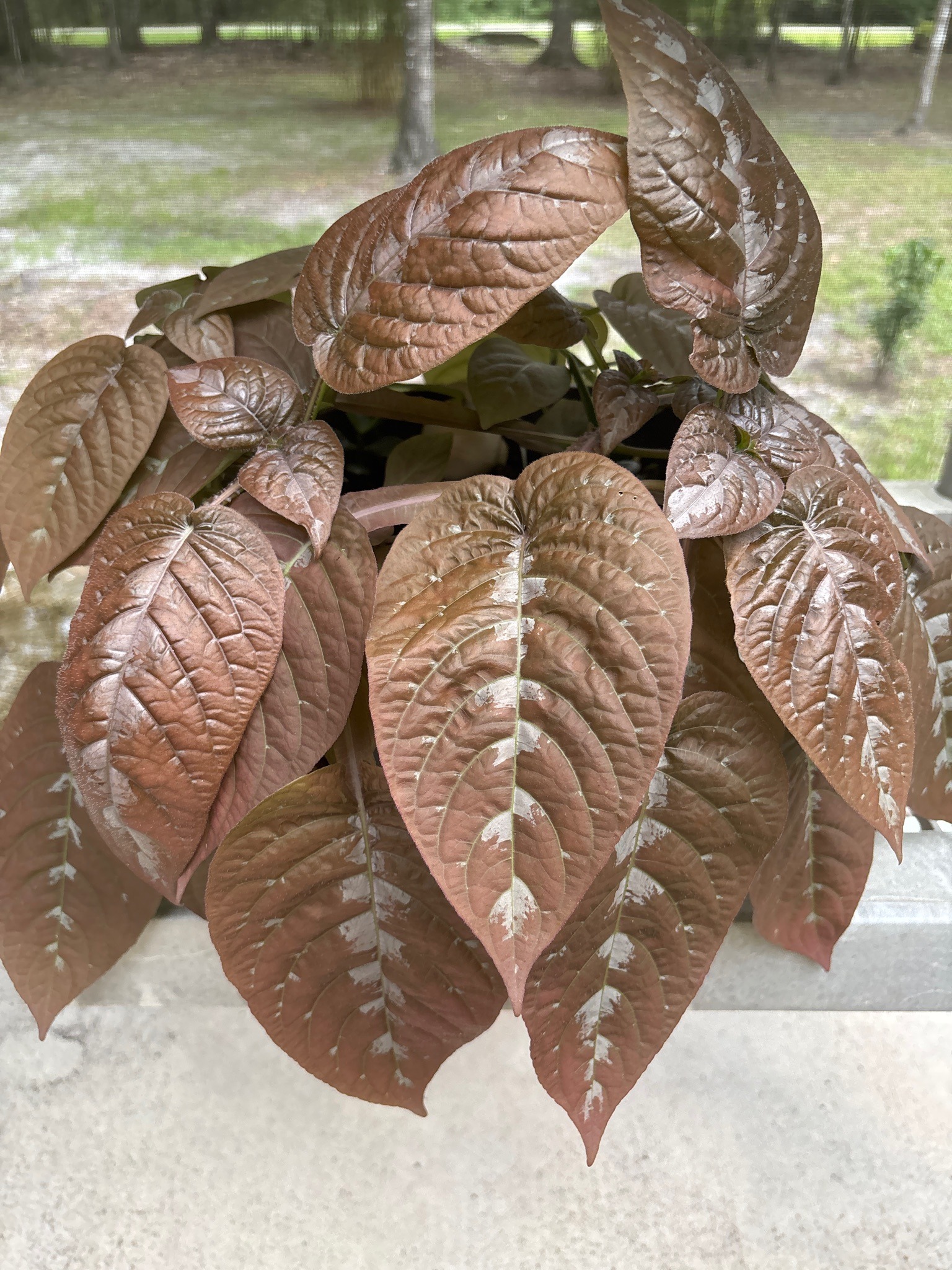
Red Ripple Peperomia
Peperomia caperata
A compact, rosette-forming perennial featuring deeply grooved, textured leaves in rich shades of coppery bronze and dark brown with contrasting silver or lighter veining along the center.
- Light
- Bright, indirect light for 6 to 8 hours per day. Avoid intense, direct sunlight which can scorch the foliage.
- Water
- Allow the potting mix to dry out substantially between watering sessions. Water deeply until it drains from the bottom, then discard excess water. High sensitivity to overwatering and root rot.
- Growth
- Compact herbaceous perennial with a low-growing, clumping rosette habit. Reaches a mature height and spread of roughly 6 to 8 inches with a moderate growth rate.
Care instructions
Provide bright, indirect sunlight and water thoroughly only when the top inch of soil becomes completely dry. Use a well-draining potting mix rich in organic matter and apply a diluted liquid fertilizer monthly during spring and summer.
Growing details
Sunlight
Bright, indirect light for 6 to 8 hours per day. Avoid intense, direct sunlight which can scorch the foliage.
Watering
Allow the potting mix to dry out substantially between watering sessions. Water deeply until it drains from the bottom, then discard excess water. High sensitivity to overwatering and root rot.
Soil
Lightweight, highly porous, and well-draining potting medium, such as an orchid bark and perlite-infused peat mix. Ideal soil pH ranges from 6.0 to 6.5.
Hardiness zone
USDA hardiness zones 10 through 12, typically grown as a protected indoor houseplant in cooler regions.
Growth habit
Compact herbaceous perennial with a low-growing, clumping rosette habit. Reaches a mature height and spread of roughly 6 to 8 inches with a moderate growth rate.
Bloom season
Produces slender, rat-tail-like spikes of tiny, non-showy greenish-white flowers primarily during spring and summer months.
Propagation
Easily propagated through leaf cuttings taken during the spring or summer by severing a healthy leaf with a short petiole and inserting it into a moist, well-draining propagation medium.
Common pests & issues
Susceptible to root rot caused by overly damp soil conditions and poor drainage. Common pests include mealybugs and fungus gnats, treatable with insecticidal soap or neem oil.
Similar species
Peperomia griseoargentea, which features shinier, more silvery-grey leaves with prominent puckering, distinguishable by the distinct metallic bronze and chocolate tones found in Peperomia caperata.