
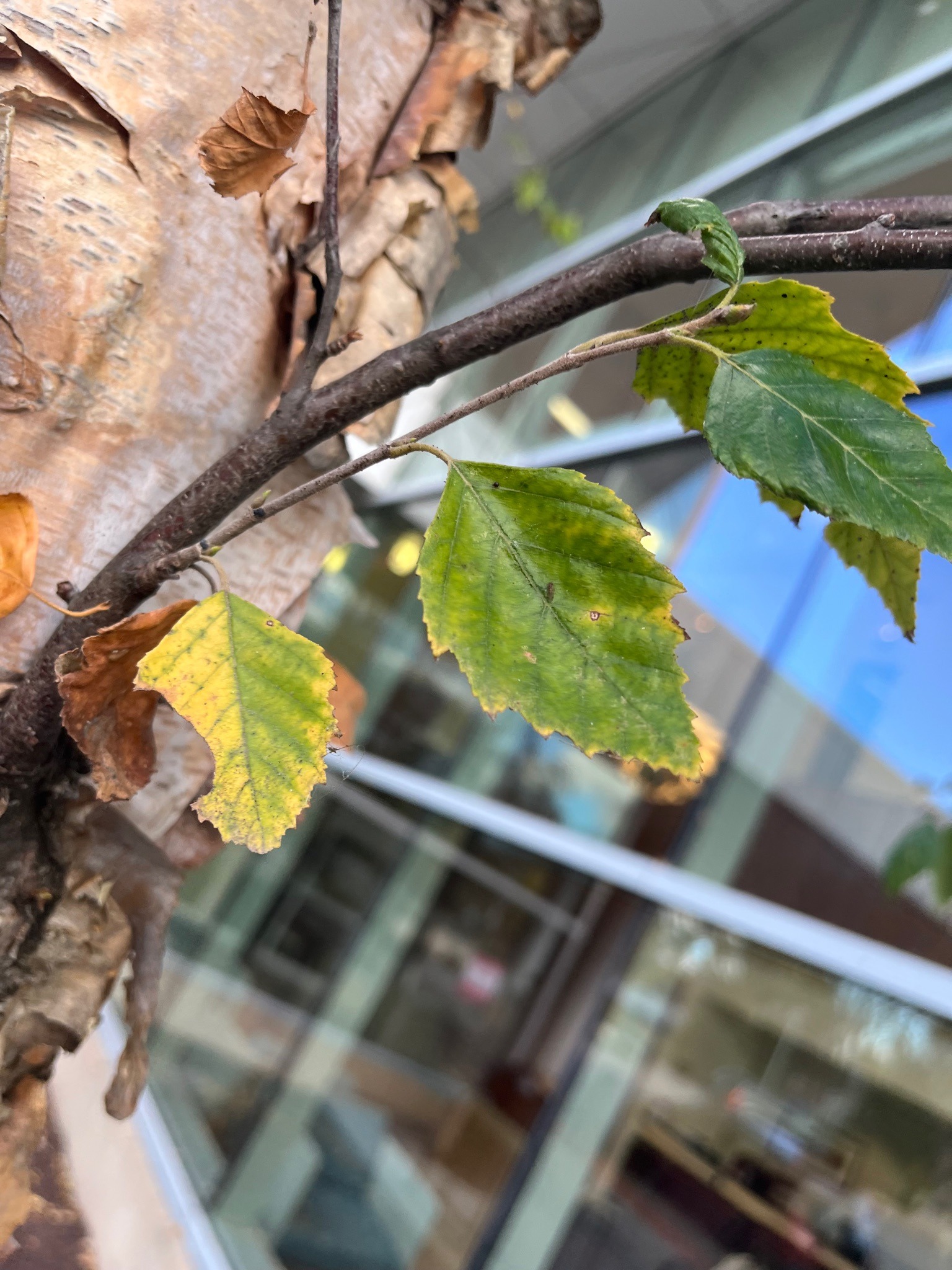
River Birch
Betula nigra
A medium to large deciduous tree known for its distinctive peeling, multicolored bark that exposes shades of cinnamon, salmon, and creamy white, accompanied by diamond-shaped green leaves with doubly serrated margins.
- Light
- Full sun to partial shade, requiring at least 6 hours of direct sunlight daily for optimal growth.
- Water
- High moisture requirements; water regularly to keep soil evenly damp. Drought stress leads to premature leaf drop.
- Growth
- Deciduous tree with a moderate to fast growth rate, typically reaching mature heights of 40 to 70 feet with a spread of 40 to 60 feet, often growing with multiple trunks.
Care instructions
Provide full sun to partial shade with consistently moist, well-draining acidic soil. Water deeply during dry spells as this species prefers high soil moisture and does not tolerate severe drought well.
Growing details
Sunlight
Full sun to partial shade, requiring at least 6 hours of direct sunlight daily for optimal growth.
Watering
High moisture requirements; water regularly to keep soil evenly damp. Drought stress leads to premature leaf drop.
Soil
Prefers rich, moist, loamy or sandy soils with good organic matter and an acidic pH range between 5.0 and 6.5.
Hardiness zone
USDA Hardiness Zones 4 through 9
Growth habit
Deciduous tree with a moderate to fast growth rate, typically reaching mature heights of 40 to 70 feet with a spread of 40 to 60 feet, often growing with multiple trunks.
Bloom season
Spring, featuring inconspicuous greenish-brown catkins that appear alongside the emerging foliage.
Propagation
Propagated primarily through softwood cuttings taken in late spring or by sowing seeds in cold frames during winter.
Common pests & issues
Susceptible to aphids, leaf miners, and borers, as well as chlorosis in alkaline soils. Fungal leaf spots can occasionally occur in humid conditions.
Similar species
Paper Birch (Betula papyrifera), which features bright white bark that peels in horizontal strips, whereas River Birch has darker, cinnamon-colored exfoliating bark.