
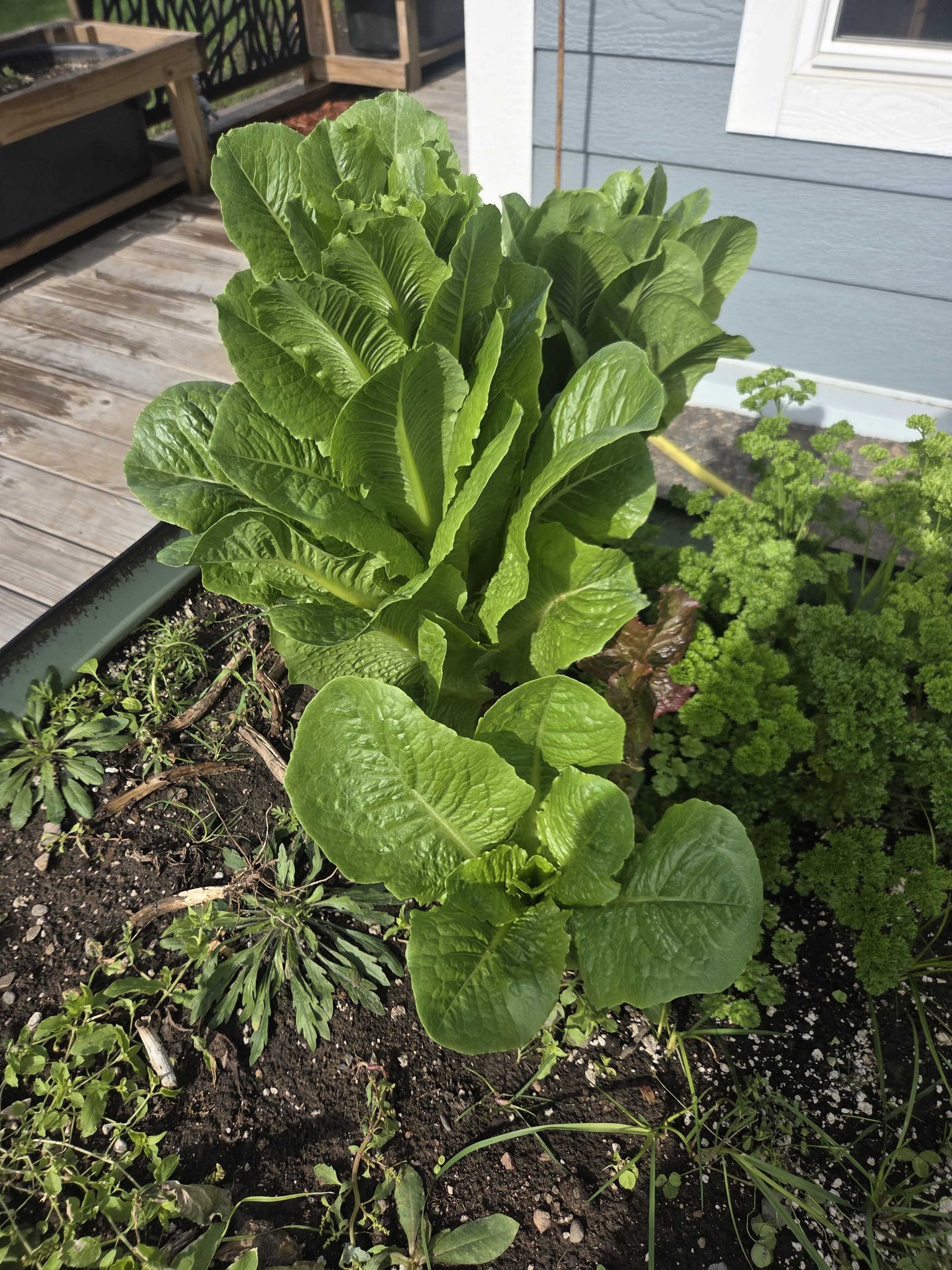
Romaine Lettuce
Lactuca sativa var. longifolia
An upright-growing plant featuring elongated, sturdy, ribbed leaves tightly packed into a tall, oblong head with a crisp texture.
- Light
- Full sun to partial shade, ideally requiring 6 hours of direct sunlight per day.
- Water
- Requires regular, consistent watering to keep the soil evenly moist. Prefers shallow roots watered frequently, avoiding drought stress which can trigger early bolting. Symptoms of underwatering include wilting and leaf browning, while overwatering can cause root rot.
- Growth
- An annual herb with an upright, vertical growth habit, reaching heights of 8 to 12 inches and a spread of 6 to 10 inches with a moderate growth rate.
Care instructions
Provide full sun to partial shade, keep the soil consistently moist with regular watering, and grow in rich, well-draining soil with a neutral pH. Apply a balanced, water-soluble fertilizer every few weeks during the active growth period.
Growing details
Sunlight
Full sun to partial shade, ideally requiring 6 hours of direct sunlight per day.
Watering
Requires regular, consistent watering to keep the soil evenly moist. Prefers shallow roots watered frequently, avoiding drought stress which can trigger early bolting. Symptoms of underwatering include wilting and leaf browning, while overwatering can cause root rot.
Soil
Rich, loamy, well-draining soil with an optimal pH range between 6.0 and 7.0.
Hardiness zone
Typically grown as an annual in USDA hardiness zones 2 through 11.
Growth habit
An annual herb with an upright, vertical growth habit, reaching heights of 8 to 12 inches and a spread of 6 to 10 inches with a moderate growth rate.
Bloom season
Produces small, yellow, dandelion-like composite flowers on tall stalks during late summer if allowed to bolt; typically harvested before flowering occurs.
Propagation
Propagated primarily from seeds sown directly into the soil or started indoors and transplanted outdoors after the final frost.
Common pests & issues
Susceptible to aphids, slugs, and cutworms, as well as fungal diseases like downy mildew and powdery mildew, which can be managed with proper spacing, good airflow, and consistent moisture management.
Similar species
Butterhead lettuce and crisphead lettuce; distinguished by its upright, elongated, stiffly ribbed leaves rather than loose rosettes or tight, spherical heads.