
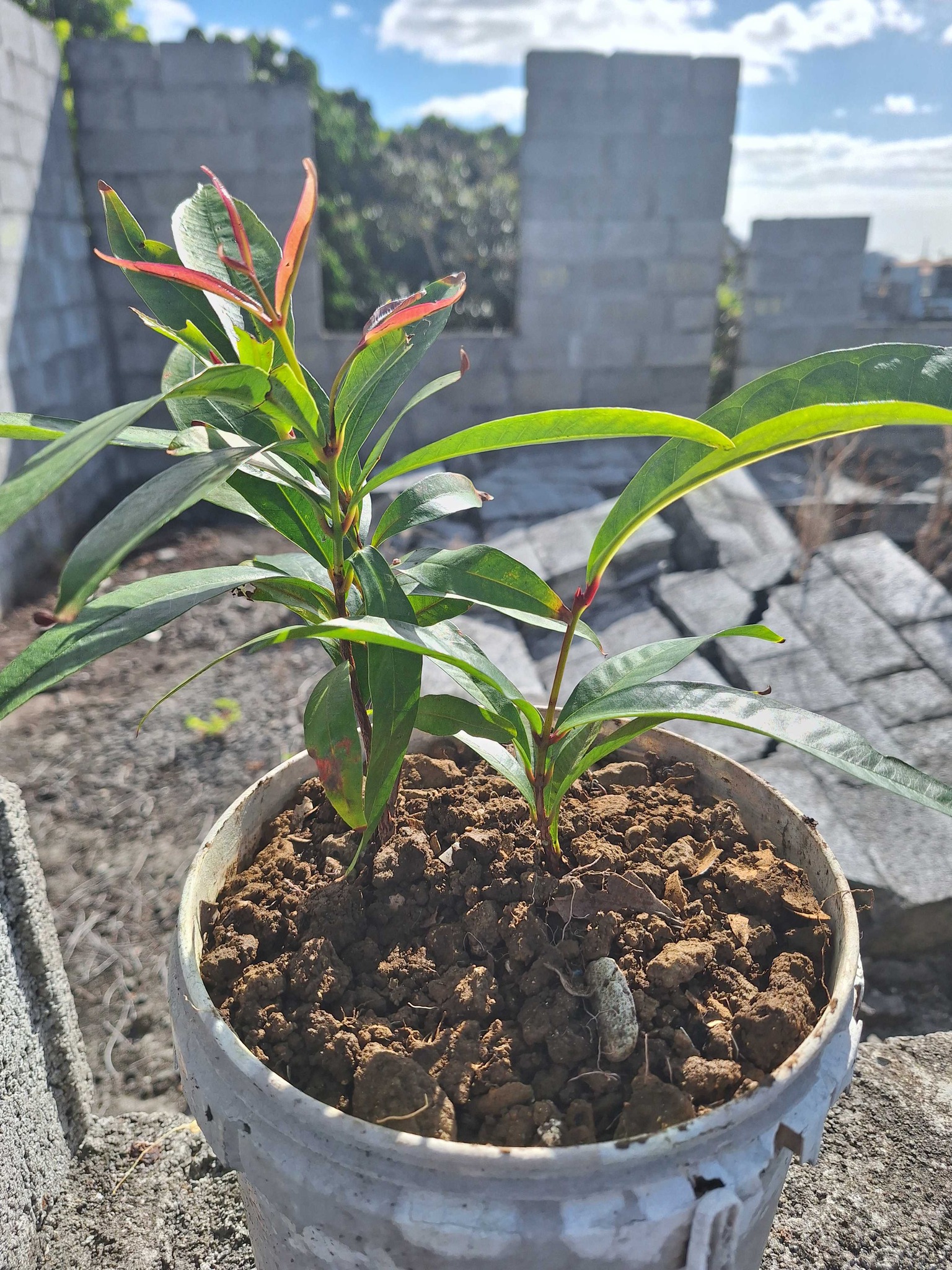
Rose Apple (Sapling)
Syzygium jambos
A young woody sapling featuring glossy, lanceolate dark green leaves with distinctive reddish-bronze new growth flushing at the stem tips and reddish stems.
- Light
- Full sun to partial shade, requiring at least 6 hours of direct sunlight daily for optimal foliage coloration.
- Water
- Moderate water requirements. Keep the soil evenly moist but never waterlogged. Allow the topsoil to dry slightly between watering sessions.
- Growth
- Perennial evergreen tree reaching mature heights of 25 to 40 feet with a dense, spreading crown, but easily managed in containers while young.
Care instructions
Provide full sun to partial shade, water regularly when the top inch of soil becomes dry, and plant in rich, well-draining soil with a slightly acidic to neutral pH. Feed with a balanced slow-release fertilizer during the active growing season.
Growing details
Sunlight
Full sun to partial shade, requiring at least 6 hours of direct sunlight daily for optimal foliage coloration.
Watering
Moderate water requirements. Keep the soil evenly moist but never waterlogged. Allow the topsoil to dry slightly between watering sessions.
Soil
Prefers loamy, fertile, well-draining soil with a pH ranging from 5.5 to 6.5, though highly adaptable to various soil types as long as drainage is adequate.
Hardiness zone
USDA Hardiness Zones 9 through 11. Sensitive to freezing temperatures and frost.
Growth habit
Perennial evergreen tree reaching mature heights of 25 to 40 feet with a dense, spreading crown, but easily managed in containers while young.
Bloom season
Spring to early summer. Features fluffy white or yellowish-green clusters of prominent stamens.
Propagation
Propagated primarily through fresh seeds planted in warm, moist potting medium, or through semi-hardwood stem cuttings treated with rooting hormone.
Common pests & issues
Prone to occasional infestations of scale insects, aphids, and mealybugs. Root rot can occur if soil drainage is poor.
Similar species
Syzygium samarangense (Wax Jambu), which features broader, glossier leaves and different fruit shapes.