
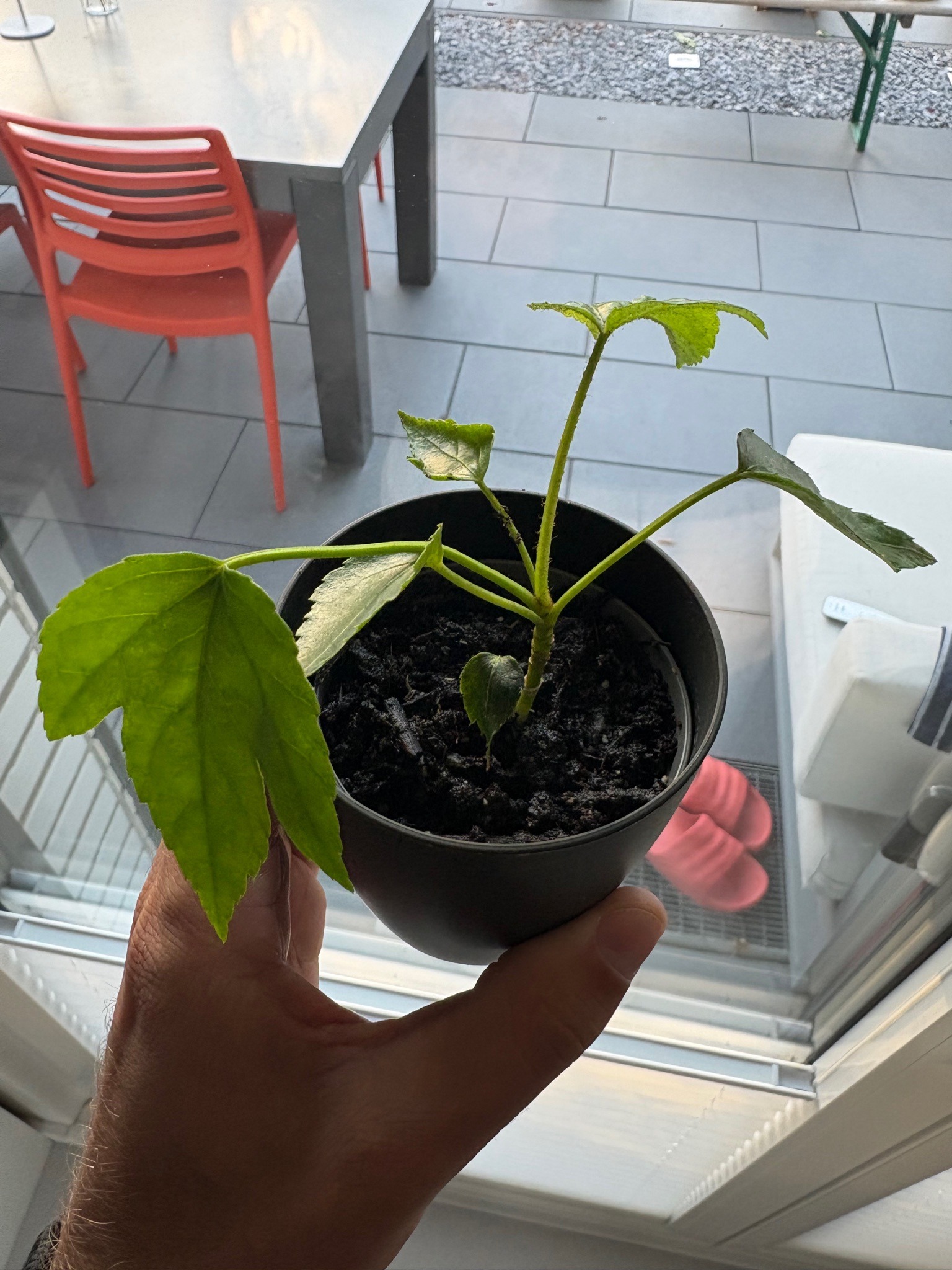
Rose of Sharon (seedling)
Hibiscus syriacus
A young woody seedling featuring characteristic alternate, lobed leaves with serrated margins and a central green stem growing in a small container.
- Light
- Full sun to partial shade, requiring at least 6 hours of direct sunlight daily for best growth.
- Water
- Water regularly when the topsoil dries out. Moderate drought tolerance once established, but young seedlings need consistent moisture. Avoid letting the soil remain waterlogged.
- Growth
- Perennial woody deciduous shrub or small tree. Mature specimens typically reach heights of 8 to 12 feet with a spread of 6 to 10 feet, featuring a moderate growth rate.
Care instructions
Provide bright, direct light for optimal growth. Water thoroughly when the top inch of soil feels dry, ensuring the pot drains freely to prevent waterlogging. Maintain in a well-draining potting medium and apply a balanced, water-soluble fertilizer during the active growing season.
Growing details
Sunlight
Full sun to partial shade, requiring at least 6 hours of direct sunlight daily for best growth.
Watering
Water regularly when the topsoil dries out. Moderate drought tolerance once established, but young seedlings need consistent moisture. Avoid letting the soil remain waterlogged.
Soil
Prefers rich, loamy, well-draining soil with a neutral to slightly acidic pH range of 6.0 to 7.5.
Hardiness zone
USDA zones 5 through 9, exhibiting good cold hardiness within these ranges.
Growth habit
Perennial woody deciduous shrub or small tree. Mature specimens typically reach heights of 8 to 12 feet with a spread of 6 to 10 feet, featuring a moderate growth rate.
Bloom season
Blooms from mid-summer through early autumn, producing showy, trumpet-shaped flowers in shades of pink, purple, blue, white, or red.
Propagation
Propagated easily from softwood cuttings taken in late spring or summer, or grown from seed collected in autumn.
Common pests & issues
Susceptible to aphids, whiteflies, and Japanese beetles. Fungal issues such as leaf spot or powdery mildew can occur in overly humid conditions with poor air circulation.
Similar species
Other members of the Malvaceae family such as Alcea rosea (hollyhock) or other Hibiscus species, distinguished primarily by mature woody stem structure, specific leaf lobing patterns, and growth form.