
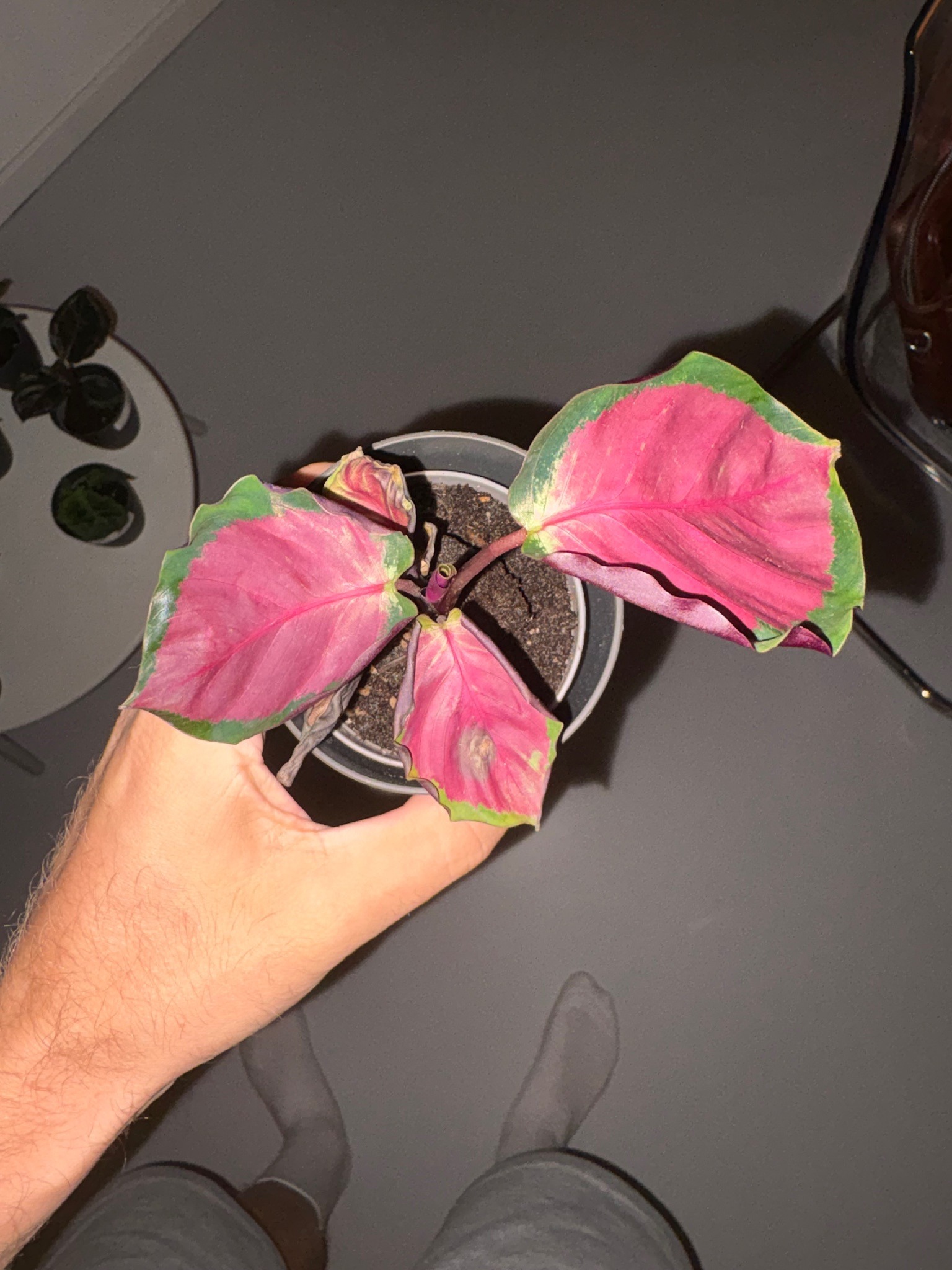
Rose Painted Calathea
Calathea roseopicta
A striking tropical foliage houseplant featuring large, rounded leaves with vibrant pink centers and margins bordered in deep green, complemented by dark purple undersides.
- Light
- Bright, indirect light for 6 to 8 hours daily. Avoid direct sunlight, which can fade the leaf coloration and burn the foliage.
- Water
- Water when the top inch of soil feels slightly dry to the touch. Keep the soil evenly moist but never waterlogged. Using filtered or distilled water is recommended to prevent leaf tip browning.
- Growth
- Clumping perennial houseplant with an upright to spreading growth habit, reaching mature heights and spreads of 1 to 2 feet with a moderate growth rate.
Care instructions
Provide bright, indirect sunlight and maintain consistently moist, well-draining soil with high humidity levels. Fertilize monthly during the spring and summer growing season with a balanced, diluted houseplant fertilizer.
Growing details
Sunlight
Bright, indirect light for 6 to 8 hours daily. Avoid direct sunlight, which can fade the leaf coloration and burn the foliage.
Watering
Water when the top inch of soil feels slightly dry to the touch. Keep the soil evenly moist but never waterlogged. Using filtered or distilled water is recommended to prevent leaf tip browning.
Soil
Rich, organic, well-draining potting mix that retains moisture without compacting, with a slightly acidic to neutral pH range of 6.0 to 6.5.
Hardiness zone
USDA hardiness zones 10 to 12 when grown outdoors. Primarily cultivated indoors as a houseplant in cooler regions, requiring temperatures between 65°F and 80°F.
Growth habit
Clumping perennial houseplant with an upright to spreading growth habit, reaching mature heights and spreads of 1 to 2 feet with a moderate growth rate.
Bloom season
Rarely blooms when grown indoors as a houseplant. In its natural habitat, it produces small, inconspicuous white or purple flowers during spring and summer.
Propagation
Propagated primarily through root division during the spring repotting season by carefully separating established clumps with healthy roots and foliage.
Common pests & issues
Susceptible to spider mites and fungus gnats, particularly in low humidity or overly wet soil environments. Leaf tip browning commonly occurs from low humidity, tap water minerals, or inconsistent watering.
Similar species
Calathea ornata, which features narrower leaves with fine pink pinstripes instead of solid pink centers, and Calathea makoyana, which features translucent patterned windows on the leaves.