
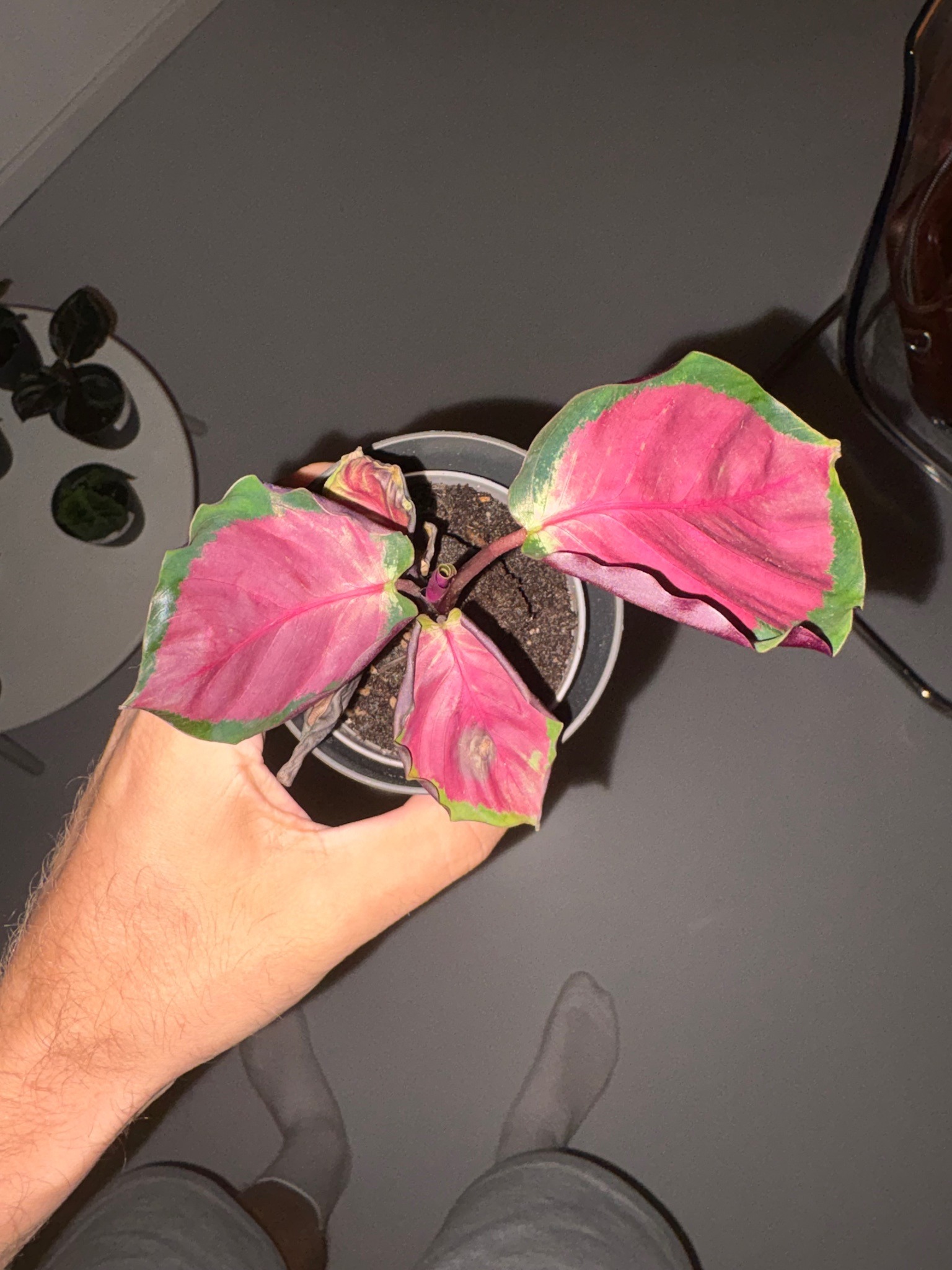
Rose Painted Calathea
Calathea roseopicta
A stunning tropical houseplant known for its large, rounded leaves featuring vibrant pink centers, dark green margins, and deep purple undersides.
- Light
- Bright, indirect light for 6 to 8 hours daily; protect from direct sun to prevent leaf bleaching.
- Water
- Water when the top inch of soil feels slightly dry. Maintain consistent moisture, avoiding extreme dryness or soggy conditions.
- Growth
- Clumping perennial herbaceous plant with an upright, spreading habit, reaching a mature height and spread of 1 to 2 feet with a moderate growth rate.
Care instructions
Provide bright, indirect sunlight and high humidity. Keep the soil evenly moist but never waterlogged, utilizing filtered water or rainwater to prevent leaf tip browning. Feed lightly with a balanced liquid houseplant fertilizer once a month during the spring and summer growing seasons.
Growing details
Sunlight
Bright, indirect light for 6 to 8 hours daily; protect from direct sun to prevent leaf bleaching.
Watering
Water when the top inch of soil feels slightly dry. Maintain consistent moisture, avoiding extreme dryness or soggy conditions.
Soil
Rich, well-draining potting mix high in organic matter, such as a combination of peat moss, perlite, and standard potting soil, with a slightly acidic pH between 5.5 and 6.5.
Hardiness zone
USDA zones 10 through 12, typically grown indoors in temperate climates.
Growth habit
Clumping perennial herbaceous plant with an upright, spreading habit, reaching a mature height and spread of 1 to 2 feet with a moderate growth rate.
Bloom season
Rarely flowers indoors; produces small, inconspicuous white or purple flowers in its native habitat during the warm season.
Propagation
Propagated primarily through root division during the spring repotting season, ensuring each section has healthy roots and multiple leaves.
Common pests & issues
Susceptible to spider mites and fungus gnats when humidity is low or soil remains overly wet. Leaf tip browning often occurs due to low humidity or chemical sensitivities in tap water.
Similar species
Calathea makoyana (Peacock Plant), which features translucent oval leaves with distinct feather-like dark green markings rather than a solid pink center.