
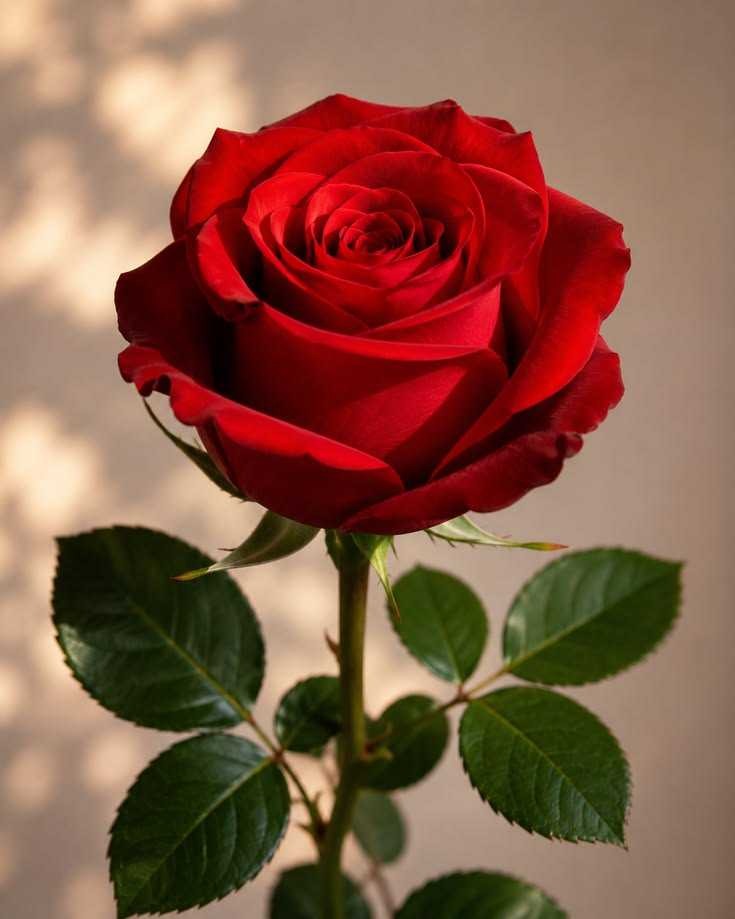
Rose
Rosa rubiginosa
A woody perennial flowering plant characterized by showy flowers featuring numerous overlapping petals, often accompanied by prickles on the stems and compound dark green leaves with serrated margins.
- Light
- Full sun, requiring 6 to 8 hours of direct sunlight daily.
- Water
- Water deeply and regularly, allowing the top inch of soil to dry out between waterings. Drought tolerance is low to moderate depending on the established root system.
- Growth
- Deciduous or semi-evergreen shrub with upright, arching, or climbing stems bearing sharp prickles. Mature height ranges from 2 to 6 feet or more with a similar spread for shrub forms.
Care instructions
Provide full sun with at least 6 hours of direct sunlight daily. Water deeply at the base to keep the soil consistently moist but well-draining, avoiding overhead watering. Apply a balanced fertilizer formulated for flowering shrubs during the active growing season in spring and summer. Prune annually in early spring to encourage vigorous new branch development and airflow.
Growing details
Sunlight
Full sun, requiring 6 to 8 hours of direct sunlight daily.
Watering
Water deeply and regularly, allowing the top inch of soil to dry out between waterings. Drought tolerance is low to moderate depending on the established root system.
Soil
Rich, loamy, well-draining soil with an optimal pH range between 6.0 and 6.8.
Hardiness zone
USDA Hardiness Zones 4 through 9, depending on the specific cultivar.
Growth habit
Deciduous or semi-evergreen shrub with upright, arching, or climbing stems bearing sharp prickles. Mature height ranges from 2 to 6 feet or more with a similar spread for shrub forms.
Bloom season
Blooms from late spring through autumn, producing highly symmetrical flowers in shades of red, pink, yellow, white, or orange, often with a pleasant fragrance.
Propagation
Propagated primarily through stem cuttings taken in summer, or via bud grafting onto established rootstocks in late winter.
Common pests & issues
Prone to fungal issues such as black spot and powdery mildew, which can be prevented by ensuring adequate spacing and air circulation. Insect pests include aphids and spider mites, manageable with targeted horticultural treatments.
Similar species
Camellias and peonies share a similar layered petal structure, but can be distinguished by their alternate leaf arrangements, lack of stem prickles, and membership in different botanical families.