
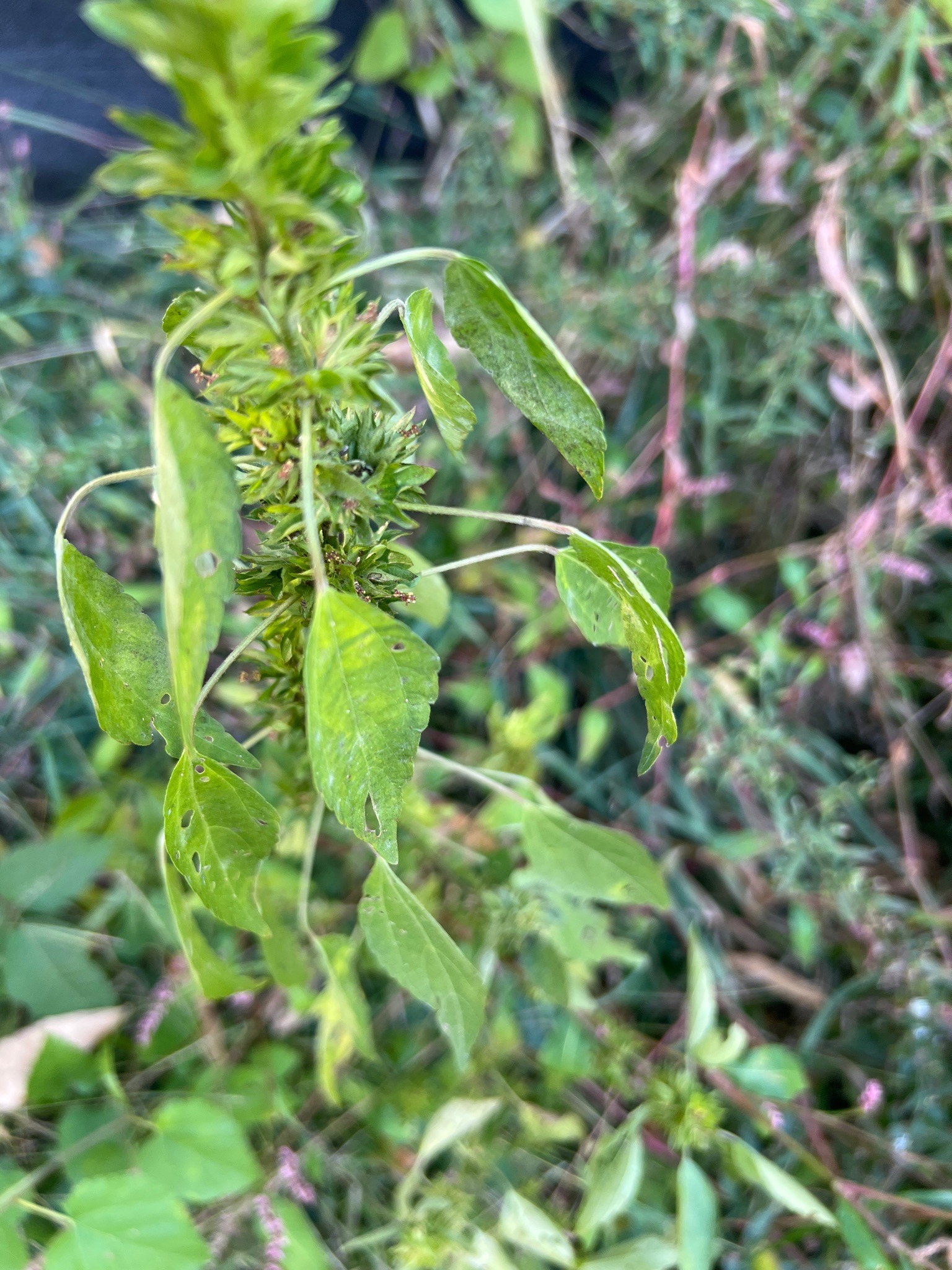
Rough Cocklebur
Xanthium strumarium
An herbaceous annual weed with coarse, rough-textured, triangular-to-ovate alternate leaves with lobed edges, and distinctive spiny bur fruits containing seeds.
- Light
- Full sun, requiring at least six to eight hours of direct sunlight per day.
- Water
- Moderate watering needs. It tolerates average soil moisture and exhibits some dry-period resilience once established, though continuous drought can stunt growth.
- Growth
- An upright annual herb growing from 1 to 4 feet tall with a branching stem structure and a moderately fast growth rate during spring and summer months.
Care instructions
This species typically grows wild in disturbed soils and agricultural areas without intentional cultivation. For ornamental or control management, it prefers full sun and well-draining soil with moderate moisture.
Growing details
Sunlight
Full sun, requiring at least six to eight hours of direct sunlight per day.
Watering
Moderate watering needs. It tolerates average soil moisture and exhibits some dry-period resilience once established, though continuous drought can stunt growth.
Soil
Adaptable to various well-drained soil types including sandy, loamy, and clay soils, preferring a neutral to slightly alkaline pH range between 6.0 and 7.5.
Hardiness zone
USDA Hardiness Zones 3 through 9, functioning primarily as a warm-season annual plant.
Growth habit
An upright annual herb growing from 1 to 4 feet tall with a branching stem structure and a moderately fast growth rate during spring and summer months.
Bloom season
Flowers from mid-summer through early autumn, producing small, inconspicuous greenish flower heads followed by hard, spiny, oblong burs.
Propagation
Propagates strictly by seed, which is distributed when the spiny burs attach to passing animals or clothing.
Common pests & issues
Can be affected by fungal leaf spots, rusts, and various foliage-feeding insects, though it is generally resilient in natural habitats.
Similar species
Burclocks (Arctium species) can appear somewhat similar due to their large leaves and burs, but Burclocks belong to a different genus and feature purple thistle-like flower heads.