
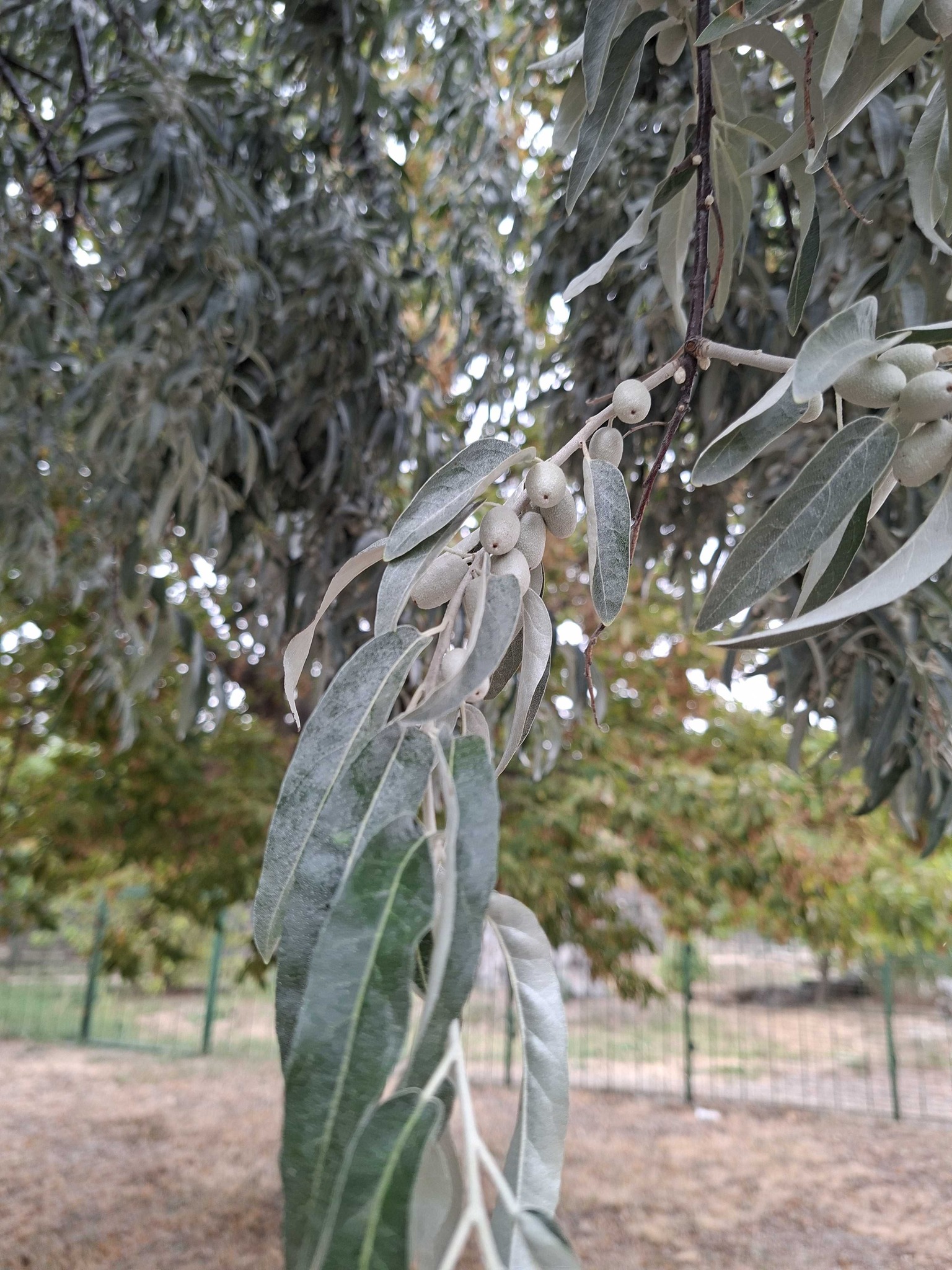
Russian olive
Elaeagnus angustifolia
A large deciduous shrub or small tree distinguished by its distinctive silvery-gray to silvery-green lanceolate leaves and small, oblong, silvery-scaled fruits hanging along the branches.
- Light
- Full sun, requiring at least 6 hours of direct sunlight daily.
- Water
- Low watering needs once established; allow soil to dry out between waterings. Highly drought tolerant. Avoid overwatering to prevent root rot.
- Growth
- Perennial woody shrub or small tree growing up to 15 to 25 feet tall with a similar spread. Features a rounded, sometimes thorny crown and a moderate to fast growth rate.
Care instructions
Provide full sun and well-draining soil. Water deeply when newly planted to establish a deep root system, then reduce watering as it demonstrates high drought tolerance once established. Fertilization is generally unnecessary as it fixes its own nitrogen.
Growing details
Sunlight
Full sun, requiring at least 6 hours of direct sunlight daily.
Watering
Low watering needs once established; allow soil to dry out between waterings. Highly drought tolerant. Avoid overwatering to prevent root rot.
Soil
Adaptable to a wide range of well-draining soils including sandy, loamy, or clay soils. Prefers a neutral to alkaline pH range but tolerates slightly acidic conditions.
Hardiness zone
USDA Hardiness Zones 2 through 8, demonstrating high cold hardiness.
Growth habit
Perennial woody shrub or small tree growing up to 15 to 25 feet tall with a similar spread. Features a rounded, sometimes thorny crown and a moderate to fast growth rate.
Bloom season
Blooms in late spring to early summer producing small, highly fragrant, yellowish flowers hidden among the foliage.
Propagation
Propagated easily from seeds, hardwood cuttings taken in winter, or softwood cuttings in summer. Stratification of seeds is beneficial for improving germination rates.
Common pests & issues
Generally resistant to major pests and diseases. Can occasionally be affected by verticillium wilt, rust, or scale insects in poorly draining soils.
Similar species
Autumn olive (Elaeagnus umbellata), which has broader, more rounded leaves and red fruit, whereas Russian olive features narrower, distinctly silvery leaves and silver-scaled fruit.