
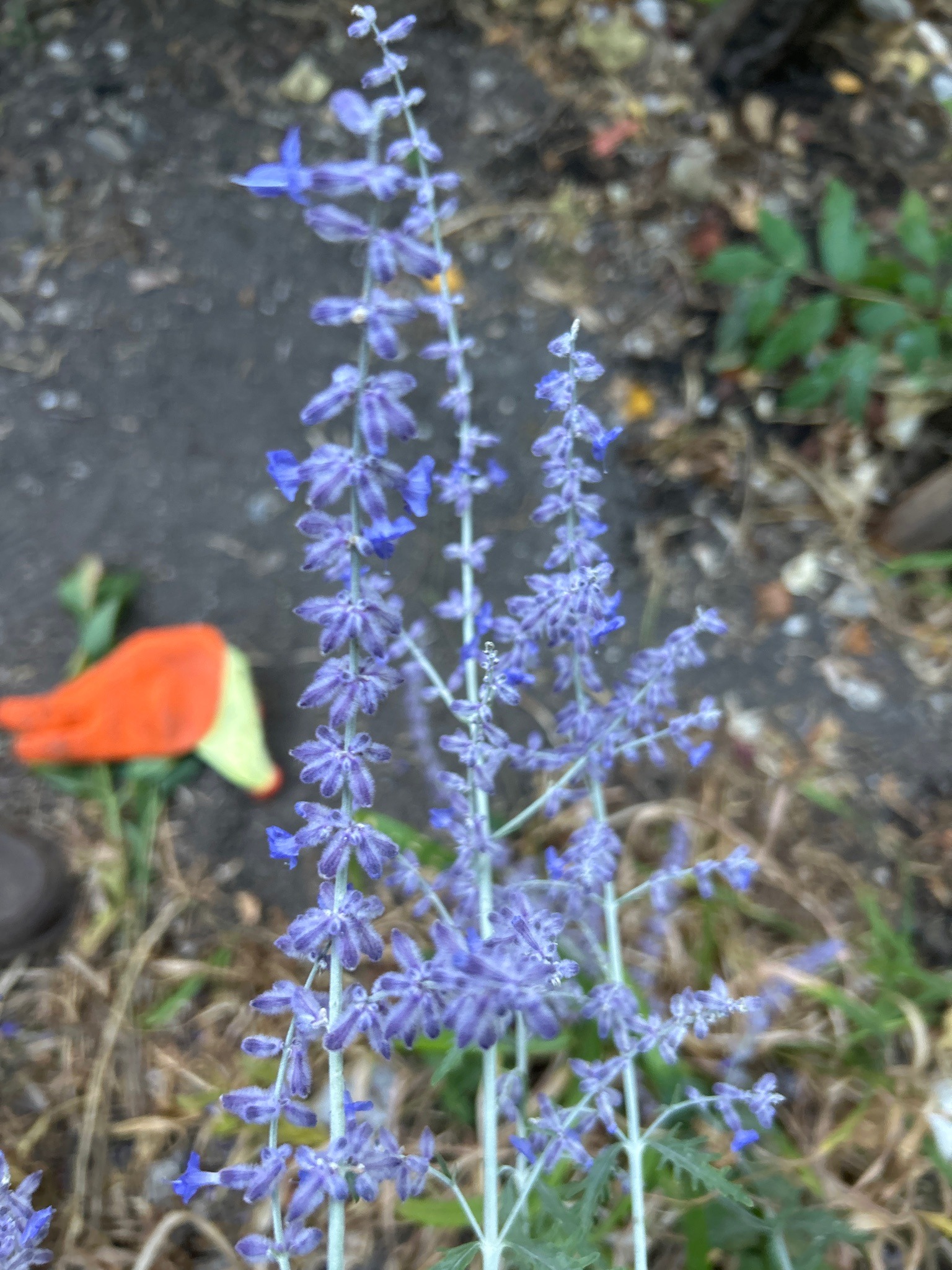
Russian Sage
Salvia yangii
Perennial subshrub featuring silvery-gray stems and finely dissected aromatic leaves, topped with tall, airy panicles of small tubular violet-blue flowers.
- Light
- Full sun, requiring at least 6 to 8 hours of direct sunlight daily
- Water
- Low watering needs once established; allow the soil to dry out completely between waterings. Highly sensitive to over-watering and poorly drained soils.
- Growth
- Deciduous perennial subshrub with an upright, branching habit, reaching mature heights of 3 to 5 feet and a similar spread, with a moderate to fast growth rate
Care instructions
Plant in full sun with well-draining soil. Water deeply when first planted to establish root systems, then reduce watering significantly as the plant is extremely drought tolerant once established. Prune back hard in early spring to encourage vigorous new growth.
Growing details
Sunlight
Full sun, requiring at least 6 to 8 hours of direct sunlight daily
Watering
Low watering needs once established; allow the soil to dry out completely between waterings. Highly sensitive to over-watering and poorly drained soils.
Soil
Prefers lean, sandy, or gravelly soils with excellent drainage and a neutral to slightly alkaline pH range between 6.0 and 7.5.
Hardiness zone
USDA zones 5 through 9, showing strong tolerance to cold winters and high summer heat
Growth habit
Deciduous perennial subshrub with an upright, branching habit, reaching mature heights of 3 to 5 feet and a similar spread, with a moderate to fast growth rate
Bloom season
Blooms from mid-summer through late autumn, producing abundant spikes of small, two-lipped light purple or blue flowers
Propagation
Propagated easily through softwood cuttings taken in late spring or early summer, division of mature clumps in spring, or from seeds
Common pests & issues
Generally trouble-free and resistant to most pests and diseases. Root rot may occur if planted in overly wet or poorly draining soils.
Similar species
Often confused with True Lavender (Lavandula angustifolia) or Catmint (Nepeta), but can be distinguished by its taller, more open stature, silvery-white stems, and finely divided leaves.