
Sacred Datura
Datura wrightii
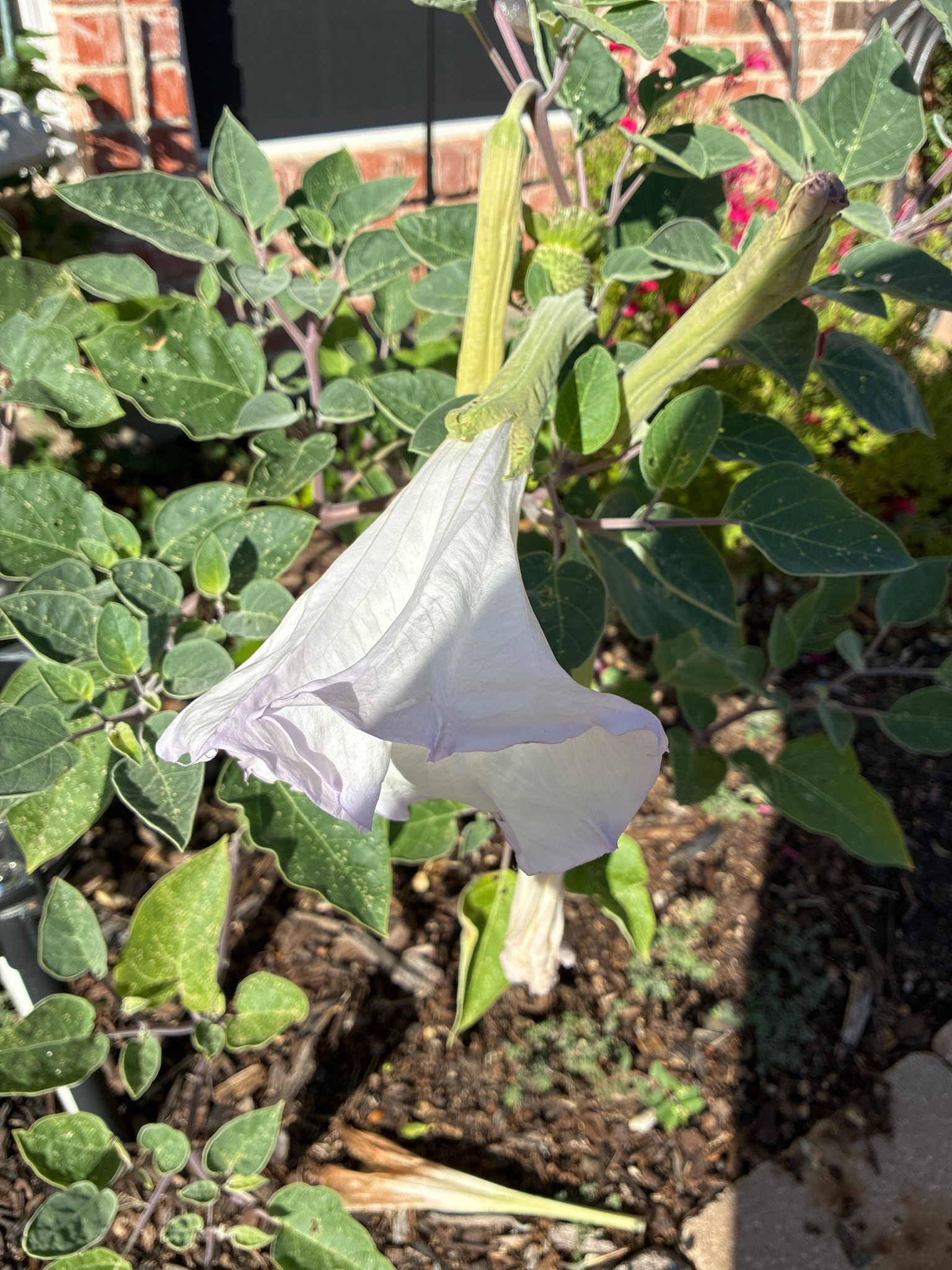
A robust, bushy herbaceous perennial featuring large, grey-green leaves with a velvety texture and massive, showy, trumpet-shaped white flowers that typically open in the evening and face upward or slightly outward.
- Light
- Full sun, requiring 6 to 8 hours of direct sunlight per day for optimal flowering.
- Water
- Moderate drought tolerance once established. Water deeply when the top few inches of soil become dry, but avoid waterlogging the roots.
- Growth
- An upright, branching herbaceous perennial shrub reaching 3 to 5 feet in height and spreading up to 4 to 6 feet wide with a moderate growth rate.
Care instructions
Provide full sun exposure for at least six hours daily. Water deeply but infrequently, allowing the soil to dry out completely between watering sessions. Plant in well-draining, sandy or loamy soil with neutral to slightly alkaline pH. Fertilization is generally not necessary and can reduce flowering if applied in excess.
Growing details
Sunlight
Full sun, requiring 6 to 8 hours of direct sunlight per day for optimal flowering.
Watering
Moderate drought tolerance once established. Water deeply when the top few inches of soil become dry, but avoid waterlogging the roots.
Soil
Prefers loose, sandy, or gravely soils with excellent drainage. Tolerates poor soils and a neutral to alkaline pH range of 6.0 to 8.0.
Hardiness zone
USDA zones 8 through 10, often grown as an annual in cooler climates.
Growth habit
An upright, branching herbaceous perennial shrub reaching 3 to 5 feet in height and spreading up to 4 to 6 feet wide with a moderate growth rate.
Bloom season
Blooms from late spring through autumn, producing large, fragrant, white to pale lavender funnel-shaped flowers that measure up to 8 inches long.
Propagation
Propagated primarily from seeds sown in spring after a brief period of warm stratification, or through stem cuttings taken during the active growing season.
Common pests & issues
Generally resilient, but may occasionally attract spider mites, aphids, or leaf miners. Root rot can occur in poorly draining soils or with excessive moisture.
Similar species
Brugmansia species (Angel's Trumpets), which are typically woody trees or large shrubs with pendant, downward-hanging flowers, whereas Datura species are herbaceous and hold their flowers upright.