
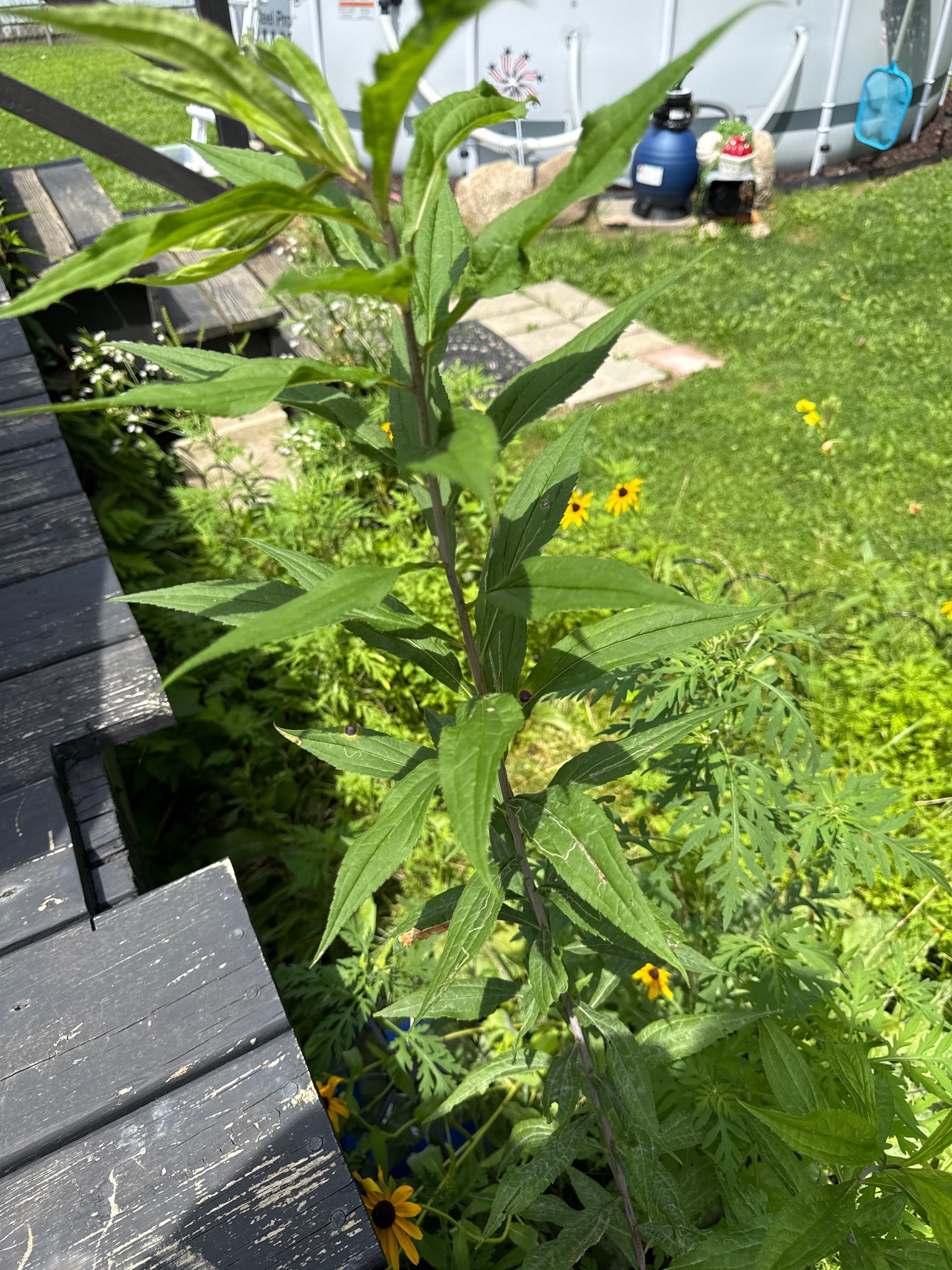
Sawtooth Sunflower
Helianthus grosseserratus
A tall perennial plant with reddish or purplish smooth stems, lance-shaped leaves with sharp, forward-pointing saw-tooth margins, and bright yellow composite flowers late in the season.
- Light
- Full sun (6 or more hours of direct sunlight daily for optimal upright growth and flower production).
- Water
- Prefers consistently moist to medium moisture soil. Water deep once a week during dry periods.
- Growth
- Herbaceous perennial growing via rhizomes to form colonies. Fast-growing, reaching 6 to 12 feet tall and 2 to 4 feet wide.
Care instructions
Thrives in full sun and moist to average, well-draining soil. Water regularly until established; mature plants tolerate periods of moisture variations. Apply a general balanced fertilizer in spring if planted in lean soil.
Growing details
Sunlight
Full sun (6 or more hours of direct sunlight daily for optimal upright growth and flower production).
Watering
Prefers consistently moist to medium moisture soil. Water deep once a week during dry periods.
Soil
Adaptable to various soil types, including loam, clay, and sand. Prefers slightly acidic to neutral pH (6.0-7.0) with moderate moisture.
Hardiness zone
USDA Zones 3 to 9.
Growth habit
Herbaceous perennial growing via rhizomes to form colonies. Fast-growing, reaching 6 to 12 feet tall and 2 to 4 feet wide.
Bloom season
Late summer to autumn (August through October). Produces clusters of yellow daisy-like flower heads with yellow center disks.
Propagation
Propagated by division of rhizomes in early spring or fall, or by seed sown in autumn.
Common pests & issues
May suffer from powdery mildew, rust, or stem borers. Can become tall and flop or spread aggressively via underground rhizomes if soil is rich and moist.
Similar species
Helianthus tuberosus (Jerusalem Artichoke) has rough, hairy stems, whereas Helianthus grosseserratus has smooth, often glaucous stems.