
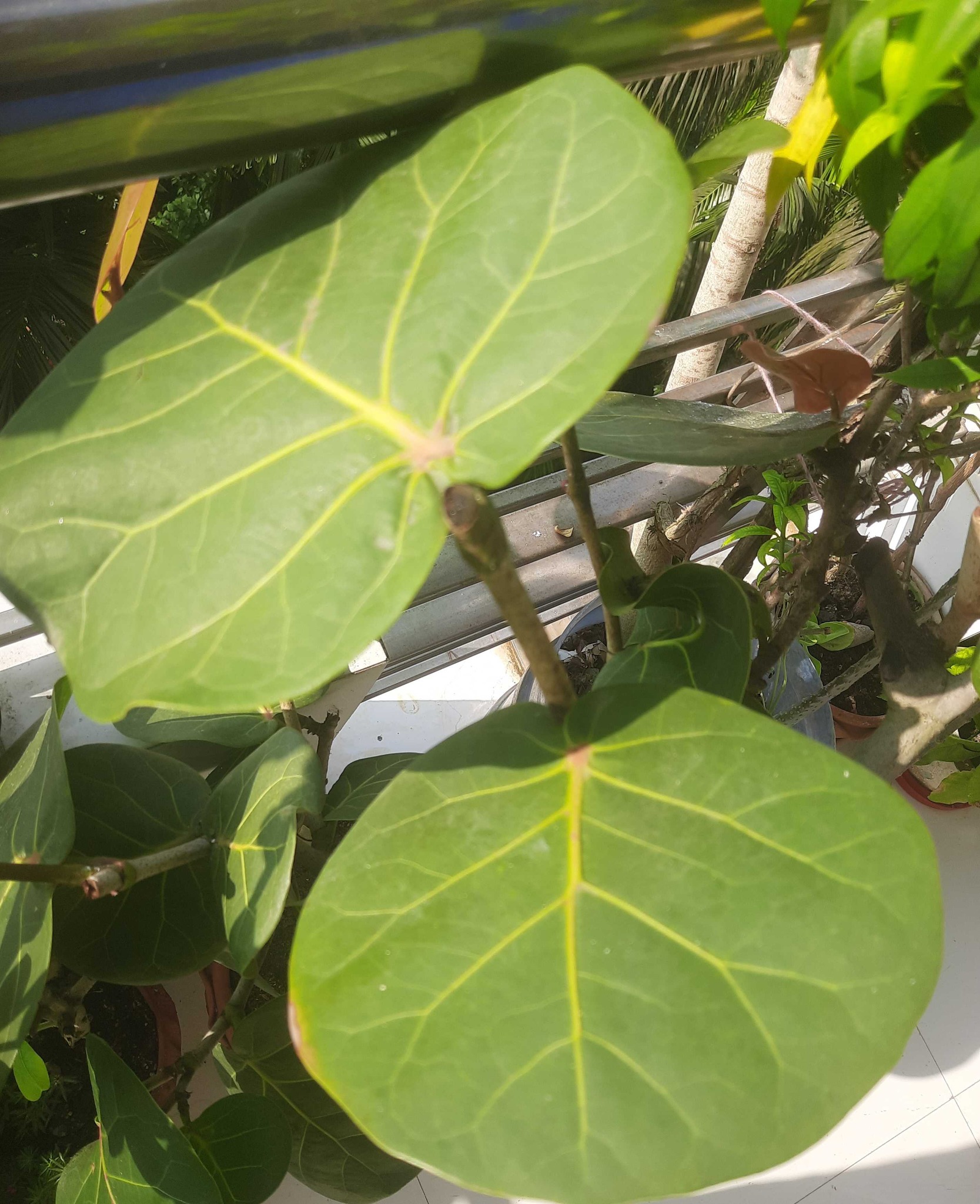
Seaside Grape
Coccoloba uvifera
A woody, evergreen coastal shrub or small tree notable for its large, stiff, orbicular to kidney-shaped leaves featuring prominent yellow or reddish veins, and a peltate leaf attachment where the petiole joins inside the leaf margin.
- Light
- Full sun, requiring 6 to 8 hours of direct sunlight daily for optimal growth and vibrant foliage coloration.
- Water
- Water deeply but infrequently, allowing the top several inches of soil to dry out completely between waterings. Highly drought-tolerant once mature; avoid continuous soil saturation to prevent root rot.
- Growth
- An evergreen shrub or small tree with a spreading, multi-stemmed habit. Can reach mature heights of 15 to 30 feet outdoors with a similarly wide spread, exhibiting a moderate growth rate.
Care instructions
Provide full sunlight for at least 6 to 8 hours daily. Water moderately, allowing the soil to dry out between waterings as it possesses high drought tolerance once established. Use sandy, well-draining soil and apply a balanced, slow-release fertilizer during the active growing season.
Growing details
Sunlight
Full sun, requiring 6 to 8 hours of direct sunlight daily for optimal growth and vibrant foliage coloration.
Watering
Water deeply but infrequently, allowing the top several inches of soil to dry out completely between waterings. Highly drought-tolerant once mature; avoid continuous soil saturation to prevent root rot.
Soil
Thrives in sandy, coarse, well-draining soils with a neutral to slightly alkaline pH range between 6.0 and 7.5. Exceptional tolerance to salt spray and poor soil conditions.
Hardiness zone
USDA Hardiness Zones 10 through 11, with limited tolerance to freezing temperatures.
Growth habit
An evergreen shrub or small tree with a spreading, multi-stemmed habit. Can reach mature heights of 15 to 30 feet outdoors with a similarly wide spread, exhibiting a moderate growth rate.
Bloom season
Spring and summer, producing small, fragrant, creamy-white flowers arranged in slender terminal or axillary racemes.
Propagation
Propagated primarily through semi-hardwood stem cuttings taken in spring or summer, or by seeds sown in warm, well-draining propagation mixes.
Common pests & issues
Generally resilient to most pests and diseases, though occasional infestations of scale insects or mealybugs may occur in warm climates. Prevent issues by ensuring adequate air circulation and avoiding overwatering.
Similar species
Can be distinguished from other broad-leaved tropical shrubs by its uniquely rounded, peltate leaves with distinct yellowish veins and reddish petioles.