
Sesame
Sesamum indicum
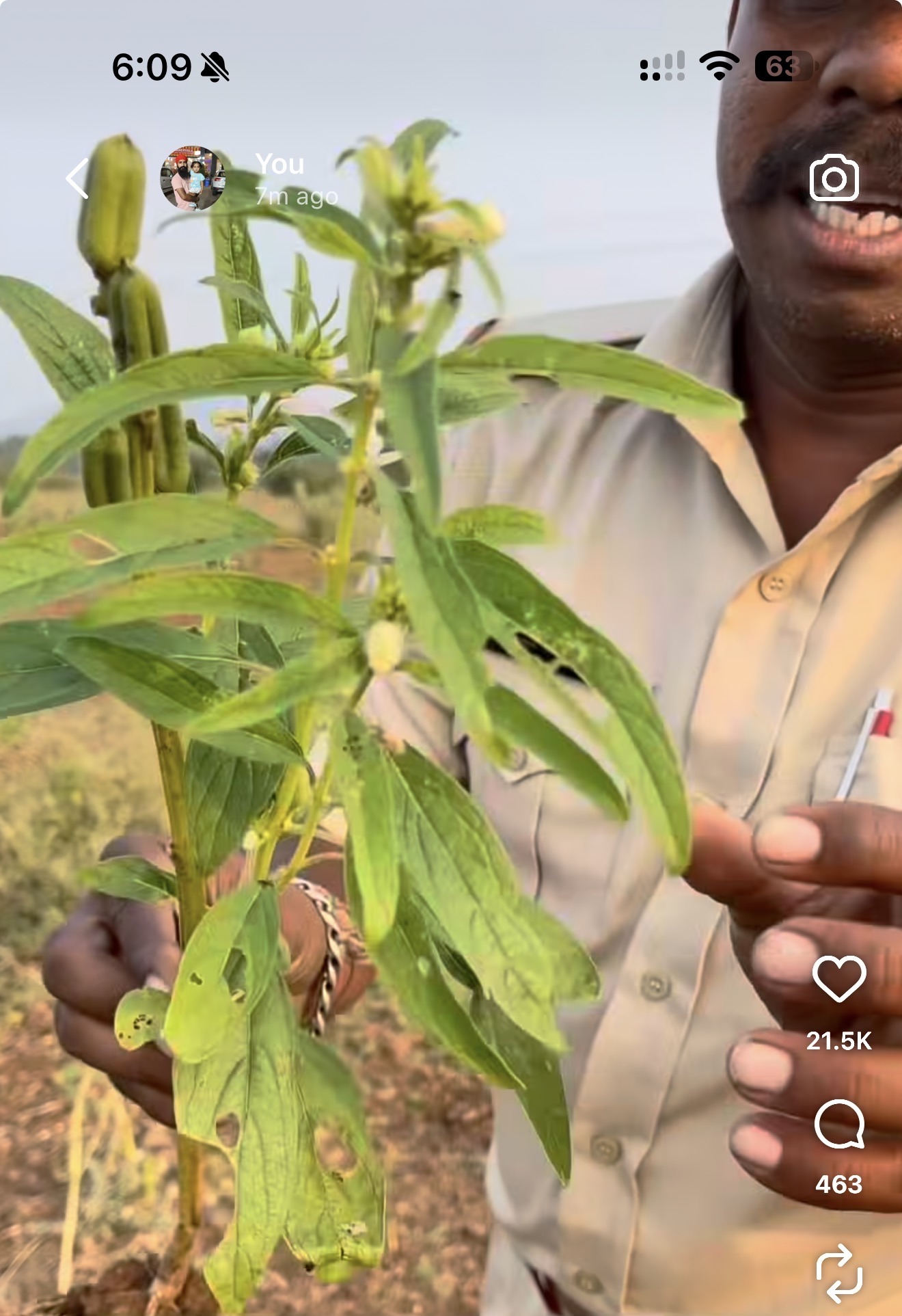
An upright annual herb featuring lanceolate to oblong leaves, tubular bell-shaped flowers ranging from white to pale pink or purple, and elongated upright capsule fruits containing numerous small seeds.
- Light
- Full sun, requiring at least 6 to 8 hours of direct sunlight daily.
- Water
- Requires moderate watering when the top layer of soil dries out. Highly drought-tolerant once established; overwatering can lead to root rot.
- Growth
- An erect annual herbaceous plant growing up to 2 to 5 feet (60 to 150 cm) tall with minimal branching, exhibiting a moderate to fast growth rate.
Care instructions
Grow in full sun with well-draining sandy loam soil. Provide moderate watering during early growth and flowering, reducing moisture as capsules mature. Apply a balanced fertilizer during the vegetative stage to encourage robust growth.
Growing details
Sunlight
Full sun, requiring at least 6 to 8 hours of direct sunlight daily.
Watering
Requires moderate watering when the top layer of soil dries out. Highly drought-tolerant once established; overwatering can lead to root rot.
Soil
Prefers fertile, well-draining sandy loam or loamy soils with a neutral to slightly acidic pH range of 5.5 to 7.0.
Hardiness zone
Cultivated globally as an annual; hardy in USDA zones 9 through 11, requiring warm temperatures to thrive.
Growth habit
An erect annual herbaceous plant growing up to 2 to 5 feet (60 to 150 cm) tall with minimal branching, exhibiting a moderate to fast growth rate.
Bloom season
Flowers appear in the summer months, presenting tubular, bell-shaped blossoms in shades of white, pink, or soft purple.
Propagation
Propagated primarily through seeds sown directly into warm soil after the last spring frost, spaced appropriately to allow for upright growth.
Common pests & issues
Susceptible to fungal wilts and root rots in poorly draining soils, as well as leaf-chewing caterpillars and aphids. Prevent by ensuring proper drainage and monitoring air circulation.
Similar species
Other members of the Pedaliaceae family or certain species of Martynia, but distinguished easily by its distinct opposite to alternate lanceolate leaves and elongated upright seed capsules.