
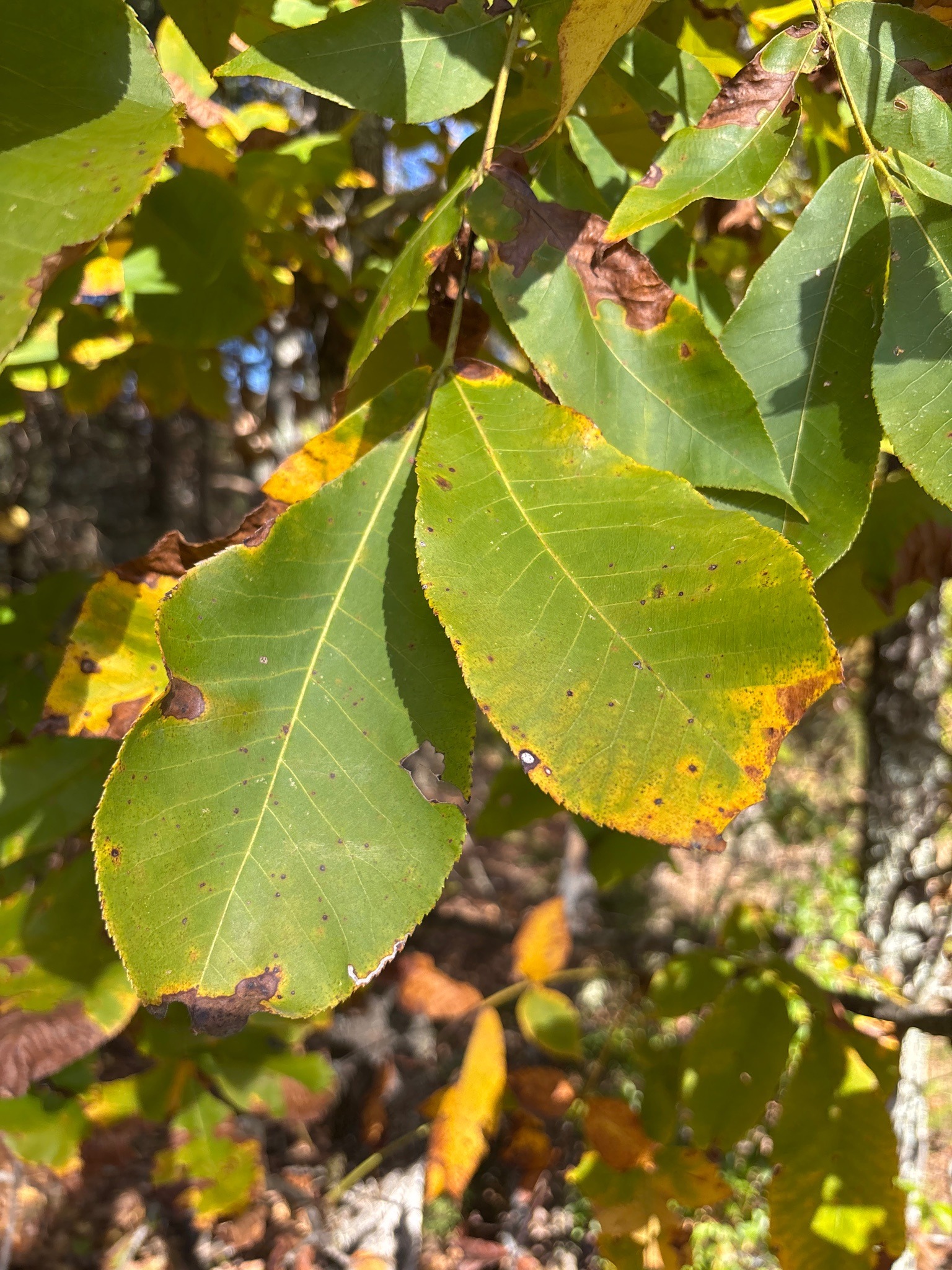
Shagbark Hickory
Carya ovata
A large deciduous tree featuring alternate, pinnately compound leaves typically with five leaflets, and distinctive rough, peeling gray bark that curls outward in long strips.
- Light
- Full sun, requiring at least 6 to 8 hours of direct sunlight daily
- Water
- Moderate water needs; drought tolerant once established, preferring deep irrigation during dry spells rather than frequent shallow watering
- Growth
- Perennial large deciduous tree with a straight trunk and upright oval to rounded crown, growing 60 to 80 feet tall with a spread of 40 to 60 feet at a slow to medium rate
Care instructions
Provide full sun exposure and deep, well-draining soils with regular watering during establishment. Fertilization is generally not necessary unless soil nutrient deficiencies are identified.
Growing details
Sunlight
Full sun, requiring at least 6 to 8 hours of direct sunlight daily
Watering
Moderate water needs; drought tolerant once established, preferring deep irrigation during dry spells rather than frequent shallow watering
Soil
Prefers deep, moist, well-draining loamy or alluvial soils with a pH range between 6.0 and 7.0
Hardiness zone
USDA Hardiness Zones 4 through 8
Growth habit
Perennial large deciduous tree with a straight trunk and upright oval to rounded crown, growing 60 to 80 feet tall with a spread of 40 to 60 feet at a slow to medium rate
Bloom season
Spring, featuring inconspicuous greenish-yellow flowers in drooping catkins
Propagation
Propagated primarily from fresh seeds in autumn, as cuttings are notoriously difficult to root
Common pests & issues
Susceptible to various leaf spot fungi, powdery mildew, stem borers, and hickory bark beetles, best managed by maintaining tree vigor and clearing fallen debris
Similar species
Shellbark hickory (Carya laciniosa), which typically has seven leaflets and larger overall fruit and leaves compared to the five leaflets of the shagbark hickory