
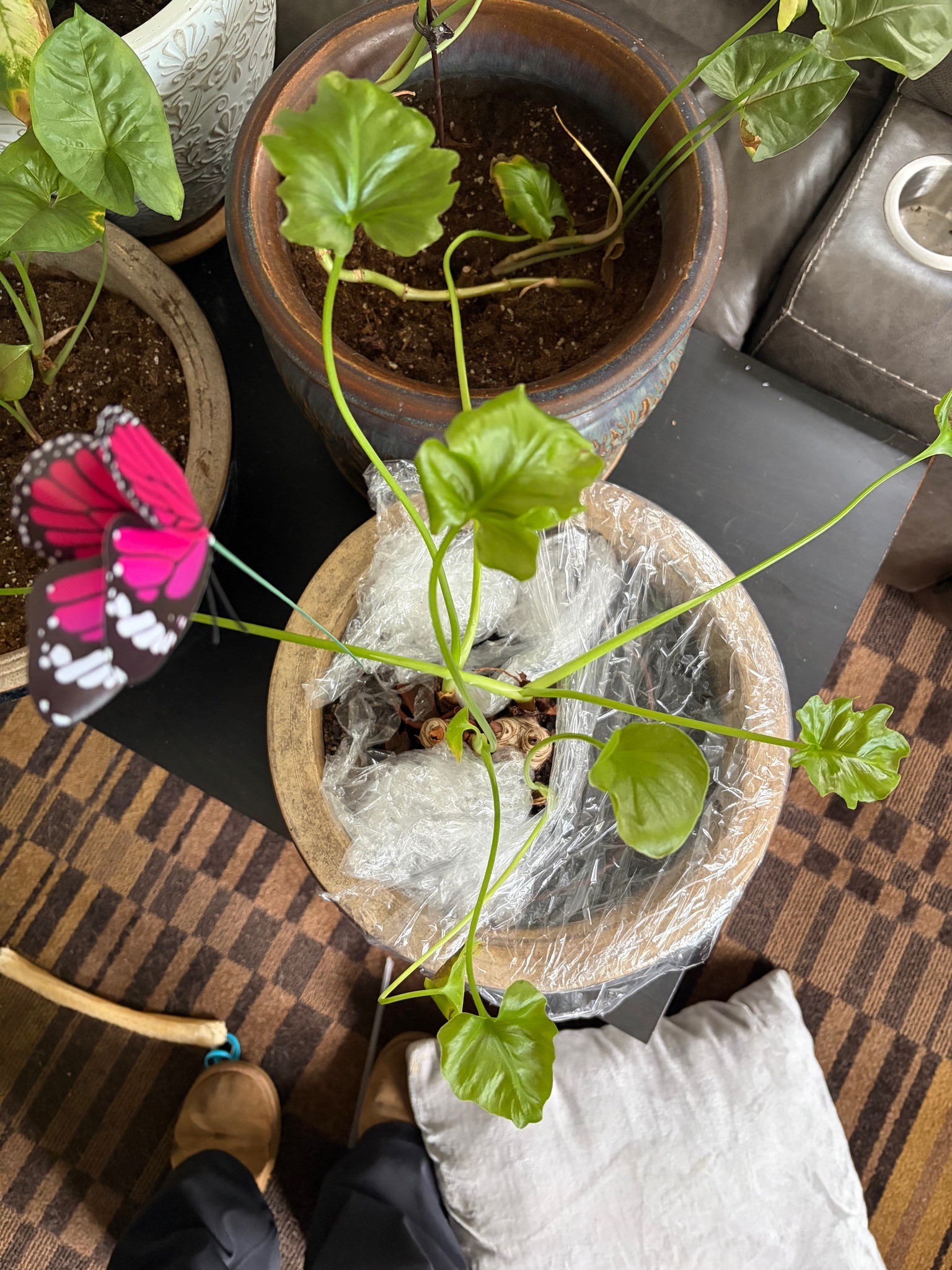
Shangri La Philodendron
Philodendron 'Shangri La'
A compact, clumping tropical foliage plant featuring deeply lobed, glossy green leaves with a distinct ruffled margin, supported by sturdy petioles.
- Light
- Bright, indirect light for 6 to 8 hours daily; protect from direct, harsh sun which can scorch the leaves.
- Water
- Water deeply when the soil is partially dry. Allow excess water to drain completely. Reduce watering frequency during the winter months.
- Growth
- Clump-forming, upright perennial epiphyte/hemiepiphyte reaching a mature height and spread of 2 to 3 feet with a moderate growth rate.
Care instructions
Provide bright, indirect sunlight and water thoroughly when the top two inches of soil become dry. Use a well-draining potting mix rich in organic matter and maintain high ambient humidity for optimal growth.
Growing details
Sunlight
Bright, indirect light for 6 to 8 hours daily; protect from direct, harsh sun which can scorch the leaves.
Watering
Water deeply when the soil is partially dry. Allow excess water to drain completely. Reduce watering frequency during the winter months.
Soil
Rich, loose, well-draining potting mix containing peat moss, perlite, and orchid bark, with a slightly acidic to neutral pH between 5.5 and 6.5.
Hardiness zone
USDA Zones 10 through 11 when grown outdoors; primarily grown as an indoor houseplant in cooler regions.
Growth habit
Clump-forming, upright perennial epiphyte/hemiepiphyte reaching a mature height and spread of 2 to 3 feet with a moderate growth rate.
Bloom season
Rarely flowers indoors; when mature in tropical conditions, it produces a typical arum-type inflorescence consisting of a spadix enclosed by a greenish-white spathe.
Propagation
Propagated primarily through division of established clumps or via stem cuttings during the active spring and summer growing seasons.
Common pests & issues
Susceptible to common indoor pests such as mealybugs, spider mites, and fungus gnats. Over-watering can lead to root rot.
Similar species
Philodendron bipinnatifidum (Tree Philodendron), which grows significantly larger with more deeply dissected leaves, and Philodendron 'Hope', which features broader, more rounded leaf lobes.