
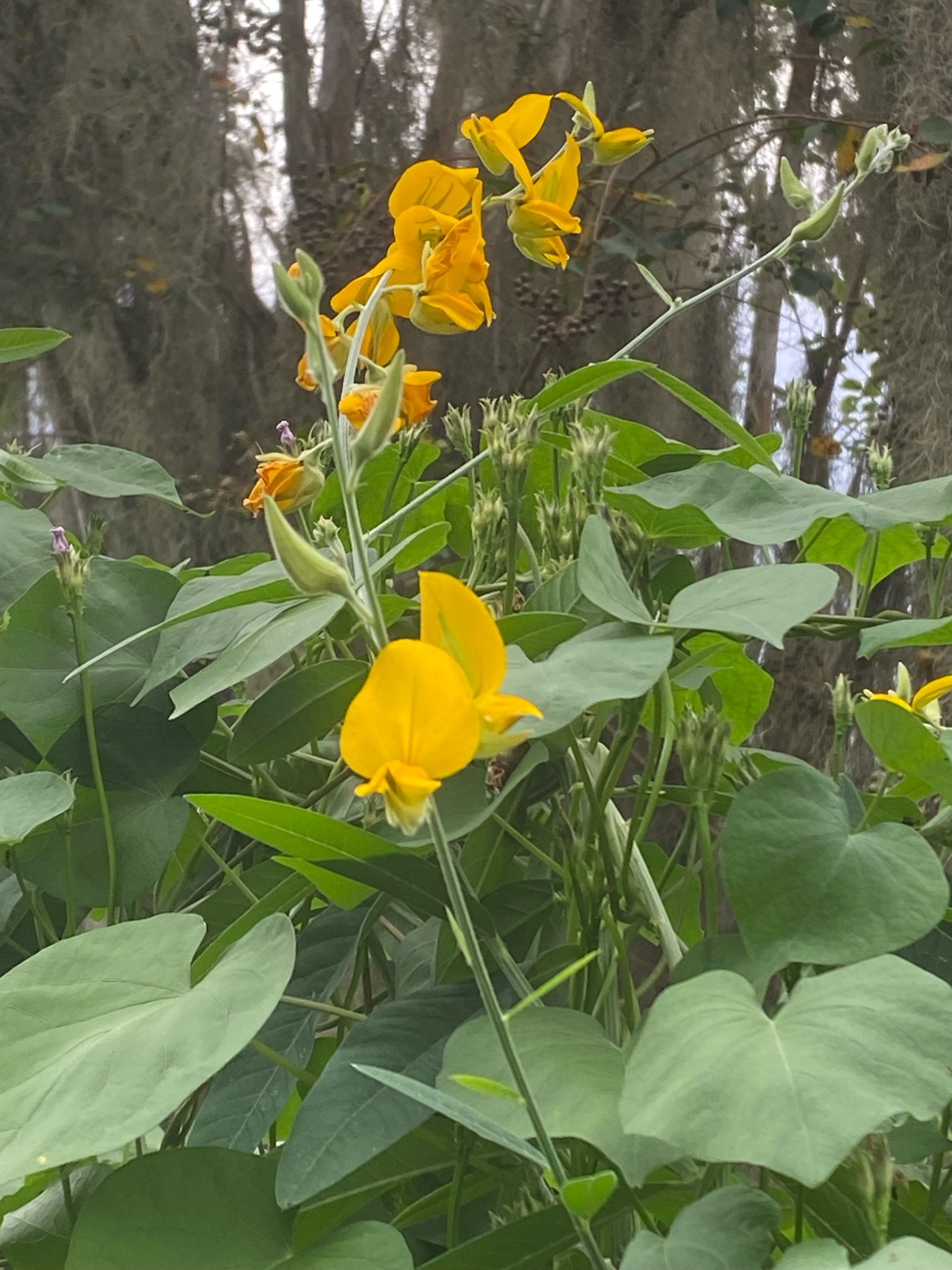
Showy Rattlebox
Crotalaria spectabilis
An erect herb or small shrub featuring large, bright yellow, pea-like flowers arranged in terminal racemes and simple, alternate, oblong-elliptic leaves with a pale underside.
- Light
- Full sun, requiring at least 6 to 8 hours of direct sunlight per day.
- Water
- Moderate watering needs. Water when the top few inches of soil feel dry to the touch. Drought tolerant once established, but avoid standing water or over-saturating the soil.
- Growth
- An erect herbaceous annual or short-lived perennial growing to a mature height of 3 to 5 feet with a moderate growth rate and upright branching structure.
Care instructions
Provide full sun and well-draining soil. Water moderately, allowing the soil to dry slightly between watering sessions, and apply a balanced, low-nitrogen fertilizer sparingly during the growing season.
Growing details
Sunlight
Full sun, requiring at least 6 to 8 hours of direct sunlight per day.
Watering
Moderate watering needs. Water when the top few inches of soil feel dry to the touch. Drought tolerant once established, but avoid standing water or over-saturating the soil.
Soil
Prefers well-draining sandy, loamy, or slightly acidic to neutral soils with good drainage. Tolerates poor nutrient soils quite well.
Hardiness zone
USDA Hardiness Zones 9 through 11, grown as an annual in cooler temperate regions.
Growth habit
An erect herbaceous annual or short-lived perennial growing to a mature height of 3 to 5 feet with a moderate growth rate and upright branching structure.
Bloom season
Blooms from summer through autumn, producing striking bright yellow, pea-like flowers in upright racemes.
Propagation
Propagated primarily from seeds. Scarification of the seed coat can improve germination rates when planted in warm spring weather.
Common pests & issues
Generally resilient, but susceptible to root rot in poorly draining soils. Watch for occasional aphids or spider mites during dry spells.
Similar species
Other Crotalaria species such as Crotalaria retusa (Lancepod rattlebox), which features smaller yellow flowers and wedge-shaped leaves with notched tips.